Curatorial text for the exhibition
John Robinson – People Ruin Paintings
He stands in the middle of a table, covered with a black cloth. He is also wrapped in it, fixed in his own staging. Every time he turns around, the fabric gets caught and threatens to pull the table with it. The gesture is awkward, almost comical. We laugh — a nervous laugh.
John Robinson draws cards from the tarot deck and asks each of us to choose three — the past, the present, the future. He speaks incessantly, carried by that unstoppable, biting English humor. Everything seems improvised, even absurd — and yet every word falls into place with an almost ruthless precision. What he reveals cuts to the bone: love, betrayal, disillusionment, shame. The audience wavers between amusement and discomfort.
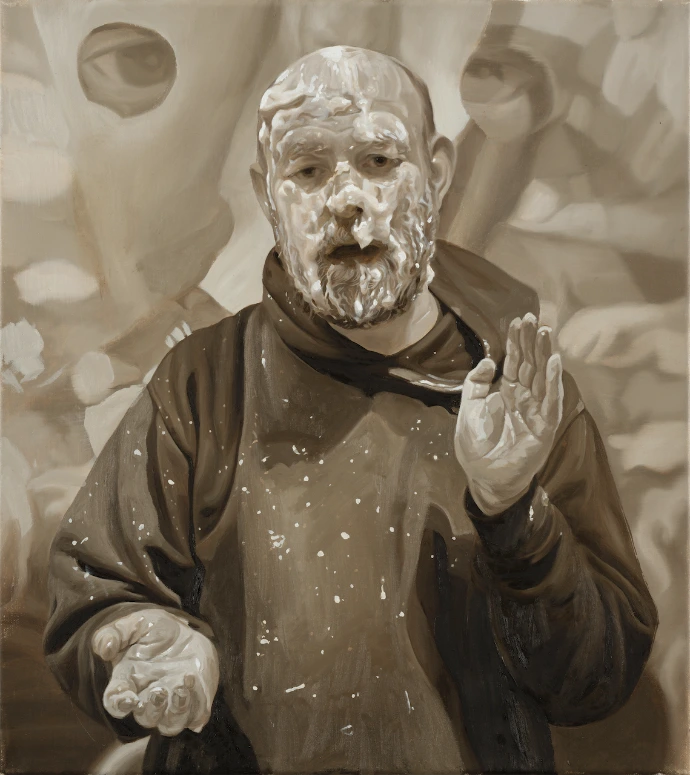
He sweats, stumbles, loses his shape as whipped cream is thrown at him. The black cloth gets soiled, the scene slowly slides into chaos. And yet something holds firm. Something invisible. From the ridiculous, a truth rises: that rare moment when art stops being performance and simply becomes human. I felt at once the urge to laugh and a strange, gentle tenderness — the kind that only arises from clear despair.
Then I understood: for him, painting begins where performance collapses. In the residue. In the chaos. From the impossibility of being anything other than a painter.
John Robinson is not a painter of conviction or beauty. What matters to him is the act of painting itself — an action stripped of morality, faith, or comfort. He has sacrificed everything for it: temptation, logic, sometimes even his sanity. For him, painting is not redemption, but a vital lie that makes survival possible, a necessary deception to stay alive.
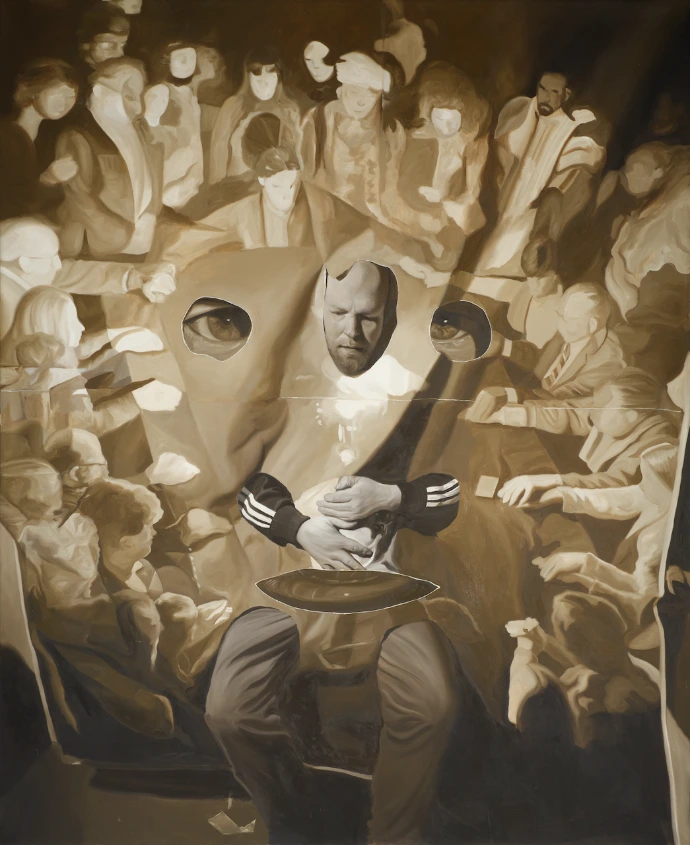
His work is irreverent, but never ironic. It disarms rather than entertains. He makes a method out of his own contradictions and transforms weakness into clarity. Everything outside of painting — religion, morality, empathy, justice — is merely surrogate: a replacement, a ghostly residue that circles around the true act. He paints from that emptiness, from the place where truth is both impossible and necessary.
The artist becomes both illusionist and prophet, a grotesque clown whose stage is his own downfall. Under the black cloth, sweating and covered in cream, he embodies the farce that the world is — and from that farce, the painting is born.
In the seriesHermits— Courbet, Basquiat, Blake, Smiley — the same figure returns, now silent, frontal, transformed. These are not tributes but incarnations. He paints himself through others, disguising himself to be able to speak. He becomes Courbet the worker, Basquiat the martyr, Blake the mystic, Smiley the fool of modernity. Each portrait is a confession: a self-portrait of the deceiver who declares: “I am all who lie to survive.”
The tarot becomes painting. The laughter quiets. The awkward gesture becomes an icon. TheHermitsform a choir of fragmented identities. Their standstill recalls the Flemish altarpieces, but stripped of faith — only fatigue, perseverance, endurance remain. They are saints of a reversed faith, witnesses to an art that promises nothing and yet refuses to disappear.
In other cycles —Seance, Tarot, Leviathan, The Woman— the same struggle continues. The grotesque and the stain, sweat and residue, become the substance of painting itself. What drips and collapses on stage becomes a surface of quiet revelation on the canvas. But that calm is deceptive. Each work carries the chaos of its own becoming within it, the despair of the gesture that preceded it.
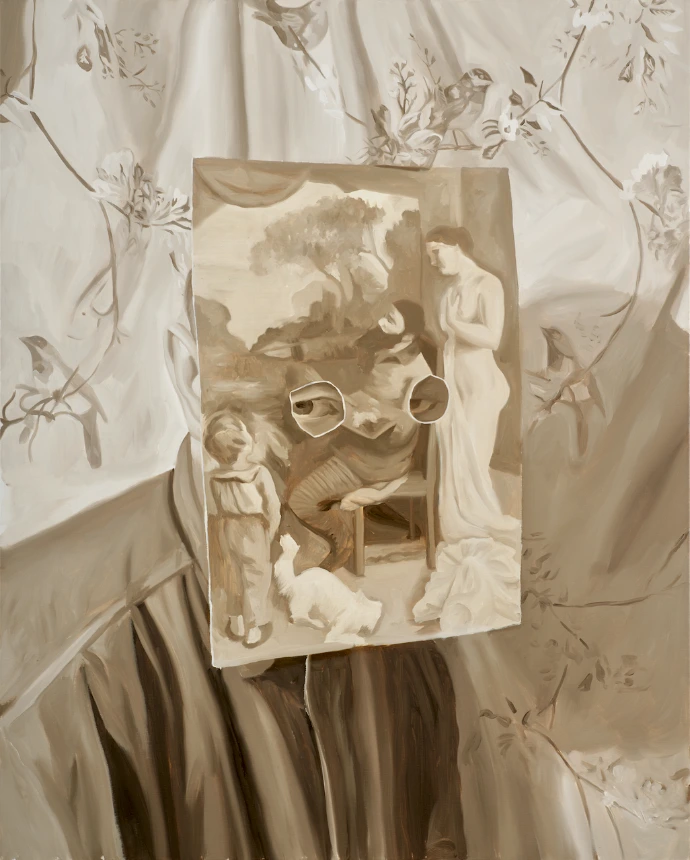
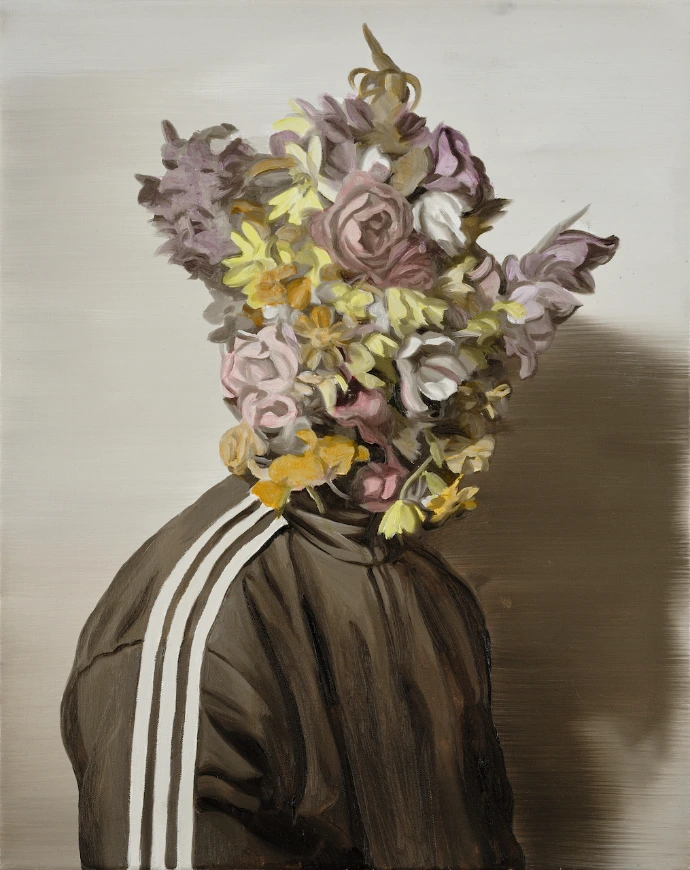
This is the painting of the aftermath — after the laughter, after the shame, after the fall.
The exhibition in Ghent unfolds along this fragile line between laughter and grace. We enter it through the performance — the awkward, comedic body — and move towards painting, towards silence, towards something that touches the sacred. Everything happens on that edge: neither comic, nor tragic, nor believing, nor cynical.
The beauty of John Robinson lies precisely in that impossibility of choosing between the ridiculous and the divine. His canvases are modern relics: laden surfaces of endurance and exhaustion. He paints disaster as others paint light.
And beneath the black canvas, beneath the laughter, beneath the layers of cream and dust, he stubbornly continues to search — not for truth, but for the possibility of still being alive.
Curatorial text by Hanna Ouaziz
DeNode Foundation, Ghent, 2026