
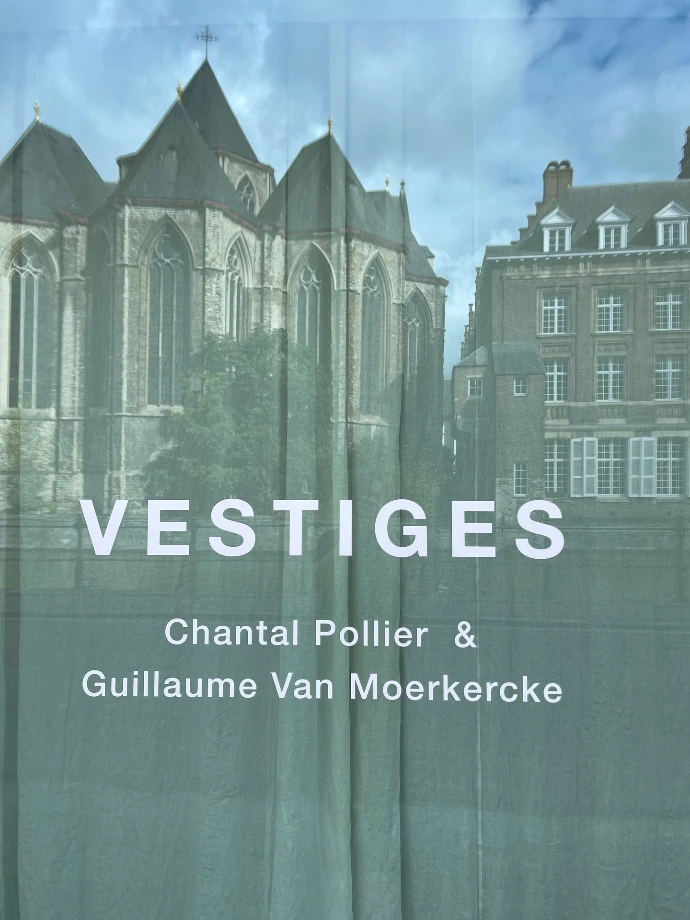
Vestiges
In Vestiges time becomes tangible. Two artists approach matter as if it were an ancient manuscript: every scratch, every grain, every trace a sentence from a story on the verge of disappearing. What remains is preserved. What threatens to fade is brought back to life.
Drawings whisper against sculptures, shadow speaks to stone.
In Vestiges Chantal Pollier and Guillaume Van Moerkercke delve into matter as one would uncover a buried memory. It is an exhibition about time, and about what defies oblivion. Remnants and traces point the way.
A silent dialogue unfolds between their practices: slowness, embodied gestures, matter shaped by hand and breath.
The organic corpus of Chantal Pollier
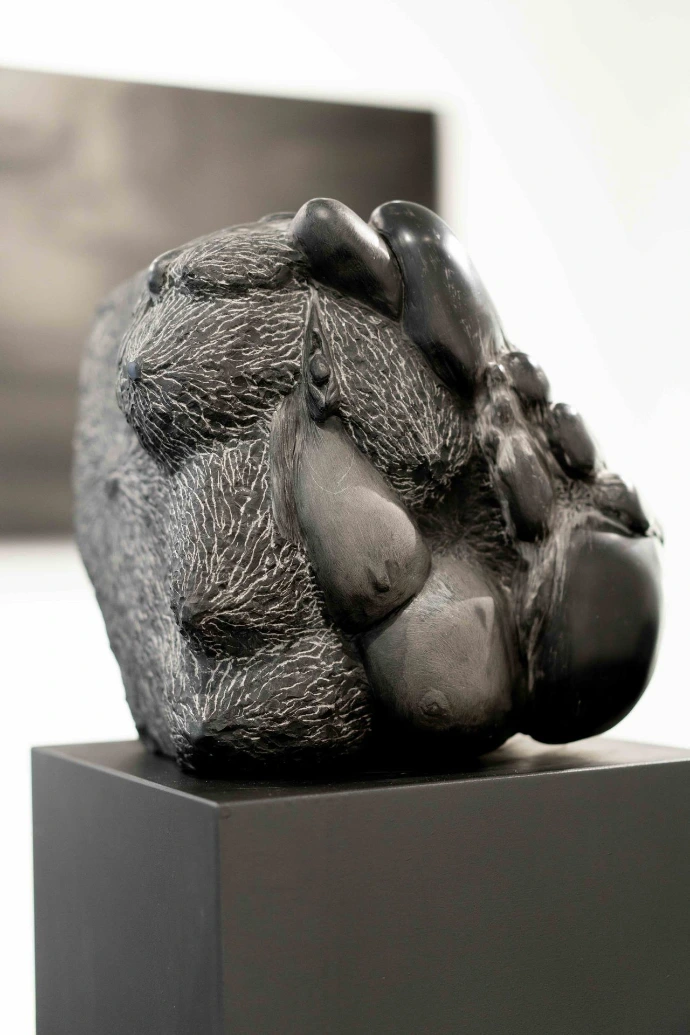
Chantal Pollier works stone as if it were alive. Her sculptures breathe an archaeology of sensitivity: landscapes of flesh, skin as topography, scars as relief. She seeks the place where hardness and vulnerability meet, where body and landscape merge..
With marble, she forms shapes that balance between emergence and disappearance: a soft heart carved from stone, a skin engraved with memories. Her works evoke associations with a distant antiquity, or perhaps archaeological finds from the future.
In her art, transience is not a loss but a revelation. She shows that what passes away, precisely because of its vulnerability, becomes unspeakably precious..
Traces in Black of
Guillaume Van Moerkercke
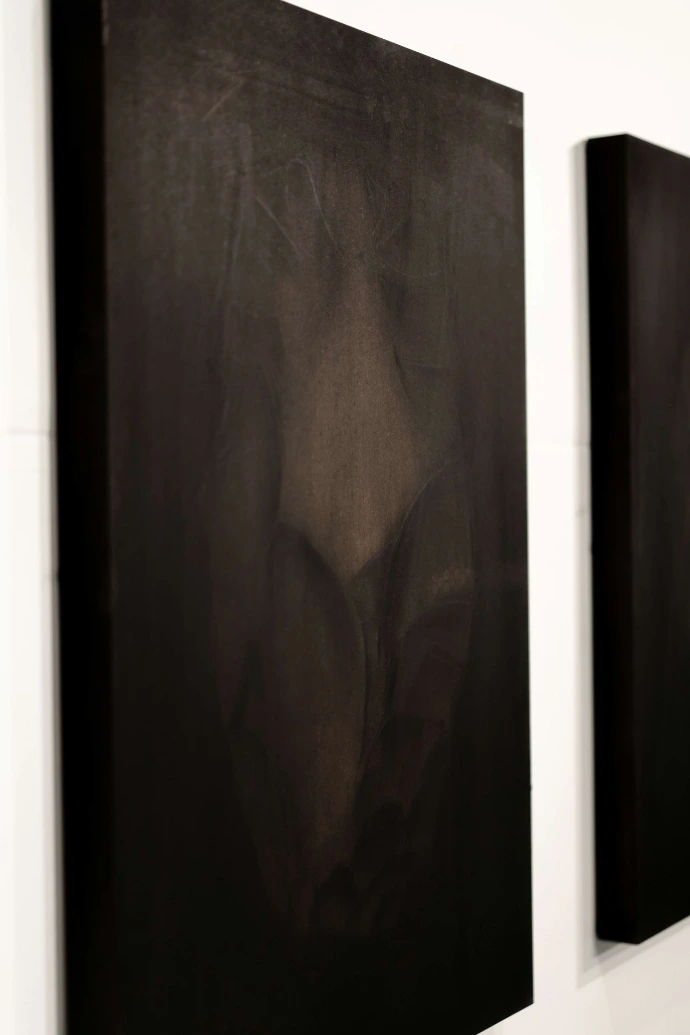
Guillaume Van Moerkercke works with charcoal—raw, black, dusty—at once a trace and an erasure. His drawings are slow excavations from sketchbooks, memories, and visions. Every gesture is a ritual, a sacred remembrance etched into the surface.
The black in his work is not emptiness, but a source: layered and alive, imbued with nuances in which forgotten forms emerge like echoes in the silence. His images hover between appearing and disappearing – ghostly, as if born from dreams or nocturnal visions. In his hands, charcoal becomes flesh, smoke, bone… stone.
His work calls for slowness, for an eye that adapts to what hides in the shadows. In that darkness, the softest traces of life become visible – fleeting, and thus all the more precious.