
Ghent, spring 24 INTERVIEW WITH BJORN WANDELS (1979)
Hilde Van Canneyt (HVC): Dear Björn, we are here in the first spring sun with a cup of coffee on the terrace of LaBath in Ghent. At this moment, you have a showcase presentation in Nodenaysteen – which is located along the Graslei. How would you describe your artistic practice? Perhaps chronologically? I would say: go ahead.
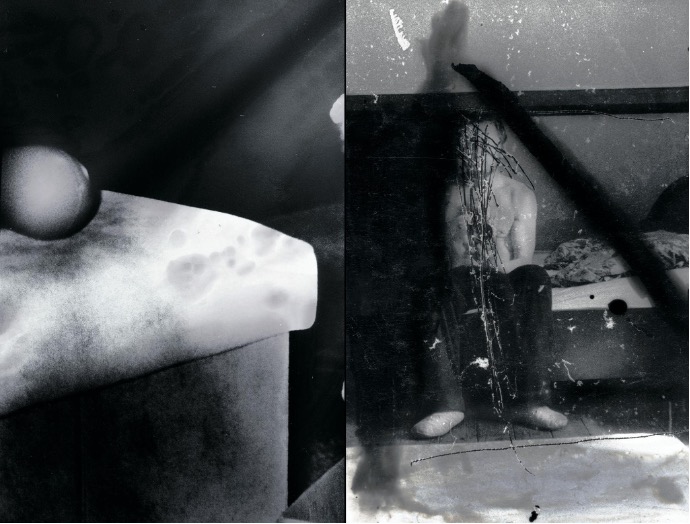
Björn Wandels (BW): I studied photography for a number of years at KASK, where I quickly felt like I had ‘graduated’. I wanted to force myself to continue searching on my own, to identify with my choice for a life as an individual. So I locked myself in the darkroom. It is important for the audience to see that a photographer is generally busy extracting images from the outside world. He or she looks for the right angle, the right light, waits for the right moment. There is, in my opinion, far too much appreciation for that, almost a blinding by the reference in the so-called reality. Even though I respect this tradition of reportage and documentary photography, I didn’t want that. I have always had an inner urge to put a kind of emotional world on paper. In a grand gesture, I turned the camera on the photographer himself. A bit of pathos is not foreign to me.
I quickly felt that I wanted to engage with self-portraiture. I also wanted to depict my personal life more broadly in a second phase. In fact, I began to limit myself in terms of scope. I started photographing my home environment: the kitchen, about my mother, my father, myself, the bedroom, the bathroom… This involved very intimate private elements. In that regard, it is also important to make a link with the personal family album as the deceptive family archive. In our living room, we had drawers under the television filled with photo albums, like in typical families. For me, the emotional bond with photography was primarily that. How can you depict your own private story through the photo album? Those are the family trips, the grandmother coming to visit, all sorts of scribbles and admission tickets, etc. In that regard, it was also a retroactive discovery for me to see my mother, who often took photos with disposable cameras, like a Kodak, and then, in a reasonably disciplined manner, pasted those photos into albums at the table on certain Sundays. What is important is that we do not have an accurate account here, that there is a mistake, something is missing or dubious, or something is in the wrong place. The album physically shows us that memory is always to be distrusted. This was my starting point to introduce the error into my practice as a collector of images: organizing, reorganizing, intentionally disordering, working against chronology.
HVC: . Beautiful.
BW For me, despite that, it was a bitterness, also a beautiful ritual in which you begin to have an intimate relationship with those images. What goes into the photo album and what doesn’t?
HVC: It’s about sorting the image, you could say. Almost looking at it through the eyes of the future: what should the rest of the world no longer see? And those photos you radically throw in the trash. Tidiness is neat, as if these moments almost never existed.
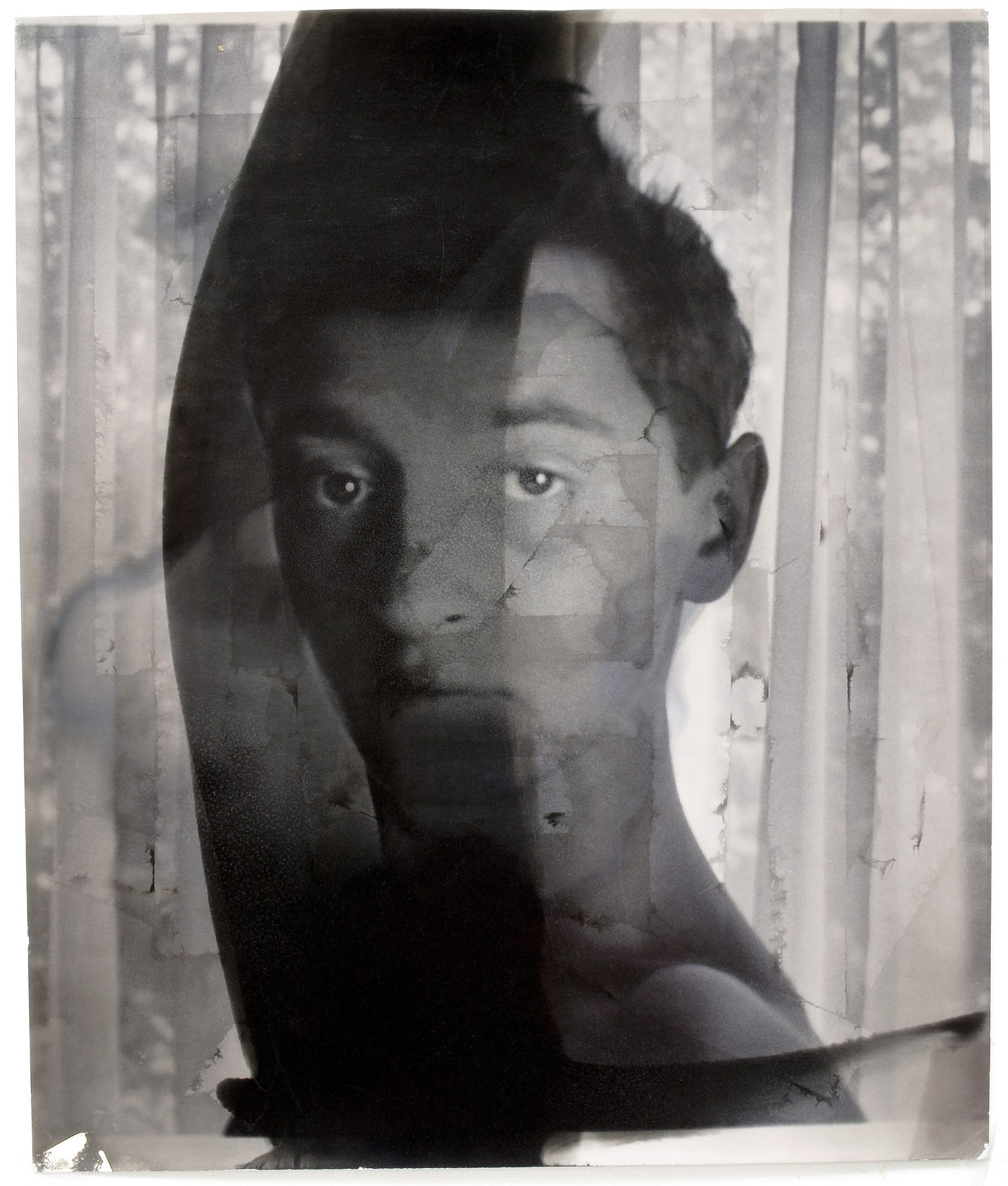
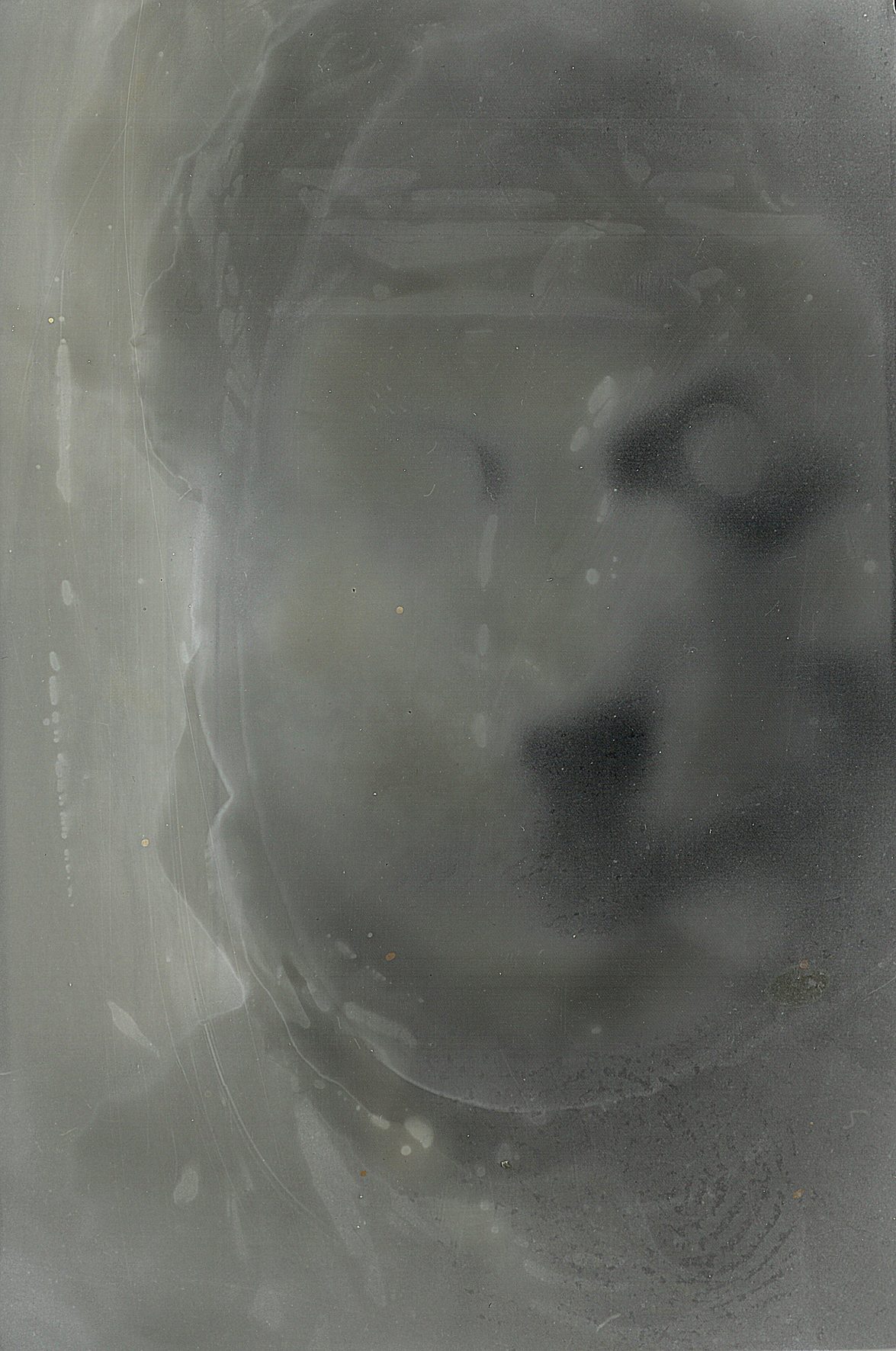
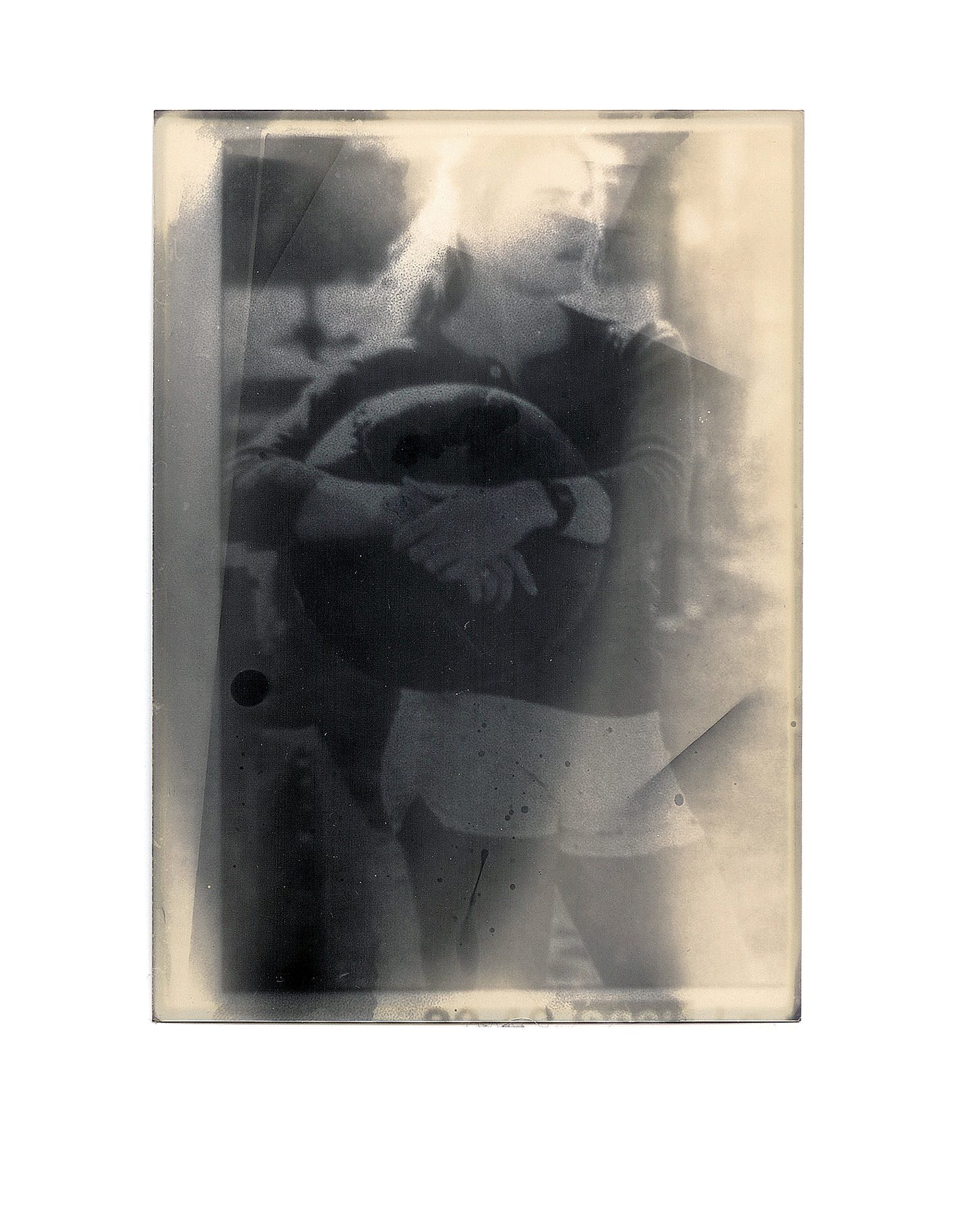
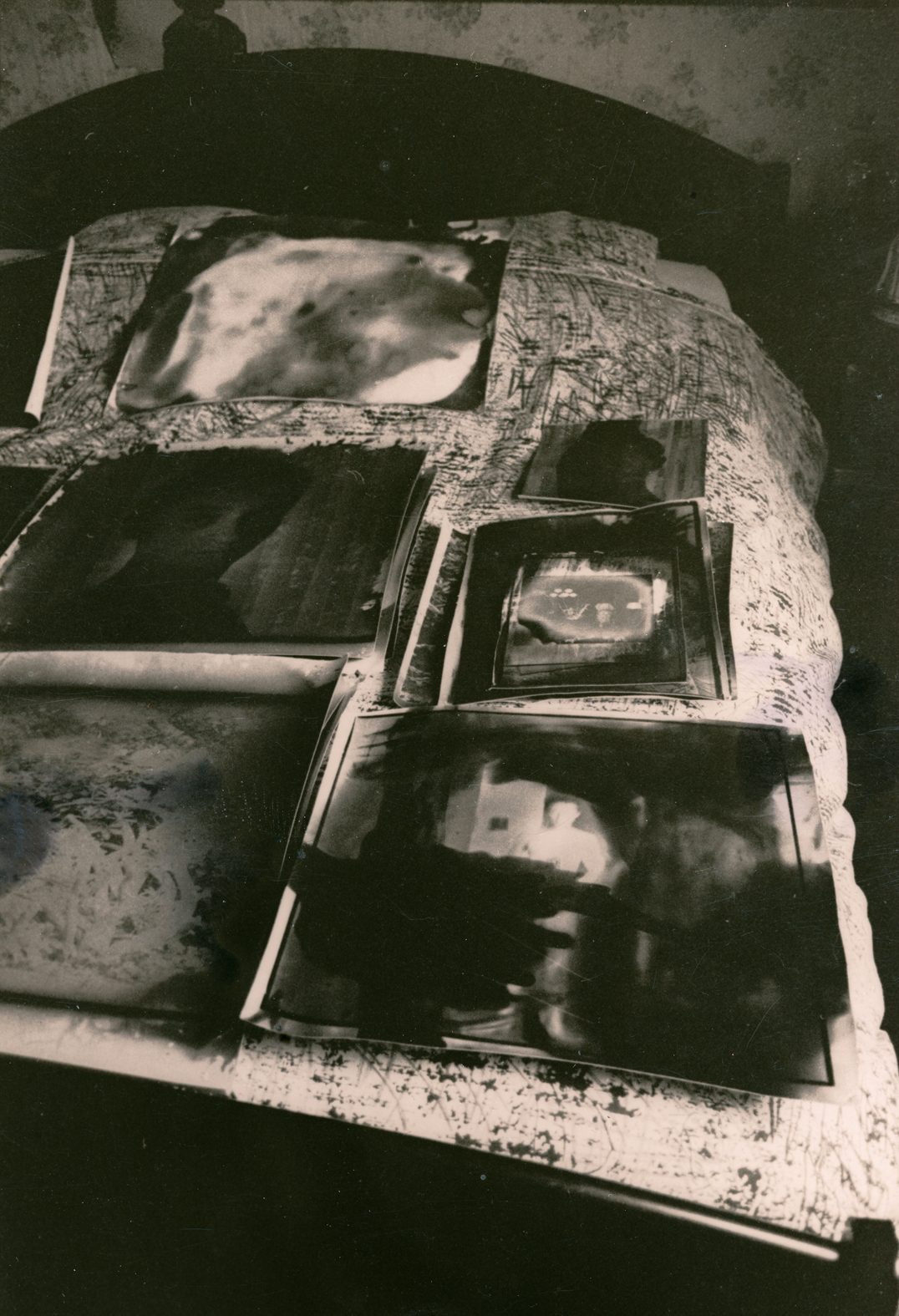
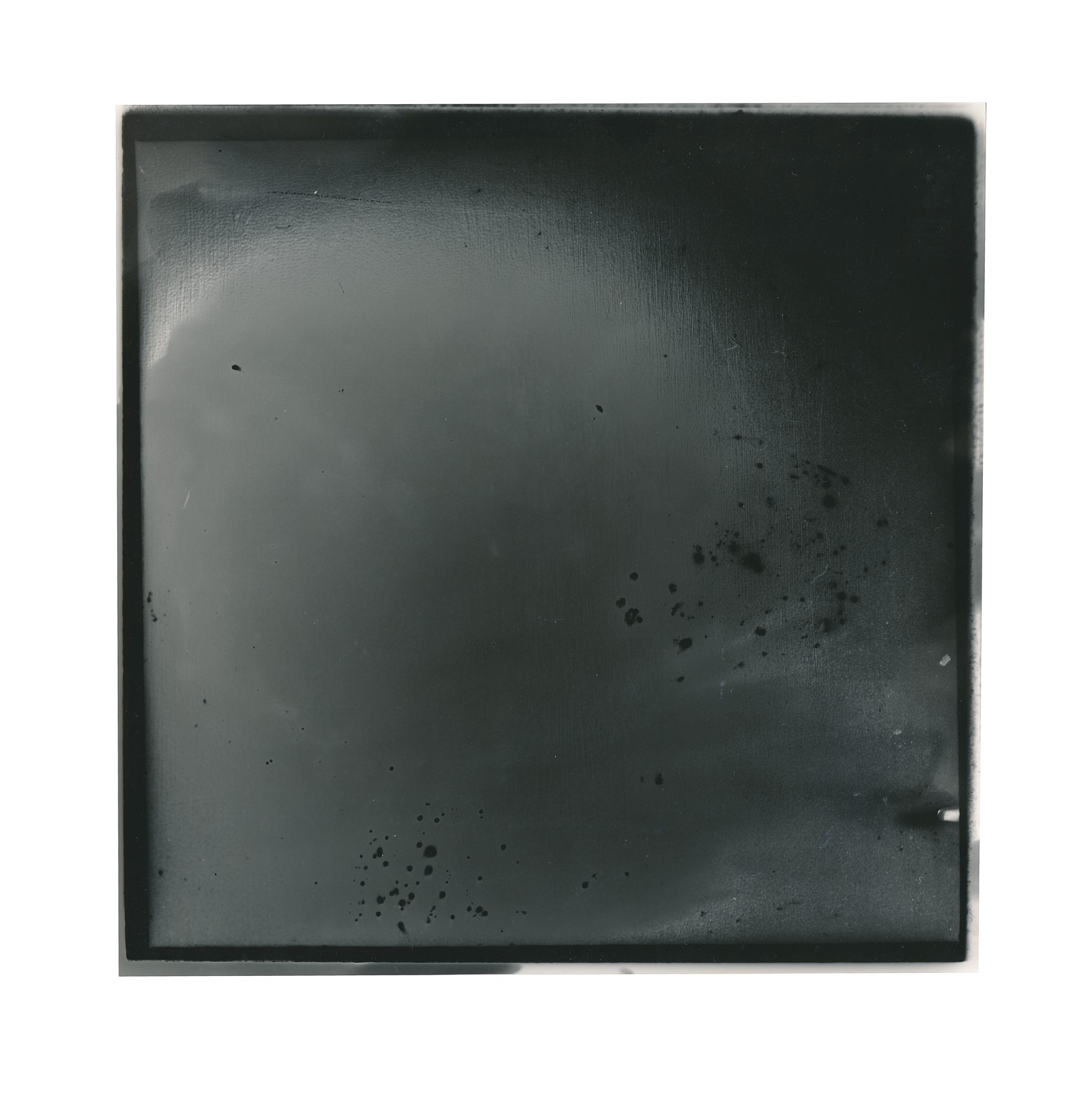
BW About that. So I started re-photographing those family images and creating a kind of intimate relationship with them by printing them in the darkroom. That is an important second point: that I began to develop my own photographic printing technique in which a moment after the moment comes in. Darkroom photography is quite simple: it involves exposing, developing, stopping, and fixing. A negative phase and in reverse, a positive phase. In fact, I quickly began to introduce something new, stopping the development, but precisely because of that, it didn’t stop. For the fixation of an image, you can actually intrusively work with photo chemistry on your photo. I think this was a crucial moment for me, because you create a standstill from a moving life, but you can also make a reverse movement: that you can still make interventions on a photographic image for yourself, in front of your eyes. Even before it is fixed. And thus create an illusion that you can pull the moment back, that there are in fact still interventions possible in the moment after the moment. That the moment can be rewritten as another moment. And that from the same moment, different moments can emerge.
HVC: Yes. In fact, photography is a snapshot, and also the development of the image. Where do you stop?
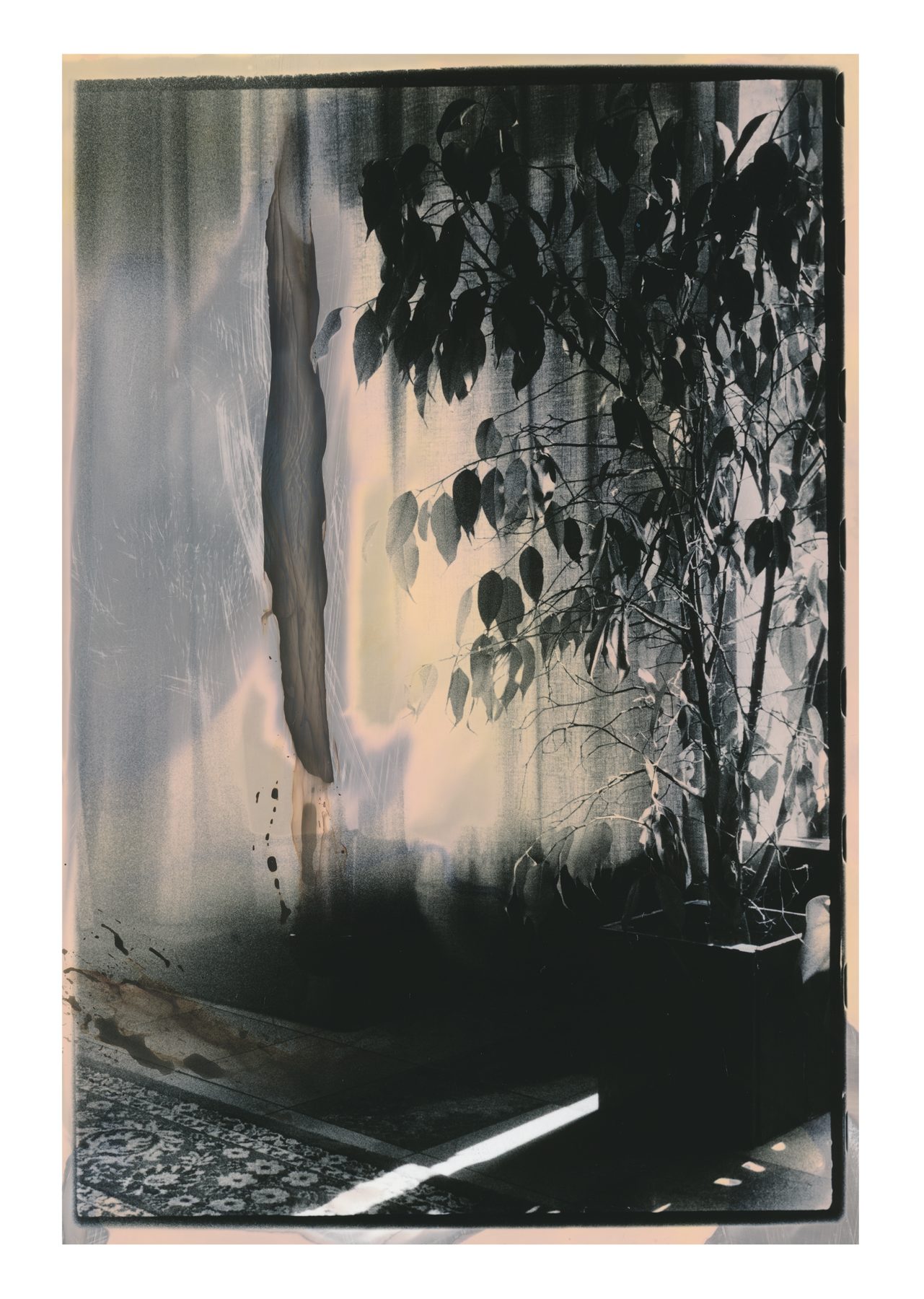
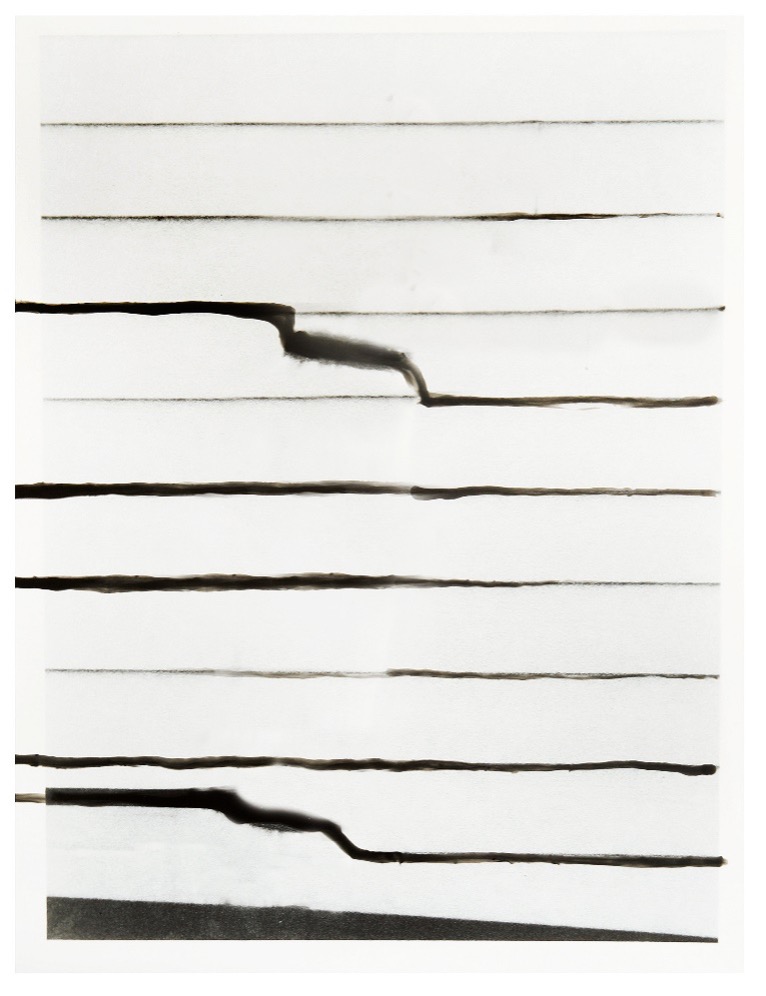
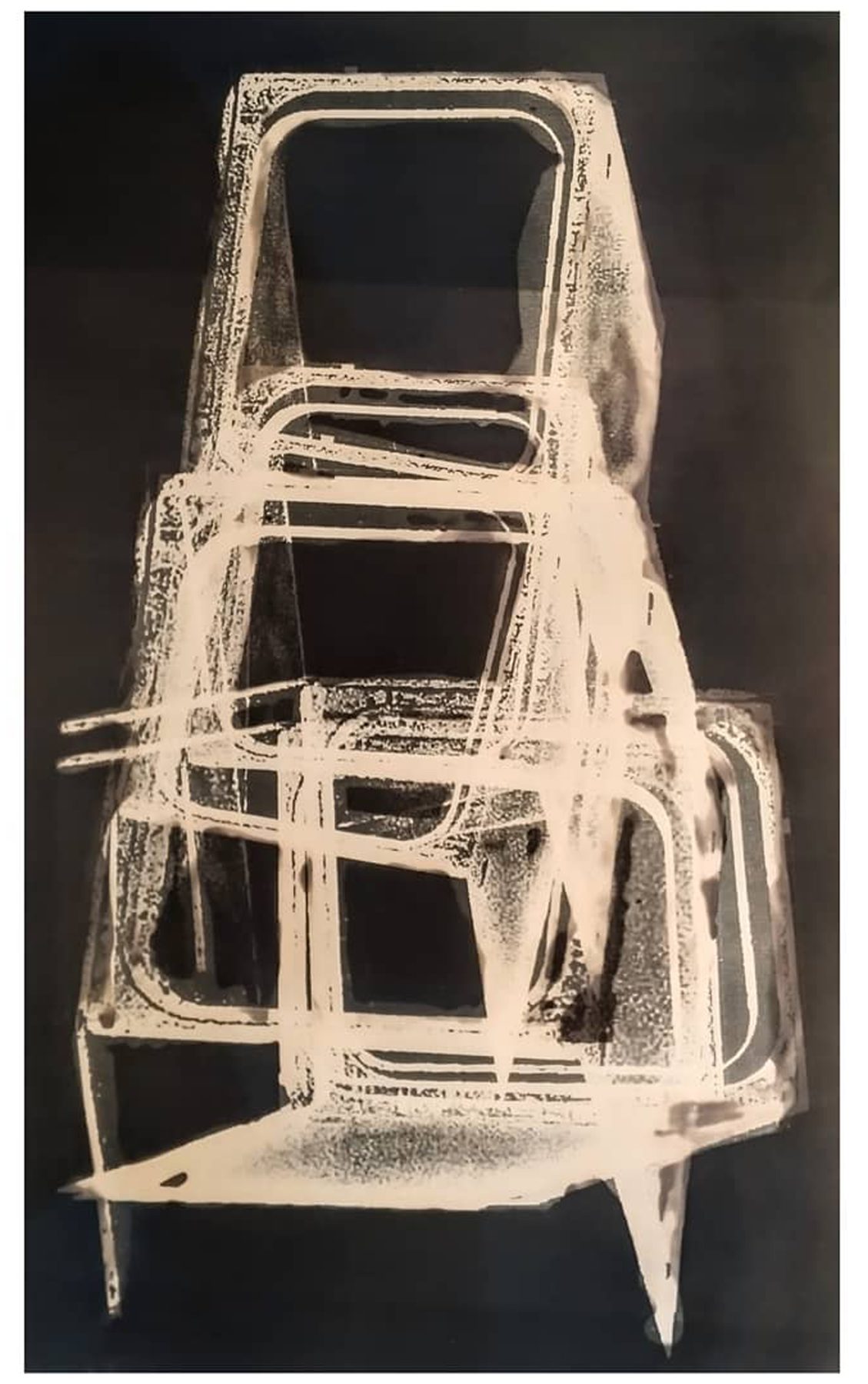
BW You indeed have your framing and you have the moment; le moment décisif of Bresson. But for me, that is the moment that is just open, because you can go in all directions, since you can make interventions in the darkroom. There was a moment when I began to insert a sign(drawing) into my photographic image. A movement with my hand, actually, a gesture. I worked then with a brush or with my bare hand; so a movement over the photographic image that brings forth a kind of sign that completely turns this image upside down. Here it was always important to me that there remained enough photographic realism, that I fundamentally stayed within photography.
HVC: The disruption, the uglification, the destruction? Almost like Fontana cutting into his canvases…
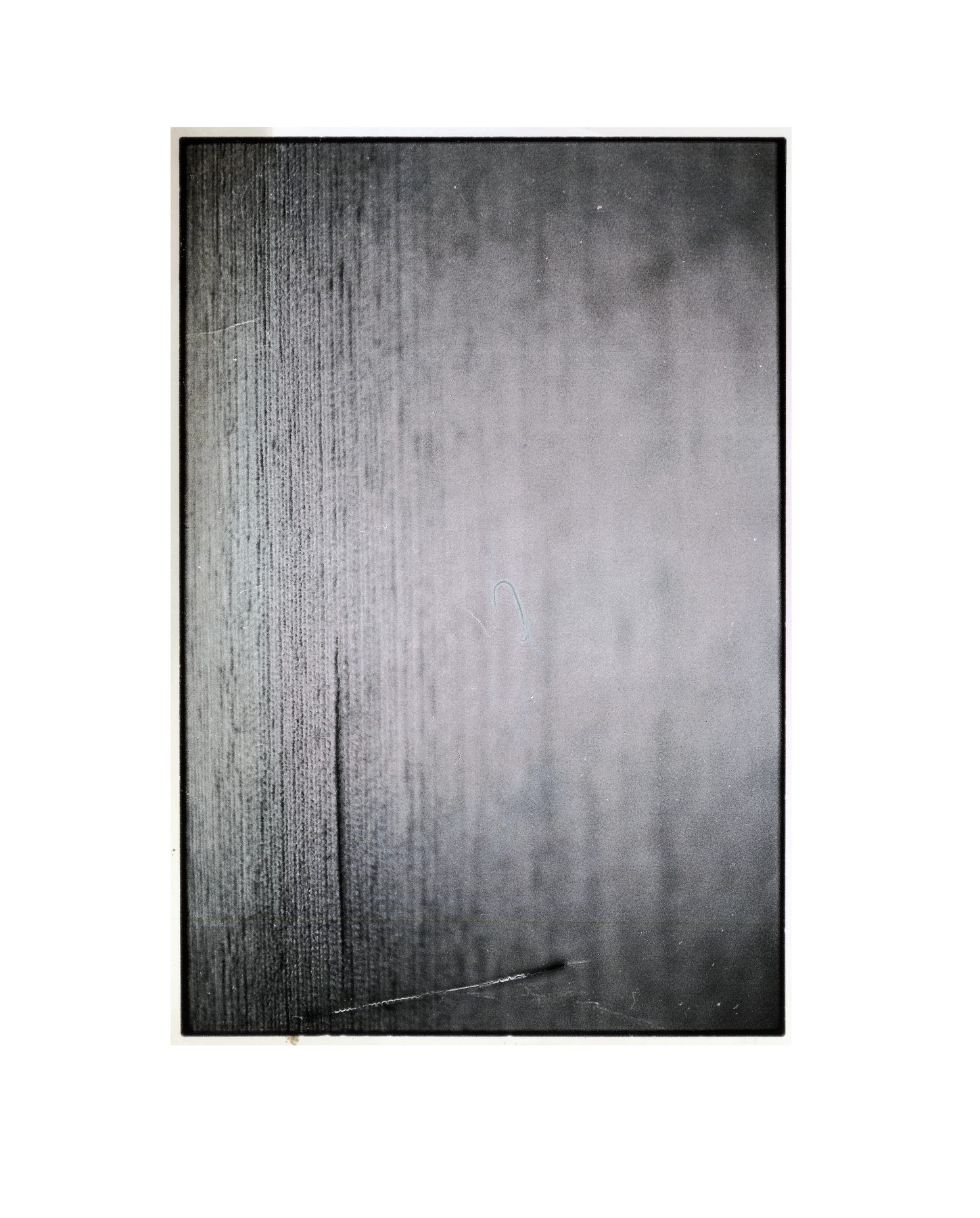
BW That is certainly also a term I have used. There is indeed an aggressive element in it. It is about the damage to the surface of the image. It is anyway an intrusive trace that comes over the entire surface of the image. It is a movement with the arm from the wrist or the shoulder over a small photo – because it’s about a photo of 9 by 13 centimeters, up to 40 by 50 centimeters. It is harder to do on larger images. It comes down to leaving a trace and with a renewed print of the same negative, you can leave another trace on it, which turns the whole idea of the infinite reproduction of the same image upside down. As it were, I was going down a potentiality and giving a big middle finger to the truth of the photo.
HVC: Do you see that a bit like graphic techniques, like etching or woodblock printing, where you can also make a few versions of the same image?
BW No, each work is unique, but each work is especially provisional. I called it interim images. It is important, Hilde, to keep seeing that I remain within photography with these images. Especially also the discovery that you can deform a negative from yourself, play with it, a little bit smaller, a little bit larger. For example, a little bit less on the left side, a little bit more on the top side. What is minimally needed within an image. An image that was taken during the day can be changed into night through the trace you leave. My enthusiasm then revolved primarily around my apparent mastery over the light.
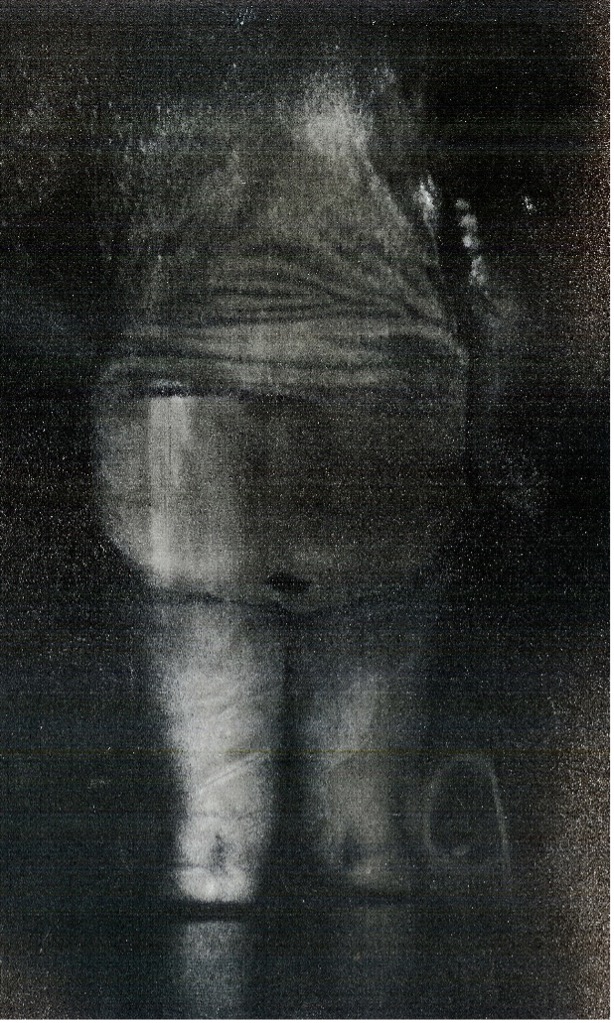
But in that regard, I find that I let go of reality and actually began photographing photography itself. Because you are dealing with elements like grain, scratches, frame, motion blur, exposure, finger in front of the lens, the moisture of the baths, etc. That I was looking for what the constitutive elements of photography are: frame, horizontality, verticality, etc. What also became important is a counterpart to depth of field, something typical in photography. Then I made the discovery that you also have sharpness on the surface. That has to do with the trace you leave on your image. That you can, for example, on a blurry image – by placing a very sharp sign on it – actually introduce a kind of sharp element that is sharp enough. So: drawing, trace, variability is important. Every print is different, repetition. And actually script, you know. I became more and more interested in that. At first, they were still scratches and over time more and more holes, but that ultimately led years later to words. By working on that for years, I noticed that you consistently make the same movements, that it is almost a manual signature.
HVC: Almost an écriture automatique?
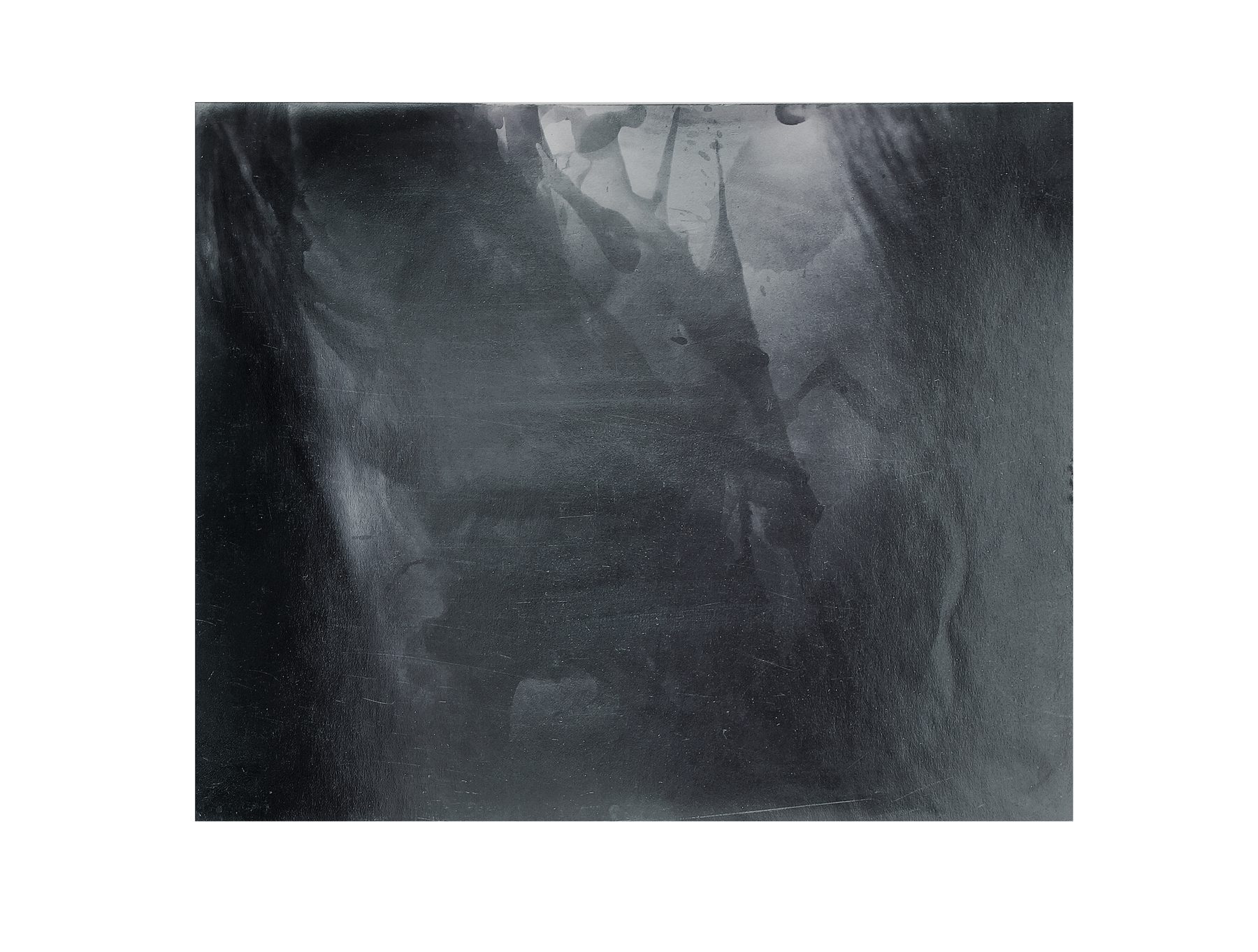
JW Almost a kind of incantation of the image. That you are much more busy actually dancing over your image and letting chance work. It may be that you make a hundred images, but they can all fail. The difference between my working method and the écriture automatique, I would like to clarify for myself at least as a great thirst for awareness of my own position, my own movements, that I look more at myself than at the image I am making because I want to know. While the pioneers of écriture automatique perhaps wanted to disable awareness.
HVC: Do you keep those ‘failed’ ones in your archive?
BW I keep them. I throw away very little.
BW But to be honest, I have to say that sometimes you work a whole day or week without any results.
HVC: I sometimes feel that way too. But the next day I realize that it wasn't in vain.
BW It's mainly a mental quest. And that daily confrontation with something you're searching for. And the fact that you don't find it is part of that quest.
HVC: It's part of being an artist. In our conversation, we're still in photography. Did you already show what you created to the outside world?
BW My first exhibition was twenty years ago, in 2004. That was the first period of those self-portraits and photos in the home environment where my mother allowed me to photograph her, thus showing the first results of those traces.
HVC: You keep working until you have an image that you're satisfied with. And then you metaphorically stamp it: 'This is a good artwork.' And then you continue, keep going, and in the meantime, you get feedback from people: 'Hey, good job.' And that motivates you to keep going. (laughs) Do you still approach your photography the same way to this day?
BW No, not really. What’s important is that quest for the writing. The fact that you are engaged with your own body posture in relation to an image. An average photographer previsualizes and creates an image, but I think in reverse: then I will be photographed – instead of me photographing. I don’t see the actual subject of an image beforehand; I start from my fundamental blindness as a photographer. I walk around, and in a kind of reversing experience, I actually see the images, to which I gave the assist, appearing everywhere. The image creates itself, and the photo writes me. I do not see, but I am seen by the photo. I am haunted by my own trace. To be honest, I must say that in recent years I have photographed less and less; something has drained away. I think I photographed a lot for twenty years until I realized: now I have an archive, now I have a kind of parallel reality within which I can start reframing.
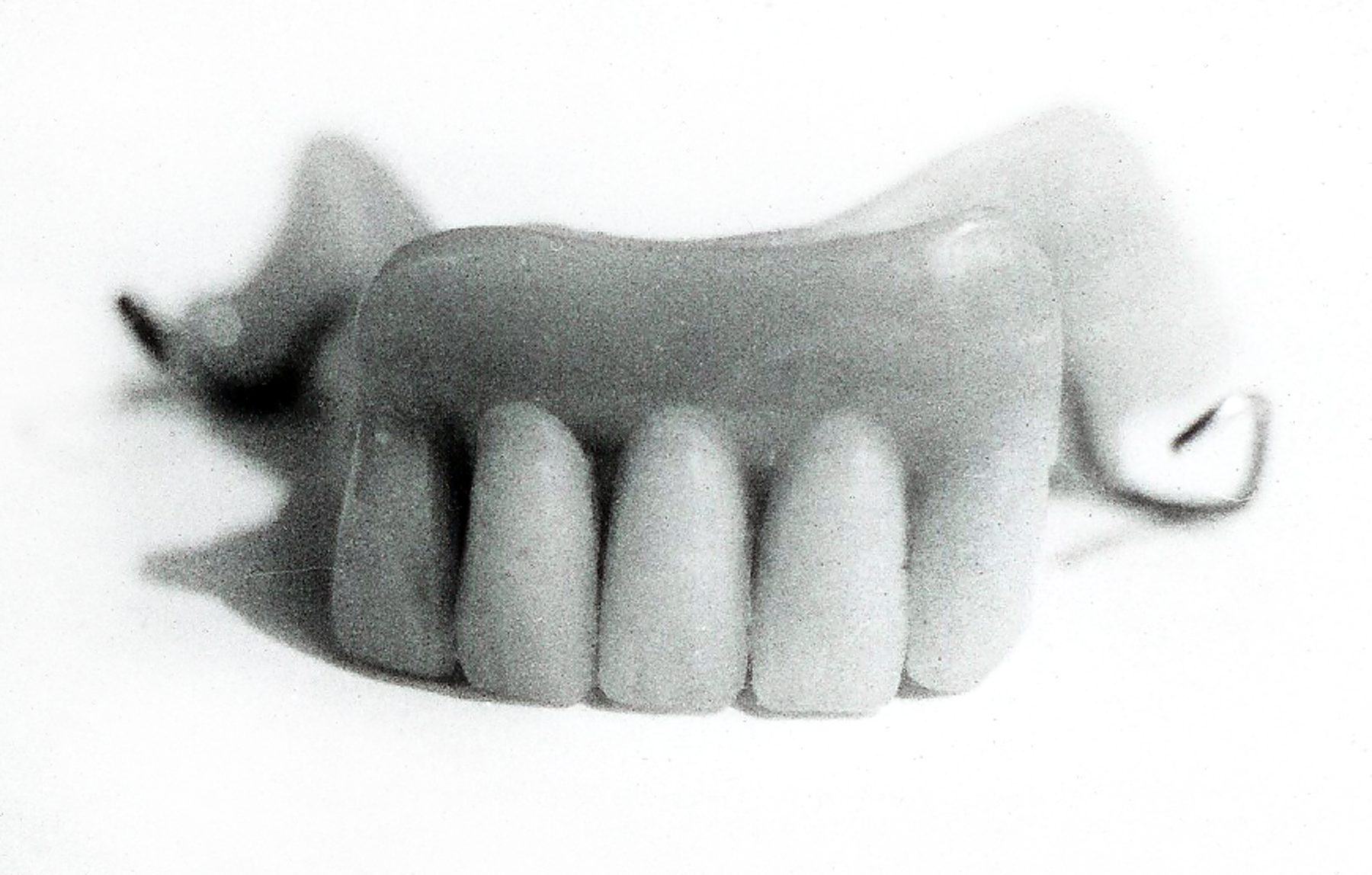
Around 2010, there was a kind of interlude in which I let go of my own darkroom technique with painting. And I briefly photographed objects in my studio in pure sharpness in a kind of Edward Weston manner.
HVC: That you placed things on a shelf, so to speak, instead of photographing things from your environment.
BW Yes, I photographed elements like a sharpener, a false set of teeth, an eraser, a pencil tip, the corner of a book.
HVC: Did you see that as a phase?
BW Yes, but it was also a turning point because at that moment, perhaps due to the seriousness and tragedy, a kind of emotional reversal or shift occurred towards comedy, absurdity, and humor, which is also an important factor in my video work. While that absurd and funny aspect is not present in my photography. Video has been a salvation for me in that respect because photography inherently has a tendency towards seriousness; it is mostly deadly serious.
Nonetheless, in a scientific way. I think there is weight to a photographic image.
HVC: Did you want to break free from that mold?
BW For a while, I was able to comfort myself in relation to reality by painting, by my own contribution within the image. But at some point, that gesture brought more disgust than comfort, as I realized that this gesture towards the photo was also a veiling. The language is harder to lie with in that area.
HVC: The trail ran cold.
BW Especially the fact that you always remain in that suggestiveness and veiling. Somehow, that gave me an aversion because it slyly made me a slave where I thought I was the master.
HVC: Because were you already working with words then? When did that creep in, when you were still working with photography?
BW That came about because I was engaged in psychoanalysis for a long time. And especially the discovery of Lacan, Freud through Lacan, but also the broader circle of the French school around it, such as Blanchot, Derrida, Foucault, Deleuze, Roland Barthes. Lacan is important to me, for example, because of the idea of the équivoque, that you can interpret the same phenomena on totally different levels of meaning, that you do not know what you are saying, that you also do not know what you are hearing, also for example the ambiguity of a word. But for me, it is important because through psychoanalysis I gained a framework for what I had been trying with my relationship to photography, perhaps better understanding the inner dynamics, better indicating my own position within my practice. Essentially, the core for me is the incorporation of an INVERS element within the artistic practice. It’s about installing an INVERS element, a paradoxically disruptive element into a work practice. It’s about looking beside the object to see the object better. I tried this approach from then on in other media as well. Can you photograph with words? Can you paint with photography? Can you film sound? Can you create images by writing? Can text work as an image? Can you perform operations on the text that cause reading to bite its own tail? These are all starting questions, opening positions of a game that can be played.
HVC: Was it also the case that you were working at home with a sketchbook writing words? Or did you do that directly digitally, writing out those words?
BW The whole transition to digital has passed me by. I received comments from people: 'Björn, digital has been around for ten years now and you're still in your darkroom. Digital really came into play when the smartphone was introduced. That was interesting. The fact that you then had a digital camera in your hand, with which you could also text, email, install apps, and work on the road, that's when I started to think: I can use this. At a certain point, I began working with video. For me, that was a third turning point, because with video recordings, you have two tracks. A video recording is always a visual recording, but also an audio recording. It comes down to the fact that I then had footage, recording material, which also included audio. Then I started to create a montage from that. And for a while, I also worked exclusively with audio; I tried to make audio collages.
HVC: But then you started working more abstractly. As soon as you made videos, I think. They all seem like abstract elements that you place next to each other.
BW Well... But there is a logic that I want to follow, in the sense that the discovery of video led me to audio, and audio led me to text. Audio drove me for several years, purely in working with audio recordings. I found that very interesting. For three years, I recorded audio in the field recording tradition with a zoom audio, like the microphone you have with you now. At that time, I also referred to myself more as a composer. It was more a feeling I had; audio is incredibly important because it contains an atmosphere that video almost completely means. How you see it depends on what you hear with it.
HVC: Should we see that audio as soundscapes?
BW That's just using the program Audacity, in a very basic way, placing elements next to and underneath each other, in the 'Plunderphonics' tradition and applying filters, working in layers, etc.
HVC: Did that have a purpose?
BW The goal was to find the key to what works in terms of audio within audio. You know, Hilde, music is very important to me; I always work with music. For me, experimental music is very important: Morton Feldman, Ligeti, Stockhausen, Goeyvaerts, John Zorn, Venetian Snares, Dominique Lawalree, David Lang, Meredith Monk, etc.
HVC: Are you then striving to create such music? Did you want to come out with it, to stand on a stage?
BW That's a good question. I think the most important thing for me is to be in the provisionality; there is no goal that is formulated in advance. To be in a development and to have enough breadth in my oeuvre. At that time, it was important for me to know how music is made, to experience music in its independent form, and to gain understanding by making it myself. Something that also works for my photography, video, and text.
HVC: For you, the making is almost more important? Because no one is waiting for it.
BW Showing and sharing is secondary to being inspired by one's own creative process. I've been told that if you don't exhibit your work, your work only has therapeutic value. Well, I think that's not true; there is at least a third possibility, and that the work opens a 'knowing' about one's own desire, and that this can be sufficient for the creator. Recognition of my work primarily means for me that I can also convey that idea about the work. In that regard, it's more of a philosophical question: 'Is it possible??', as well as a search for what the key or possibly the connecting element is between, for example, composer Morton Feldman and artist Agnes Martin. What are the shared essential characteristics of a work across the boundaries of art forms?
What are possibly the similar drives, elements, or logics? How does Ligeti make his music, and can I possibly do that myself? At that time, I also went to music school and started drumming, purely to experience rhythm that could function in relation to the structure of my video montages. In that regard, the score also became important. Think of the graphic score. That you draw from an audiological perspective. From a video-logical perspective... And at this moment, I'm just sitting with this question: can I convert audio compositions into video work via artificial intelligence? That is the INVERSE element, bringing in that opposing, contrary starting position into the work and from there arriving at results within that great exploration. There is a logical step, also from audio to text. In my audio recordings, I began to work with the voice. For me, that was a discovery because I had long thought that private life, working with memory, intimacy, etc., could be found through the image, through the personal collection of images. While an emotional atmosphere like the audio recording of a voice evokes much more.
In that regard, I must realize that I have never found comfort in an image. If someone you love dearly has passed away, and then returns through the recording of their voice, you have a much more direct access to what has been lost. Photography has never had access to that; the equipment is dumb in that regard. That is the silence of the image.
HVC: I secretly recorded my mom before she died...
BW I think it's a very direct access to what you have emotionally lost. With those sound recordings, I also started playing with omitting consonants: I would write texts and have people sing or speak them. How much of a word can be omitted without losing recognizability? Those kinds of questions. At one point, it became a kind of addiction, almost an obsession to write, to put words down, to be busy with letters, to mutilate the language.
HVC: Wow, how should we imagine that? On the typewriter? By hand?
BW Often it was through listening to what was being said around me. Or also by studying the dictionary. For example, a few years ago I read The Interpretation of Dreams by Freud; letting the effectiveness of the association work completely. Actually, opening oneself up to the intrusive echoes, while reading The Interpretation of Dreams, of my father speaking; writing down from memory what has been spoken to you. But I can actually say little about text; just as I feel more like I have been photographed than that I have photographed myself, I feel that it is more the text that speaks than that I can speak about it.
HVC: I don't see it that way. (winks) But you use text in your videos then?
BW That's also something separate.
HVC: Caramba! Should we imagine that you keep all this in notebooks with text?
BW Yes, moreover on loose sheets in notebooks.
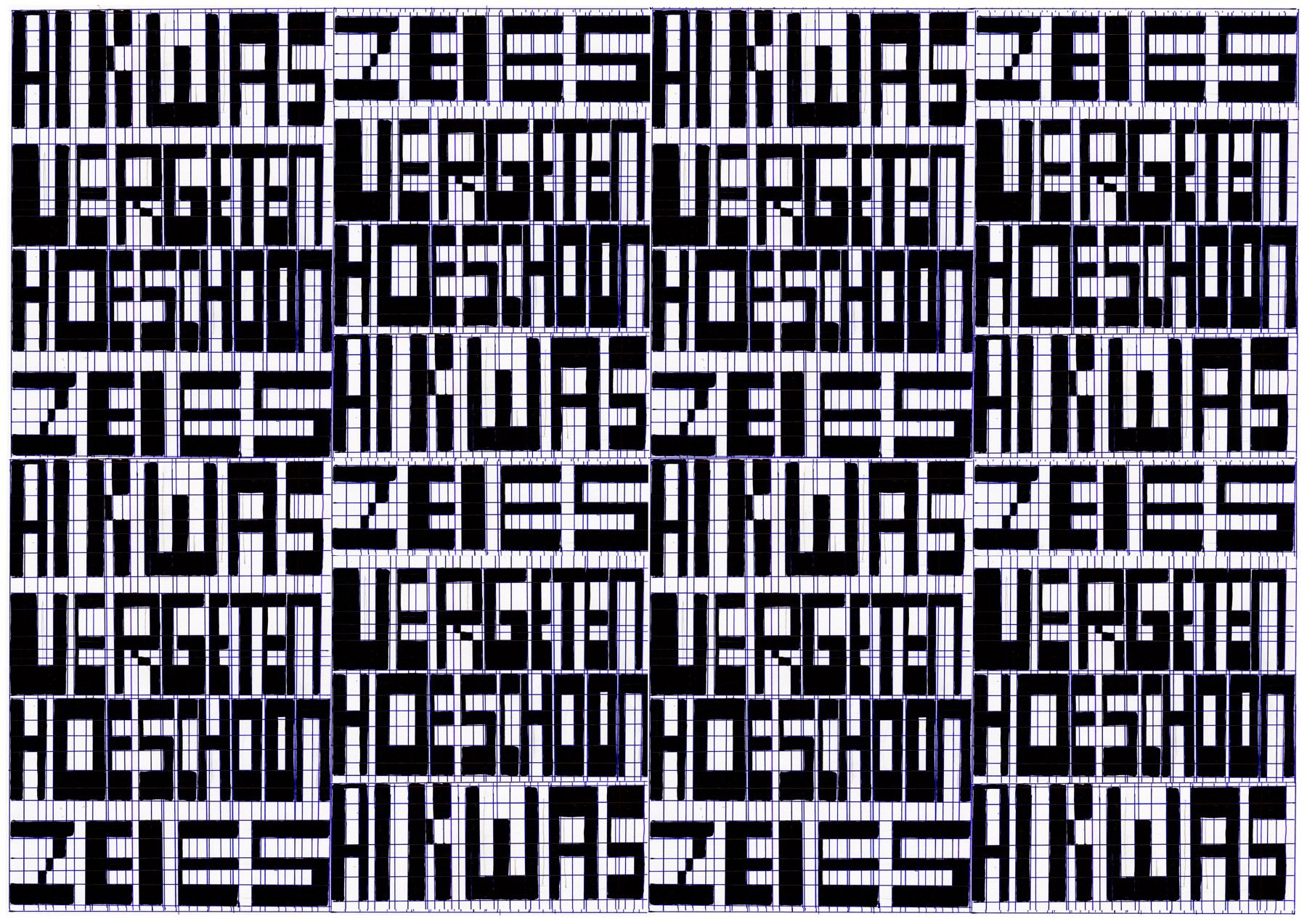
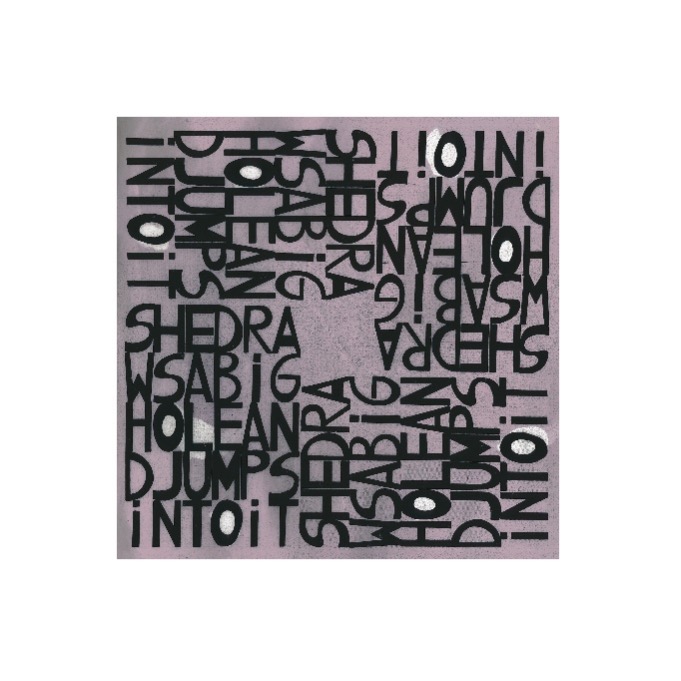
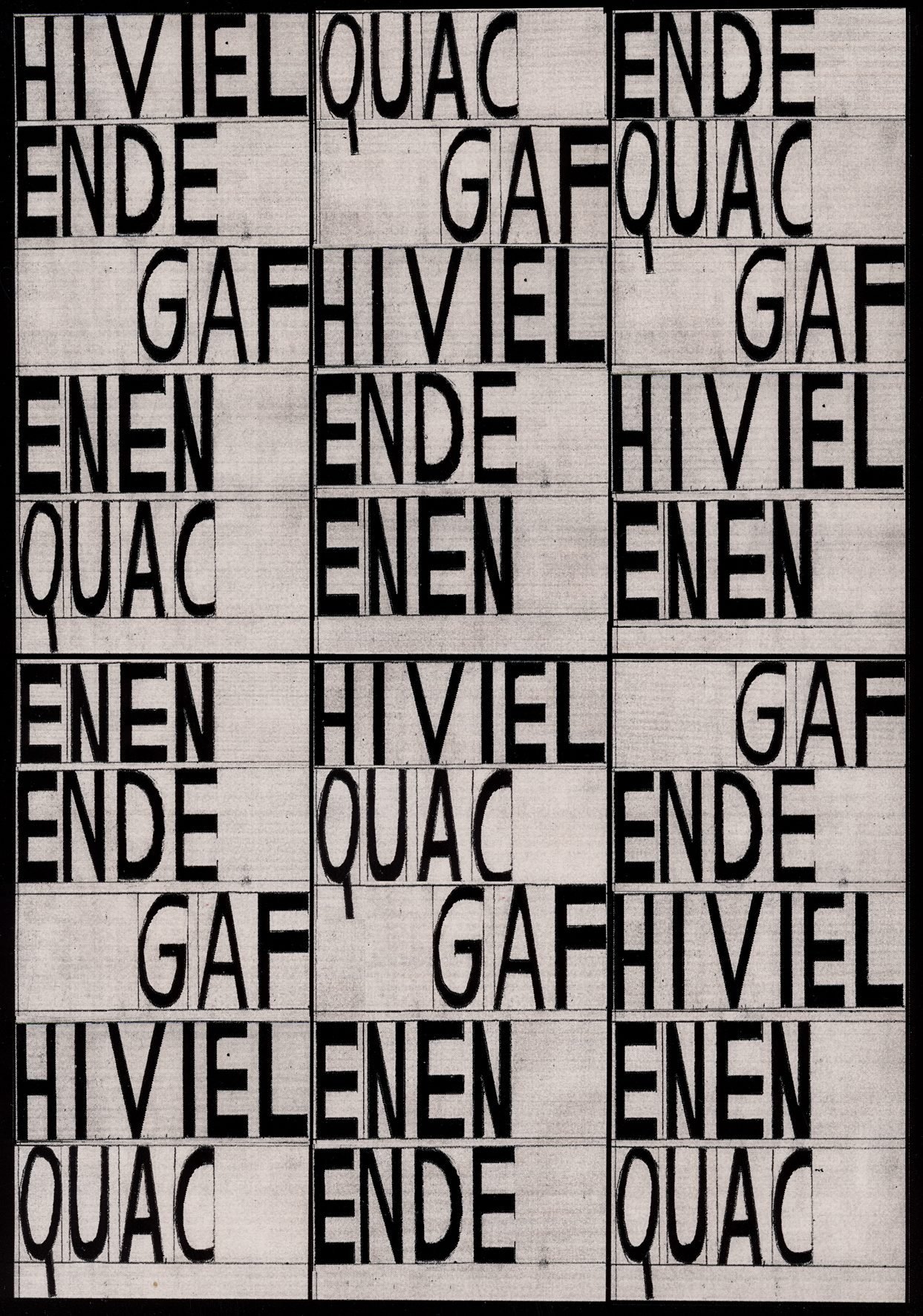
But that INVERSE element must be seen in the fact that I approached it as a draftsman. The question is: can you write with letters, with words, but as a draftsman, not as a writer or linguist? It’s all about starting to write inversely, so backwards, from right to left. Or from top to bottom. Just like you had traditions of writing from left to right, the second line from right to left. That kind of visual poetry figures. Or writing with your left hand while you are right-handed, leaving out certain consonants. Working more with those visual elements. Or purely based on sound. It was an addiction to twist letters through it. For example, shifting vowels in a certain word. That is a playful element, but I think it is dangerous because working inversely on language, unlike with images, affects the meaning and the sense, including that of the creator's framework. In that area, I have completely lost photography. As if chained in language instead of drawn (do you see the reversal of the letters?). So here too remains a practice of disturbance through the implantation of something contrary, a viral element. I simply have to trust the effectiveness of the disturbing element here.
HVC: Fascinating! If we now make a bridge to video, do you use that word art and the sound we talked about in your videos? We see four screens with moving images side by side on a flatscreen in Nodenaysteen.. Mostly repetitive images.
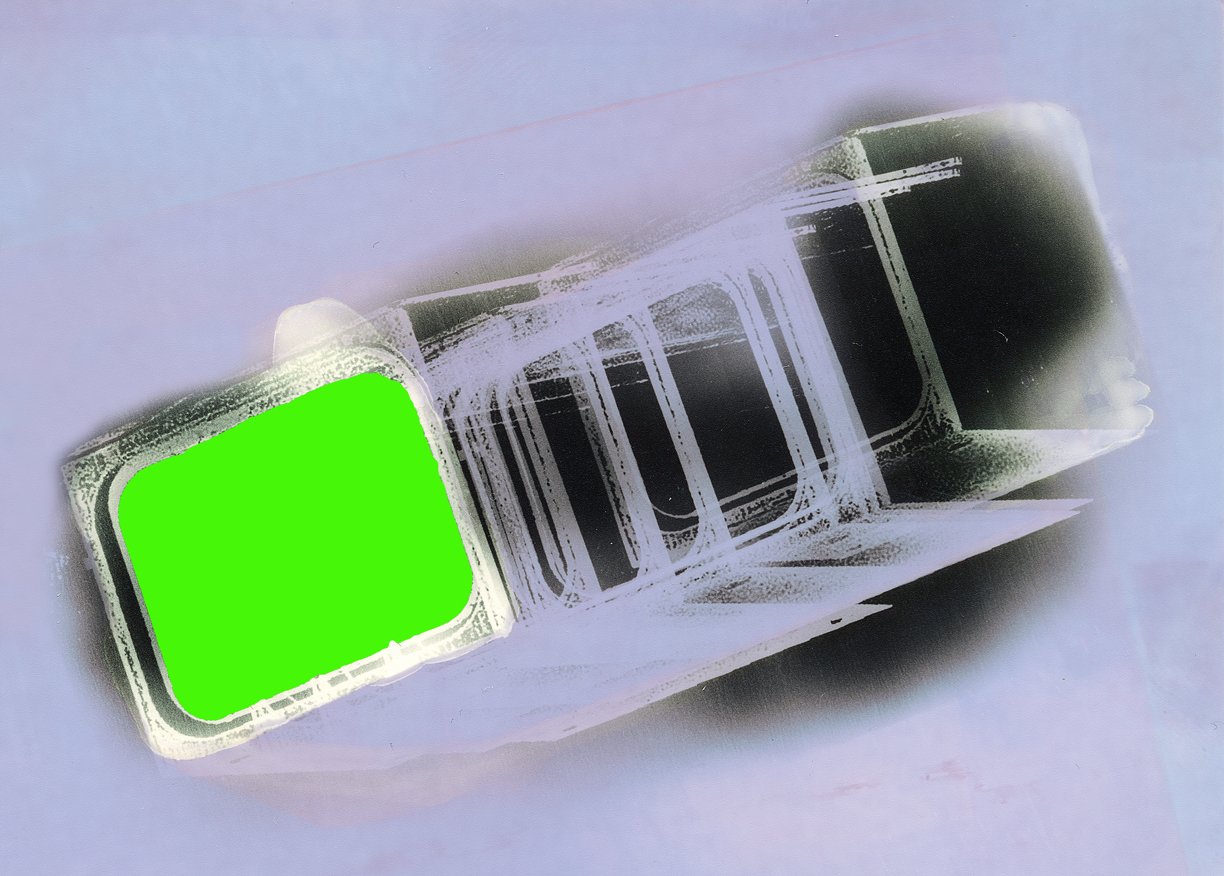
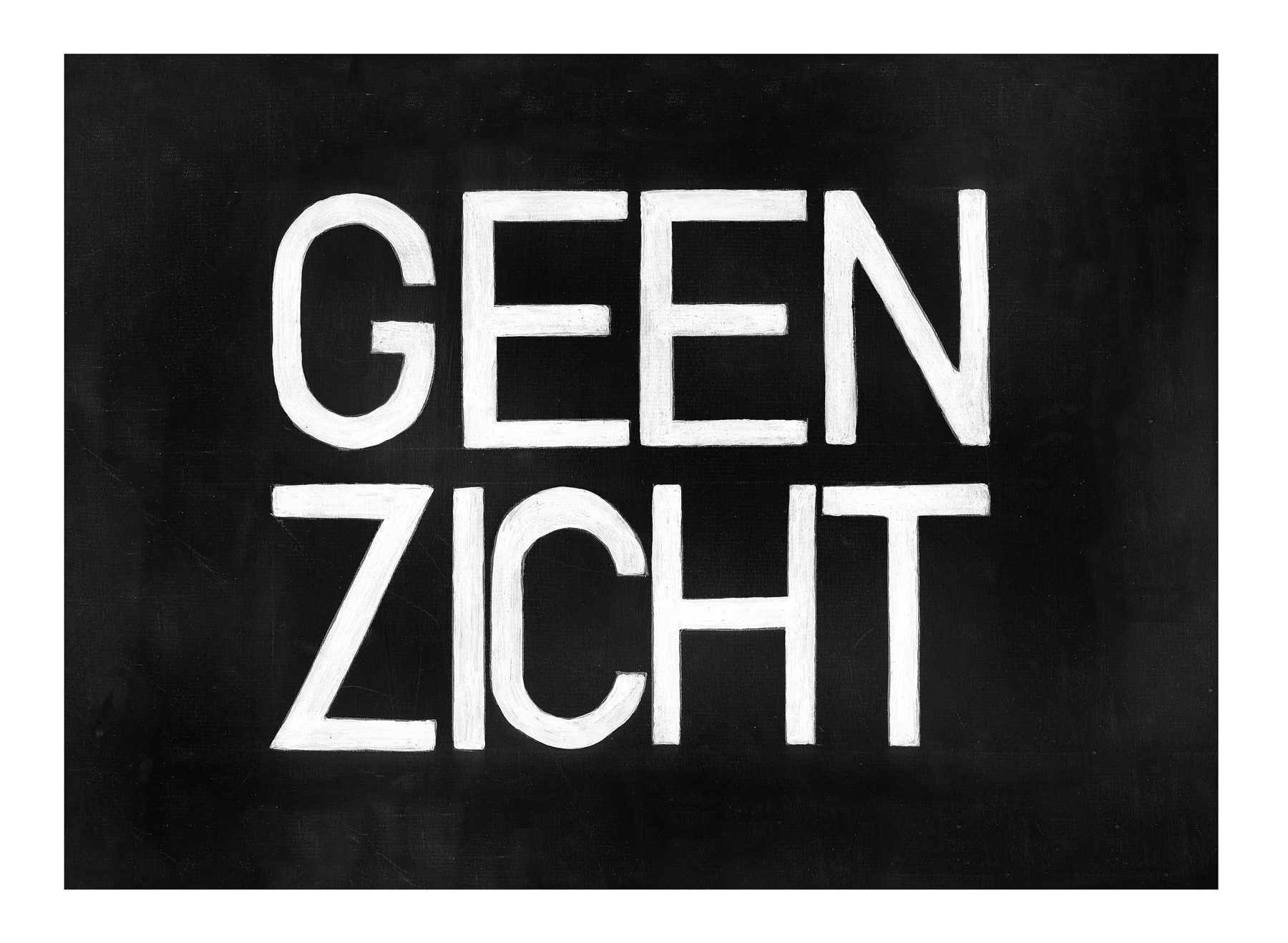
BW No. Words and audio are separate. What we see in Nodenaysteen are 32 silent or muted videos on four screens. They are “rotators,” or another working title I often give them, “screensavers.”
HVC: Should we imagine it like you receive a commission or a proposal to exhibit? That you gather images and then think: which ones fit together? For such a presentation, how do you proceed?
BW Yes, the work was actually done in advance, you know. I only work on my own commission. (laughs)
HVC: Then you indeed have to show it to the client and the viewer. You get a showcase of five by three meters, four screens... How do you approach that? Is it picking from your image bank and thinking: ‘Okay, that fits on that screen.’
BW Well, that was the question: do we work with one large screen, do we work with two large screens? But in the conception of those videos, they are actually conceived as moving paintings. The intention of those videos in themselves is to show them in endless loops on the wall. Now, there was indeed the possibility to show that. The experiment is not foreign to me. By trying something new, I discover something else. What is the gain for me now is that I asked for a number of screens. Since I often work with rotating elements, it has been a game to actually repeat that rotation in the arrangement of the monitors, in a kind of video installation where the four monitors tilt in a circular movement each time.
HVC: How did you approach this for yourself so that the passerby – whom you do not know – passes by and becomes intrigued? Do you want us to step into your world? That is different when you enter a gallery and people know which exhibition they are entering. Do you want us to be touched by the moving images? Do you want to tell something?
BW Honesty compels me to say that I did not know whether that would work at all. A video at a window in an urban environment that is already so polluted by movement, image, sound, and smell.
HVC: There by the water, the back of the thirteenth-century Pand, it’s not visually polluted. Passersby stroll calmly along the water and then see those images.
BW I think you will have to rely on the viewers who want to explore.
HVC: What do you want to add to all those images that already exist? If we were walking in Tokyo now, we would constantly see all kinds of screens where everything moves together.
BW In that area, we are completely worn down. I hope there are indeed people in the audience who, because there is a connection to a space that effectively chooses to exhibit contemporary art, there will be a movement of first stillness and then interest. From someone in the audience who makes an effort to look. In a second part of the ‘show’, I actually played a second, different montage, one that takes into account the average passing time of the passerby, estimated at 6 seconds, in the tempo of the loops.
HVC: Do you think they will see how your process is? Do you want to tell something with those images? It’s not something social or political that you are denouncing. It also doesn’t seem to be about seeking effect; form for the sake of form, l’art pour l’art is the most important.
BW It’s the absurdity of senseless, causeless, and aimless movement, the simplicity, beauty, and poetry of it. For me, it’s really a video movement game. What strikes me time and again, both recently at Stroom and at Bring Your Beamer in Ghent, is that I really enjoy it when children watch with fascination. Stroom is the brewery of Carl Uytterhaegen, who also has a small exhibition space in his microbrewery.
HVC: There’s even some of your work on one of their beautiful (art) beer cans.
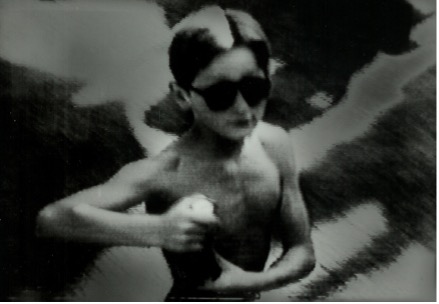
BW How those young children react is the effect I want to achieve. On the opening night, when Paul (from Nodenaysteen) and I were done with our work, I pointed it out to him: ‘Look, there’s a little boy about five or six years old who is stopping his mother to look. And the mother points out a ball that is spinning. That’s one of the things I try. What I want to show is the infantile pleasure of playing with the object. It’s all about, if you can get someone from the audience to make the effort to surrender to the silliness of the movement, that he suddenly finds himself in a situation where he also feels the liveliness of such a simple movement. Like a ping pong ball bouncing on a table. That absolute, it comes from nowhere and goes nowhere and it repeats itself constantly and it’s beautiful. And actually that you get into that enchantment of something that can be so beautiful from a silly movement; like a leaf spinning in the wind. That’s what my oeuvre is about. Ultimately, those works also originated from photography; the videos are still images that have been re-animated. That is for me the logic of the circle that returns to the beginning in the darkroom. Where I could actually open my moment again by not fixing it and letting the moment last endlessly. I found that back in video by pulling still photos open again, giving the moment back – at a different speed, however – to the endless movement of our reality.
HVC: When I look at your Instagram page, there’s for example The mirror would do well to reflect a little more before sending us back our image.
BW It’s a quote from Lacan. Lately, I’ve been calling what I do collage-video. Especially when I’m working with video software, I notice that it often involves building: that simple dynamic, in which one simple movement is assigned to the lower left corner, for example. A video sometimes consists of fifty videos, the time there has been quite significantly increased.
HVC: Yes, but your social media role reminds me of the walls behind Depeche Mode, Kraftwerk, Einstürzende Neubauten, Goose, etc. They all have – how should I put it? – that typical, repetitive quality that I also find in your images. You are trying to reach the unreachable, because you go deep, right? Are you working on it every day?
BW 24/7, Hilde.
HVC: What are you waiting for? For applause from others? There was no social media in the past, so you could get 'applause', likes, every day through your diary, because you could 'show' it.
BW There is another gain from presenting work in a 3D environment. A post on Instagram is something different than actually engaging with the technicality of your equipment, hanging a monitor on the wall, all that without DVDs, USBs, etc. The placement in space is an art in itself. On Instagram, you cannot possibly show a video simultaneously in front of and behind you. You have very different possibilities to build worlds, where you can also play, confronting video with photography, video with text. In which I see possibilities to combine those elements.
HVC: Creativity is the residue of wasted time. Does that resonate with you? In a way, you are 'wasting' time to create something beautiful, if I may put it that way. In my eyes, you are 'playing'. Einstein also said: 'Logic takes you from A to B, imagination takes you everywhere.' You are almost returning to the core: line, plane, circle. Like the child who noticed and could only think: 'Wow.' Perhaps we have lost this too much as adults?
HVC: Karel Appel said he did not paint, but that it painted him. I feel that with you too: you want to create and then preferably show it. But nowadays we have Facebook, Instagram, whatever. It doesn't even have to be presented through the regular exhibition space to the viewing public anymore.
BW Good question. Heidegger once gave a seminar on that Langeweile, boredom. In fact, it is a luxurious position, but you have to know how to obtain it, and once you have it, you have to know how to endure and handle it. It is a big task to get the parameters right in which you can create. You have to make space for yourself. Perhaps that is the biggest task. But once you are there, confronting yourself with boredom, uselessness, and aimlessness, then you can possibly start to play. Of course, you also have to arm yourself against the power of your device, so you don't become its slave. What I always did was use things for purposes they were not made for. And the computer, or more broadly the screen, is indeed an addiction. If I couldn't do what I do, I wonder if I would wither away like a catatonic, sitting in my chair, suffering from chronic indigestion from overeating all that material that flows out of the screen.
HVC: Do you actually make contemporary art?
BW It doesn't matter. I often say that I haven't gotten past the 19th century (laughs). At one point, I had the limited space of my home environment and managed to capture that. That's why I stopped photographing. Because my only subject was 'television'. Then I was just watching television: the news, CNN, but also movies, but in fact, you are watching it in an apathetic manner. I set my camera on a tripod and photographed and filmed elements that I saw passing by. For me, it is a kind of extreme magnification of the position we find ourselves in concerning the media.
HVC: Can you still watch TV 'normally'?
BW No. And think of that scene in the cult film A Requiem for a Dream. It comes down to a kind of home situation where those people watch the same game show every day. On the television, we repeatedly see the quote: We have a winner! We have a winner! The game element is important for me to undo the deadening effect of television. I have a holy fear of being delivered to the consuming, devouring power of those things. And to be entertained by them. Because then I feel like a slave to those things.
By making films myself, I feel that I can arm myself against that. Mind you, I take it very seriously. On one hand, there is the poetic emotion through the possibilities of video; I seek beauty and believe in the poetic potential of moving images. But still, there is also a gut feeling that says: these are shitty movies for shitty people on shitty screens on shitty platforms, shitty shitty shitty!
HVC: I think I will never look at my TV the same way again. You are an intellectual, if I may say so. You could just as well create intellectual stuff, yet you make simple drawings. You reduce the whole world to a sphere or plane, with some moving back-and-forth elements. While you could just as easily create elite art. With your photography, you might have ended up in a different segment of art with a lot of fanfare and expensive intellectual texts.
BW I have an aversion to art that pretends to offer some kind of answer to certain societal problems. I think art should just be. In the simplicity of infantile play.
HVC: That's chic. You also position yourself vulnerably. You have worked for twenty-five years around all this to get to the essence.
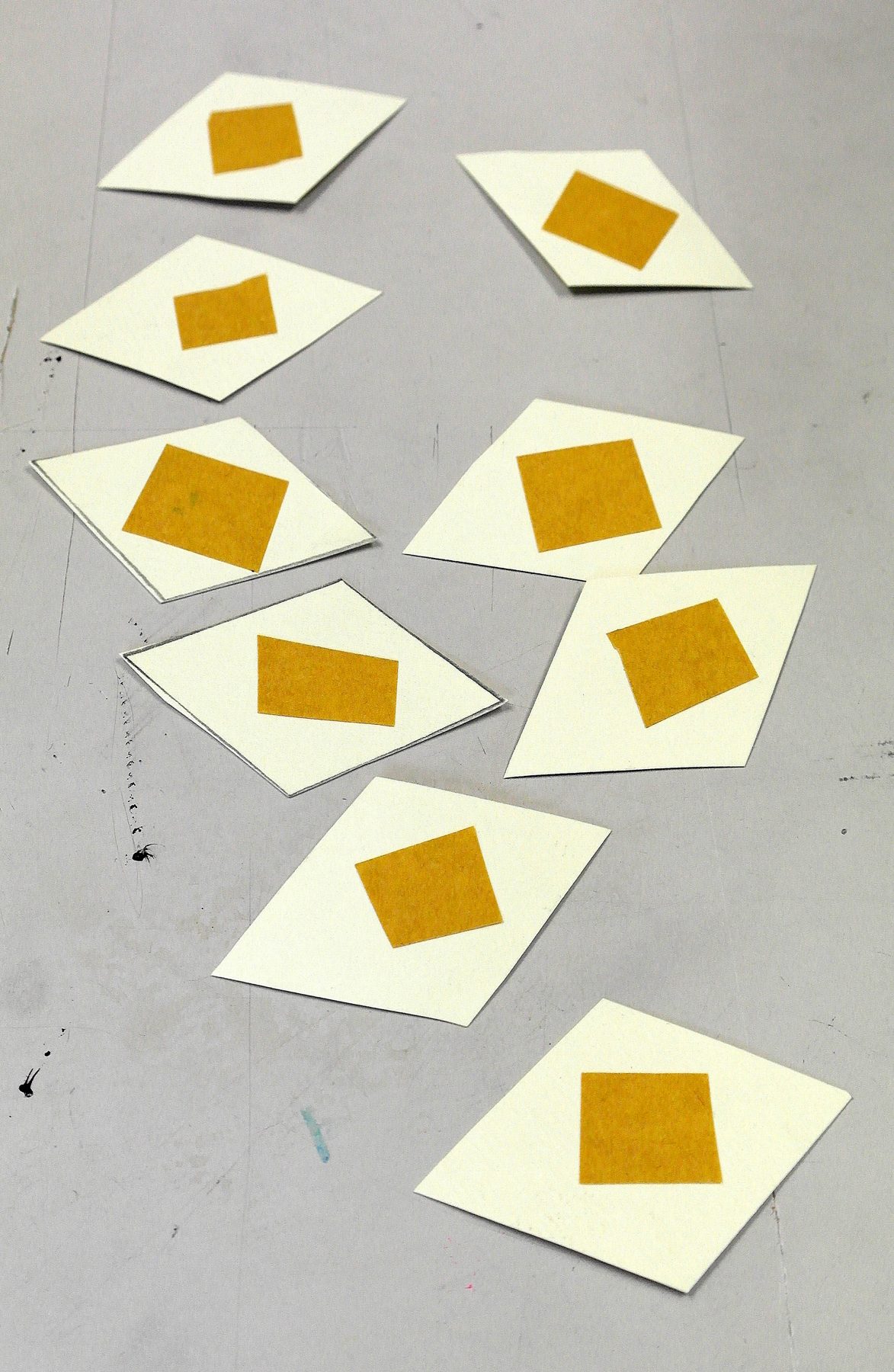
BW Maybe I have an interesting point to end on: at this moment, I have started a new project, in which the only thing I have left is the edge of the image. I am only making the edge, the frames. If you see the image as a rectangle or square, the only thing you have left is the edge, from which I actually cut the image away from the plane. I only keep a frame. They are essentially cardboard works; you could call them sculptures. The only thing I make are frames in the ratios 16-9, 9-16, and 4-3. The typical cinematic ratio as the technique has given us, I am now working out in small. I have time! And I am triggered again by a starting point.
HVC: Even more back to basics. And seeing your time as a strength! To think about! Actually, you are a bit away from the digital and working with your hands, to put it simply. But then you will photograph those frames again, I think. Will they then become photos?
BW That is an interesting question!
HVC: If you put them on your social media, they are flat surfaces again. Interesting practice you have! By the way, a tip for everyone: follow Björn Wandels on Instagram!
BW At your own risk! (laughs)
HVC: And check out these videos, people!
@Hilde Van Canneyt
www.nodenaysteen.
https://www.instagram.com/bjorn_wandels/
https://bemerkungenuberdiefarben.wordpress.com/