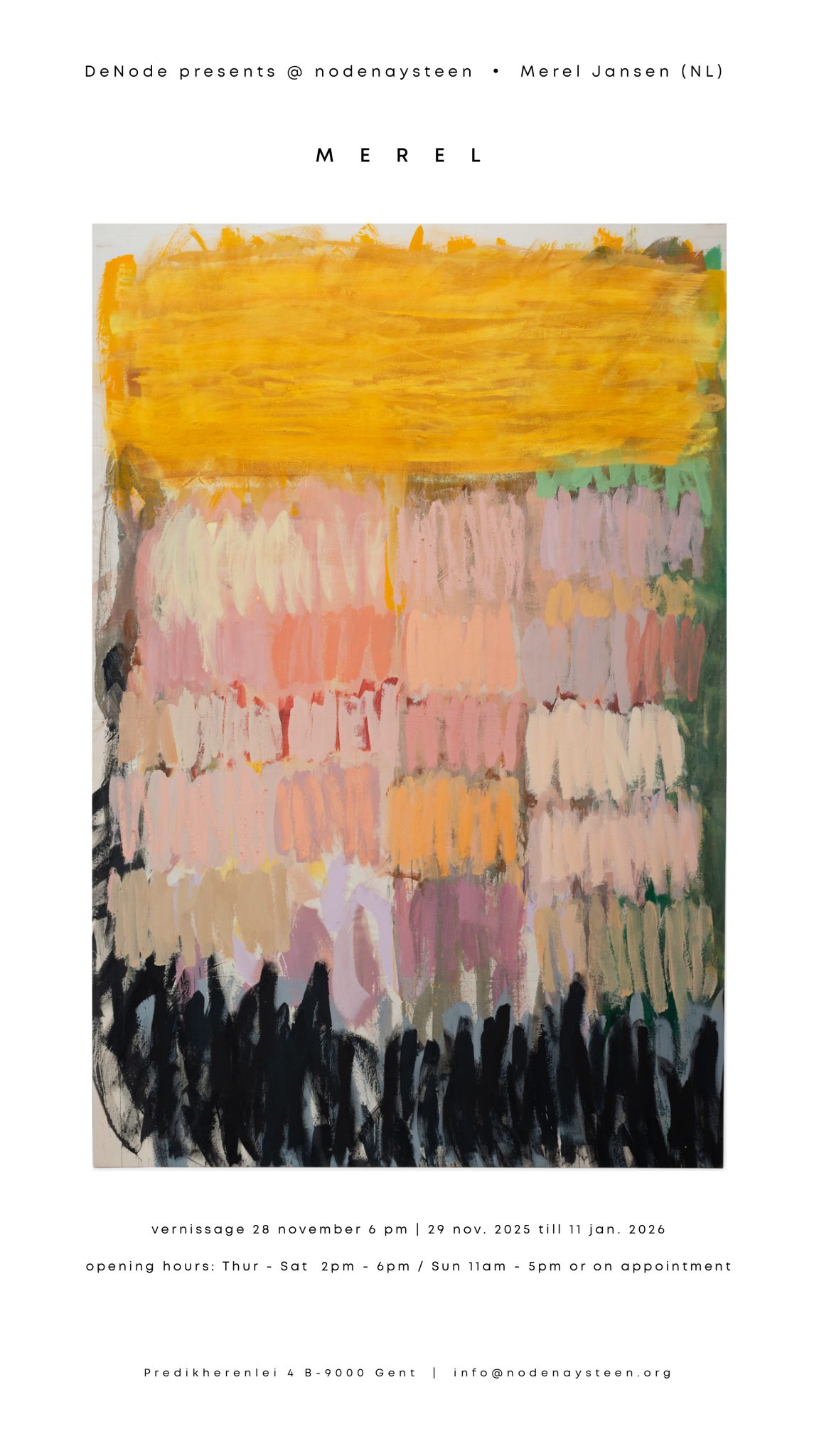
DeNode presents@Nodenaysteen: Merel Jansen (NL) Predikherenlei 4, 9000 Ghent. Last weekend to see the show! January 10 & 11, 2026. Ghent, autumn 2025 INTERVIEW WITH MEREL JANSEN (°1990)
Hilde Van Canneyt (HVC): Dear Merel, I got to know you at Nodenaysteen in Ghent, where you are essentially presenting a duo-exhibition with yourself: the gallery has recently doubled with an extra space, and you are showing both figurative and abstract work. But before we go there, let’s ‘rewind’ a bit. Were you constantly drawing and crafting as a child? Or did your parents take you to museums? Or was your father perhaps a famous artist? (winks)
Merel Jansen (MJ): (laughs) We visited very few museums. It came very strongly from within myself. My parents were creative, though: there was always material at home, and anything was possible. It was okay to get messy, the crafting clutter could stay, experimenting was natural. But the question of what I wanted to become never really existed; it was always clear. And at home, it was only encouraged. I wanted to discover it for myself, not through museums or art history. That came later. For example, how little did I know about Christian art? While it is, of course, ubiquitous in Belgium! I eventually found a lot of inspiration there. Art history fascinates me immensely; I really started filling my backpack. I studied at the AKI ArtEZ Academy of Art and Design in Enschede, a fantastic academy where you get a lot of freedom. That meant a lot of experimentation but less theoretical focus. I graduated when I was 21. Almost all my work was bought up à la minute by AkzoNobel; it was just bam. Galleries showed interest, while I had grown up with the idea that you shouldn’t expect too much from an artist's life. But from the day I received my diploma, things actually went incredibly well. I was totally unprepared for that, and certainly not for life after the academy.
I moved back in with my parents and set up a studio in the attic. From that moment on, it was all about making, making, making. I worked with textiles, gained attention and publicity, but at the same time, I was deeply unhappy because I was no longer experimenting. Suddenly, it became serious: this is what you do. While my youth and time at the academy were all about openness, learning, and failing. I felt constrained, as if I was stuck, because people expected portraits with watercolor on canvas from me. That’s when I actually fled to Belgium (laughs). I saw that there was a textile program and thought: okay, what can I discover there? That’s how I ended up at Sint-Lucas Ghent. But there, I quickly found that I was too free-spirited and too unconventional for the academic framework. The teachers didn’t know what to do with me, and vice versa. The school system was very different from the Netherlands, and I found it hard to find my place there. I thought Ghent was fantastic, but not the school. But that resistance did help me to bite into painting again.
Through yoga, I met a friend who was studying painting at Sint-Lucas. I remember walking into the studio, smelling turpentine, and thinking: what on earth am I doing? I need to be here! I returned to Arnhem, where I completed my master’s degree. We’re talking 2017. In the meantime, I was offered a job as a technical advisor at a large paint factory – Royal Talens – and that’s how it continued.
HVC: Through that friend Ilona, you came into contact with the team at Nodenaysteen, and that during the Venice Biennale, mind you. Let’s stay in 2017 for a moment.
MJ I continued with textiles for a short while. Then I got into a relationship with an old classmate from the Netherlands, also a painter. He said: “Merel, what are you actually doing? You returned to paint, and now you’re back in textiles!” We were in Paris at the time, and I was literally feasting on all the painting I saw there. That was a turning point. I thought: okay, I’ll rent a studio again and start painting again. I dove back into art history, partly due to my stay in Belgium and my fascination with the Flemish primitives. I don’t necessarily find that art beautiful, but the stories are incredibly rich. Everything in it fascinates me. That’s how I started a reinterpretation of the Ghent Altarpiece, just to start modestly (laughs).
HVC: Did that initiative come entirely from you, or was it a commission?
MJ It was an inner urgency. It just had to happen. Who it was for didn’t matter much. I think I have something to add. That sounds arrogant, but I want to express it as fully as possible. After that, I’ll see who wants to show it.
HVC: Brave! I took a peek at your website. Up until 2023, we see portraits, both individually and in groups. You can see that you had ‘training’ in the sense of how you resolved the faces, approached the suggestive background, etc. Although you already told me that you absolutely didn’t learn to paint at the academy; you had to figure that out for yourself. You definitely had and still have that good painterly swing in you. I suspect it’s different working on ‘people’ than diving into the depths of the abstract entirely from yourself. Is it now different going to your studio than when you were solely working figuratively? Now you don’t have those characters in your head anymore. You don’t think: ‘Ah, I still need to finish that cloak and that abyss, and oh yes, that nose isn’t quite right.’
MJ But I think I really wanted to keep the people around me. Tineke, my best friend for a long time, is also hanging in the gallery. Because of my many moves, I was always afraid of losing people.
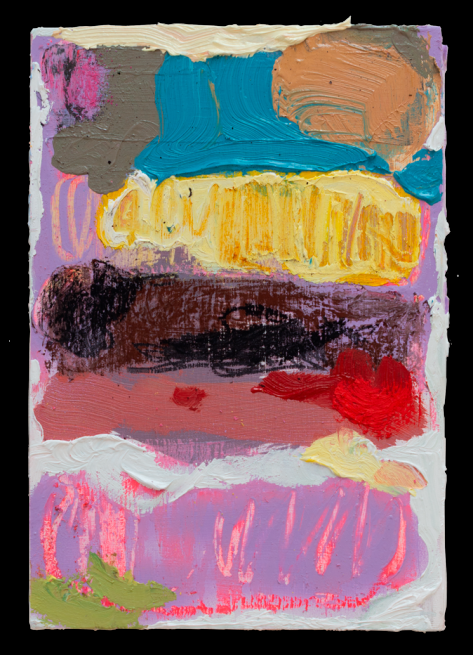
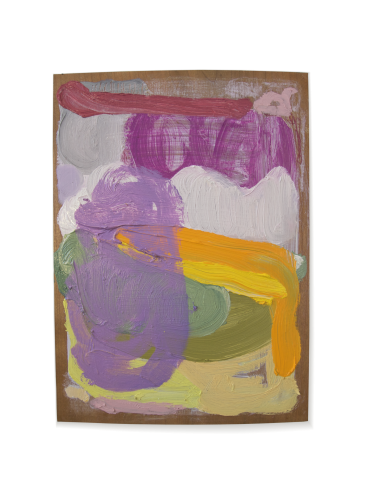
HVC: It requires more inner strength now, I suspect. The path is tougher, but in the end, you – and your work – come out stronger. When the work is buzzing, the colors and forms match – match is a bad word – I would say vibrate, or when they fight for a place at the front and also win and achieve an ‘uneven balance’. Now you go to your studio, hang up some canvases, put on some good music, and dive right in. Or is it the opposite, approaching the canvas very deliberately, leaving, returning, etc...?
MJ It’s almost a kind of triathlon. I do indeed put on music that fits for me; how I feel at that moment. That is very decisive for how I start. But I also know that it can ultimately be something completely different from what I initially had in my head. It’s mainly about getting into that flow and being able to release a kind of energy in it and then continue from there. Once I have the first part of the triathlon, I really need to stop for a moment, catch my breath, and think: okay, but what will the next part be? And what after that? It can take weeks, but it’s a stacking of all quite physical works, actually.
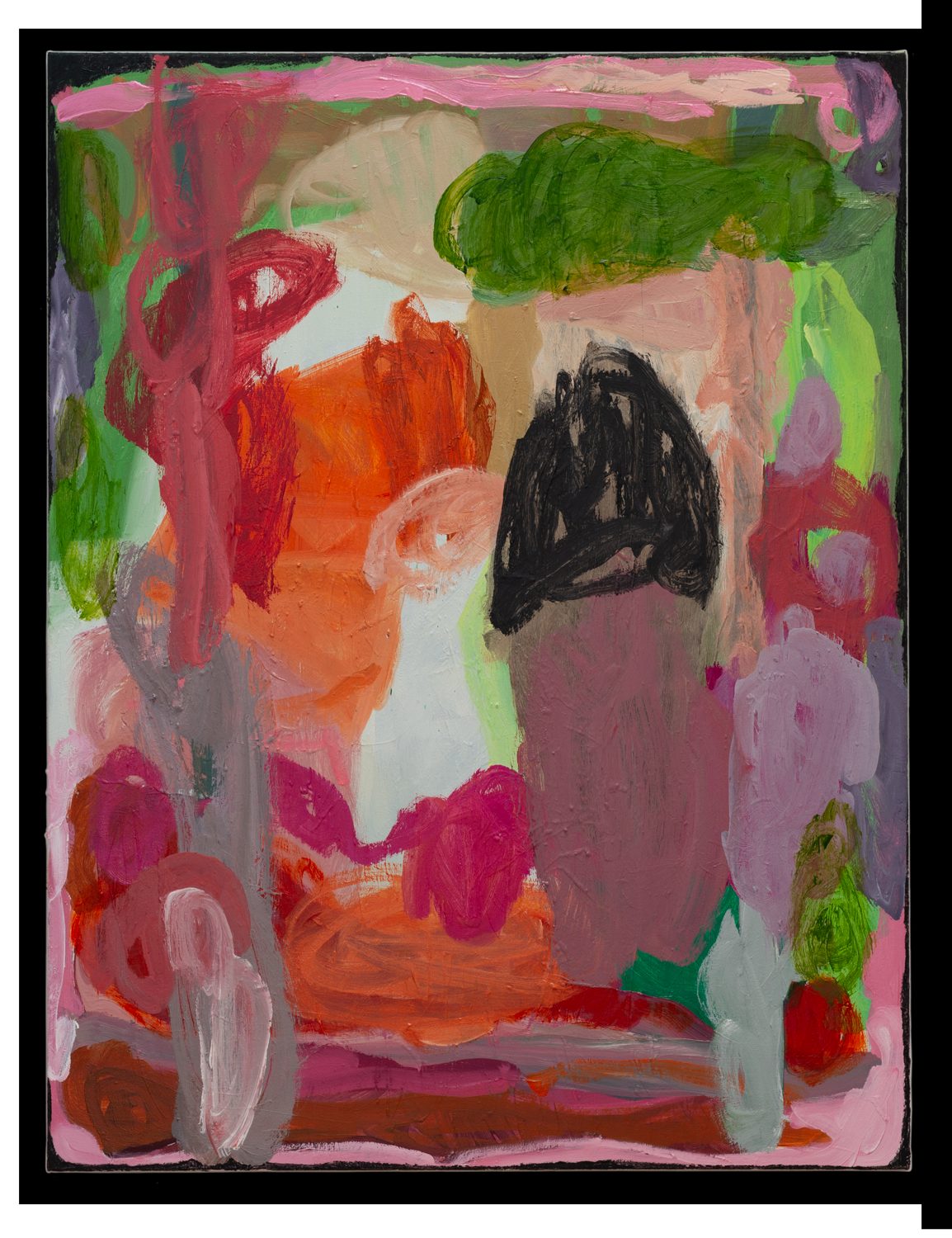
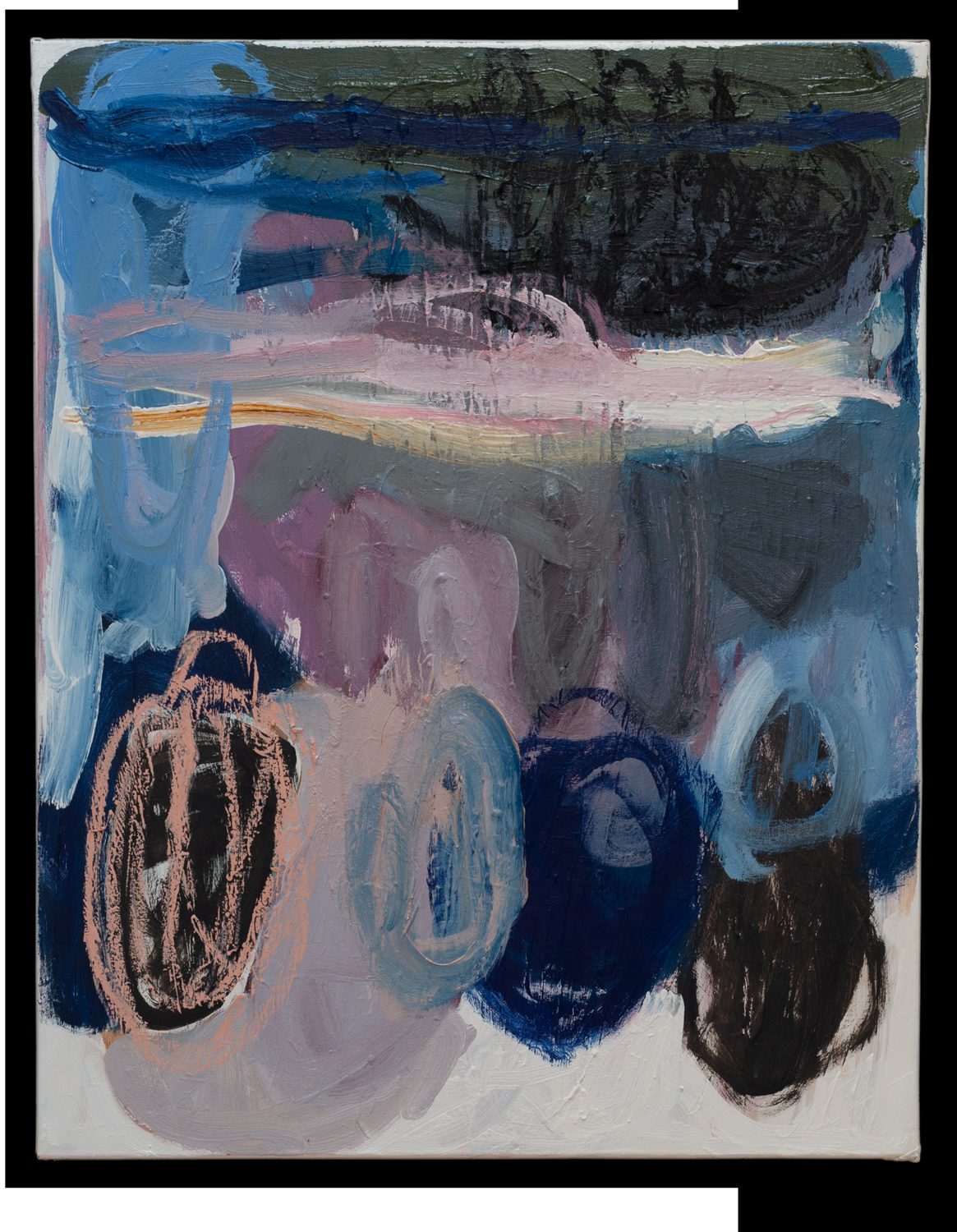
HVC: When at some point you think in euphoria: “It’s finished!”, do you consciously let the painting rest for a night before ‘signing it off’ as ‘finished’? Do you let it breathe for a while, like we let wine breathe to achieve its proper flavor?
MJ Yes. Sometimes I think afterwards: an hour ago it was better. Then I try to return. When something is finished, I need to see it multiple days in a row. It really has to click.
HVC: Is the studio a place that attracts you, or do you have to push yourself to go there?
MJ I HAVE to be there. Even if I feel bad, am sick, or have a hangover. Just the possibility that something can happen is enough. That there is movement, in my head and in the work.
HVC: Just being present, so as not to miss the moment. It’s also about being physically in that place. There’s a quote regarding creativity; well, that you just have to sit down in a chair and start. I have to glue myself to my chair or nothing happens. (laughs) And for you artists, it’s often about being in the studio and walking around, feeling, looking, tidying up, and occasionally getting behind that easel. (winks) It’s about being there so as not to miss ‘it’.
MJ Some works wouldn’t have existed if I hadn’t spent that time in the studio.
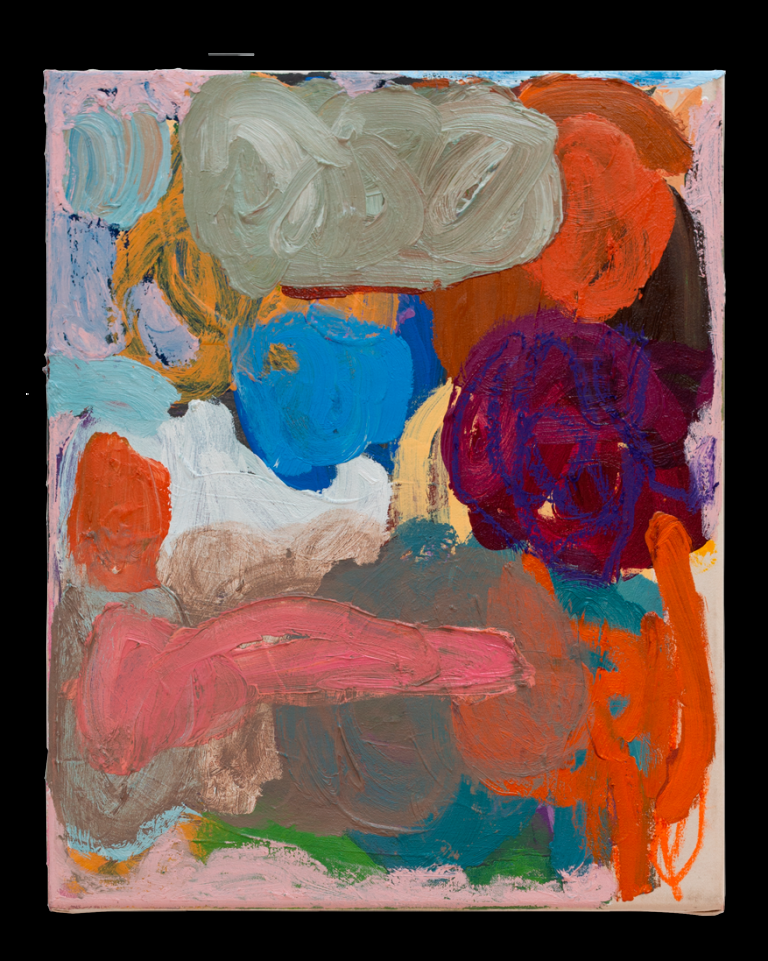
HVC: Your current abstract works vary in size. Is that intuitive?
MJ The idea is always the most important. No matter how I feel, I commit to it. Art takes precedence. I prefer not to paint with a hangover, but then I would blame myself – it would just result in bad work. So I go big (laughs). In any case, an idea starts with the question of a certain size, but the small or large format is actually not the issue. The choice is indeed emotional: what must be, must be…
HVC: Do you have a (social) side job besides your (solitude) painting?
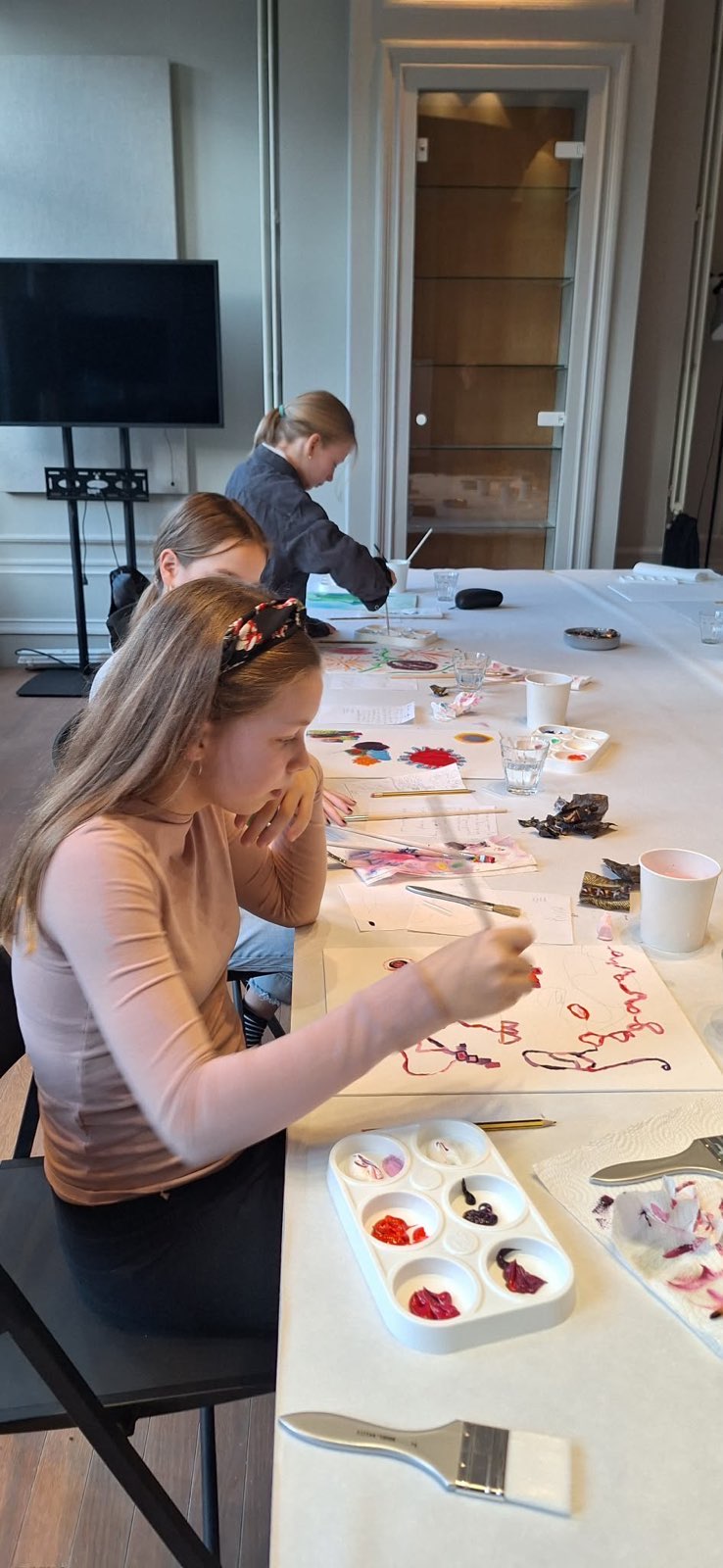
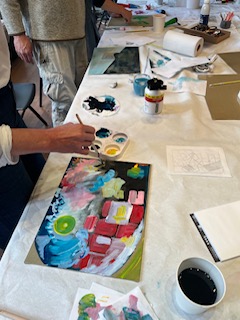
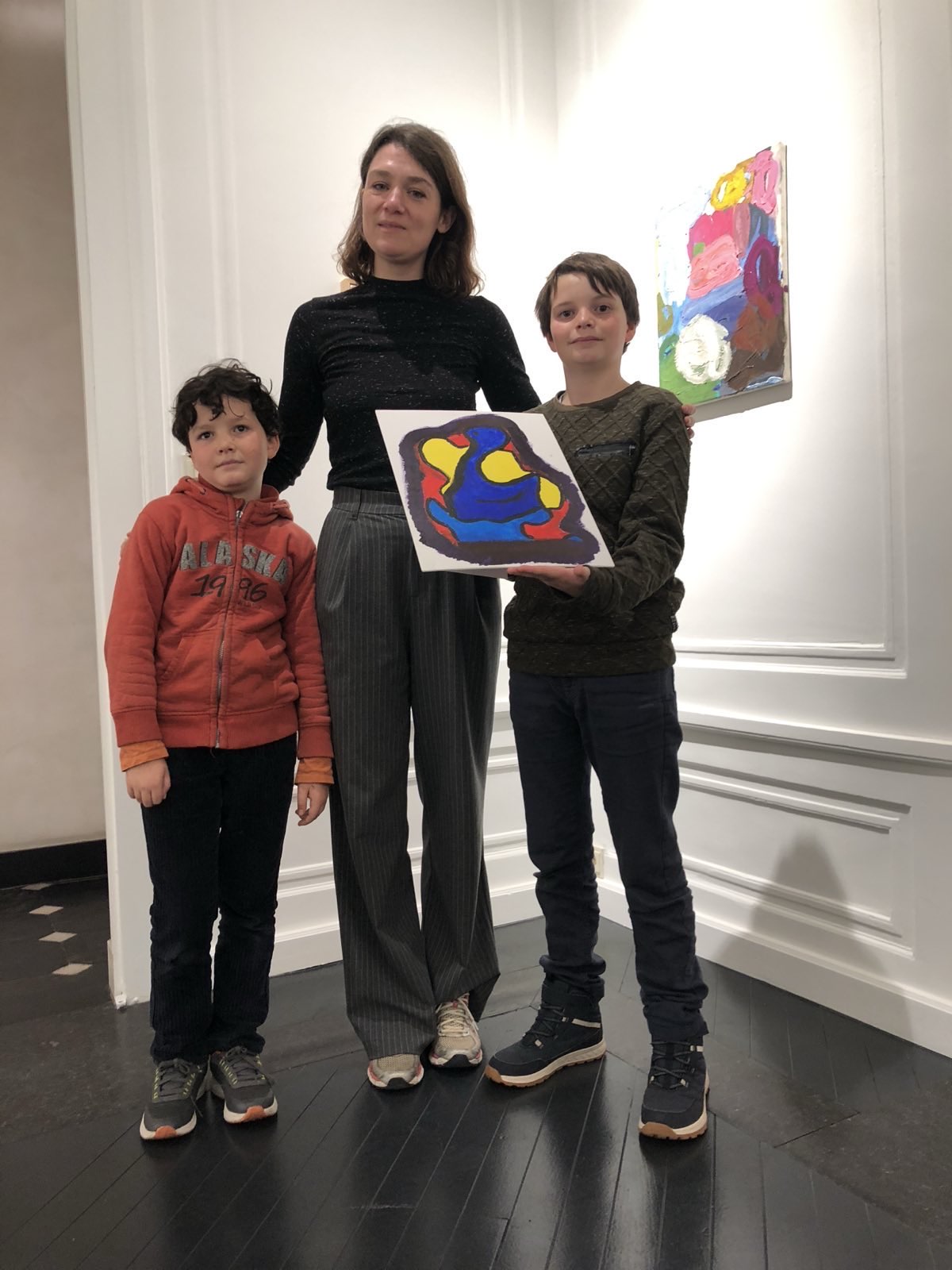
MJ Sometimes yes. I am always alone in my studio. Always. And I really love people, so I occasionally give painting lessons, which gives me some input in terms of energy. Aside from the money you earn from it, it's nice to break out of this bubble for a moment, otherwise it becomes your world. It has to be something you can step out of. That's why I don't draw or paint at home; that's really for sleeping, eating, and cuddling with the cat.
HVC: I’ll take a look at your titles: Kuiltje, Up, Zij, Zand erover, Misschien groeit het wel uit tot iets anders, Vanzelf, Speeltuin, Hoeft niet,… You add the titles afterwards. But actually, you know when you start painting who or what you are painting about, even if you don’t really convey a message to us viewers. Titles can guide us or throw us off balance. Or with some artists: reveal too much.
MJ That's right! I somewhat hope so. I have crazy titles that say nothing. I actually want to bring everyone from one wrong foot to the other. (laughs) I also don’t want to pin people down, but let them do. Nowadays, we are bombarded with images and (fake) news. What is still real? And what should you believe? Which side are you on? The reason I turned to abstraction is to return to our basis, to what is REAL: our (gut) feeling that we can trust; our experiences and visions. What truth is, is something different for everyone, and that can (and must!) exist. That is what I want to put on the canvas, and may it be an invitation to engage with color, form, and composition yourself.
HVC: Noted! (winks) Good art is for me just as much the art of doubt, failure, freedom. You clearly also bring beauty with your work; the aesthetic execution is important.
MJ That's true.
HVC: Since you started drawing, you feel, since you’ve been working abstractly, closest to yourself. Every time you work on your canvas, a surprise emerges; which makes it interesting for you as well. That vibration with those colors is for you the most honest. I find it easy to talk about ‘a style’, but actually, it’s not a ‘style’, rather a handwriting. Because before you know it, it can also become a ‘little style’. Just like art can become a ‘little trick’. Your paintings are also not a tentacle to the outside world, to what lives objectively: politics, ecology, the suffering of the world. They are not mirrors of the world.
MJ As an artist, you are quite a sponge. You pick up everything that exists, and that influences my painting. What exactly, that’s my new thought: to what extent does my environment influence my painting? I mean my literal landscape, also the light. It’s of course a well-worn idea of what influence light has on your painting. I really don’t know for myself; I’ve always painted in the Netherlands. How would it be if I eat different things, see different people and different landscapes? I always want to keep doing things I can’t do yet. In three years, it might be something different, but for now, I’m still happily busy.
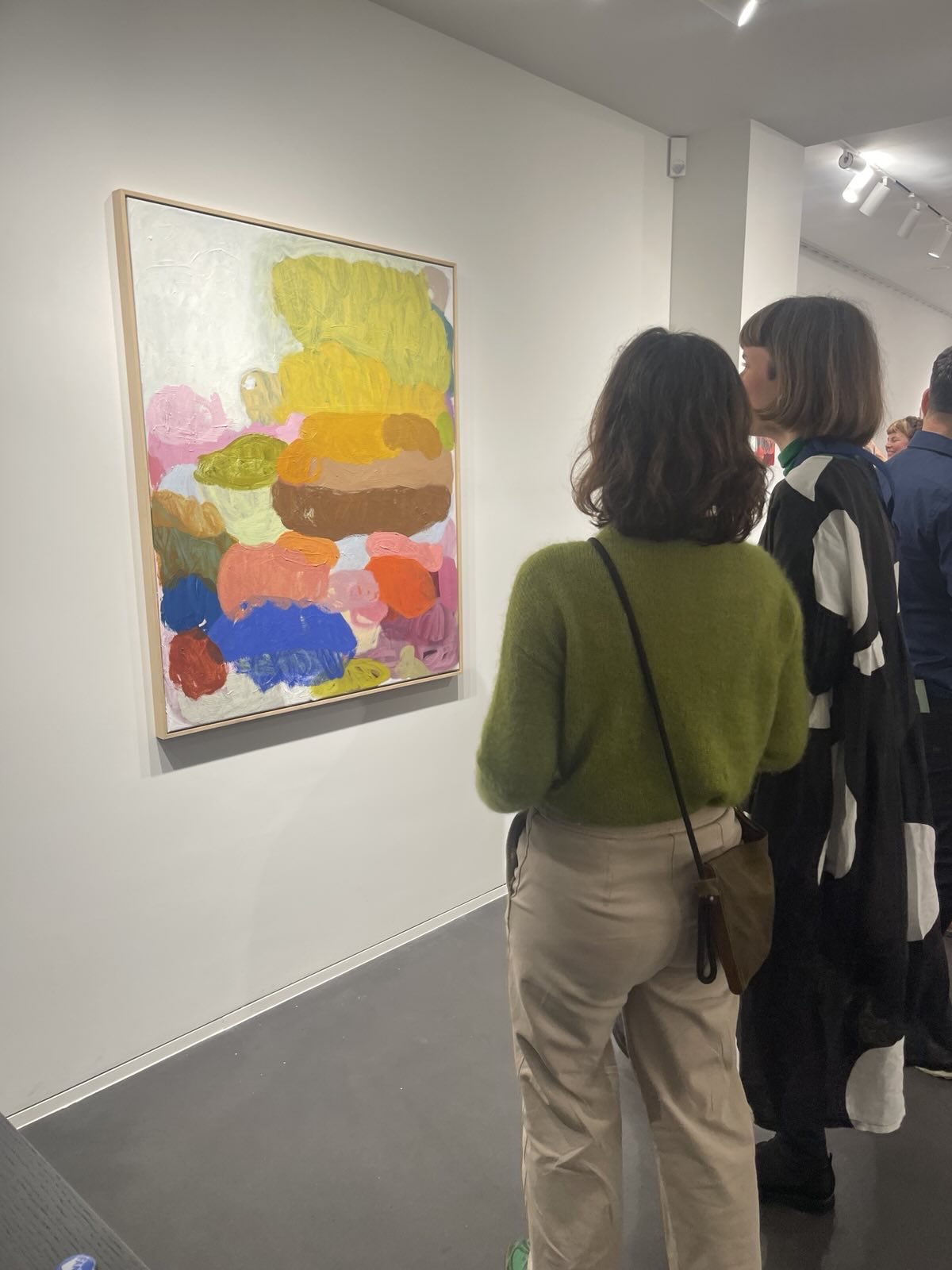
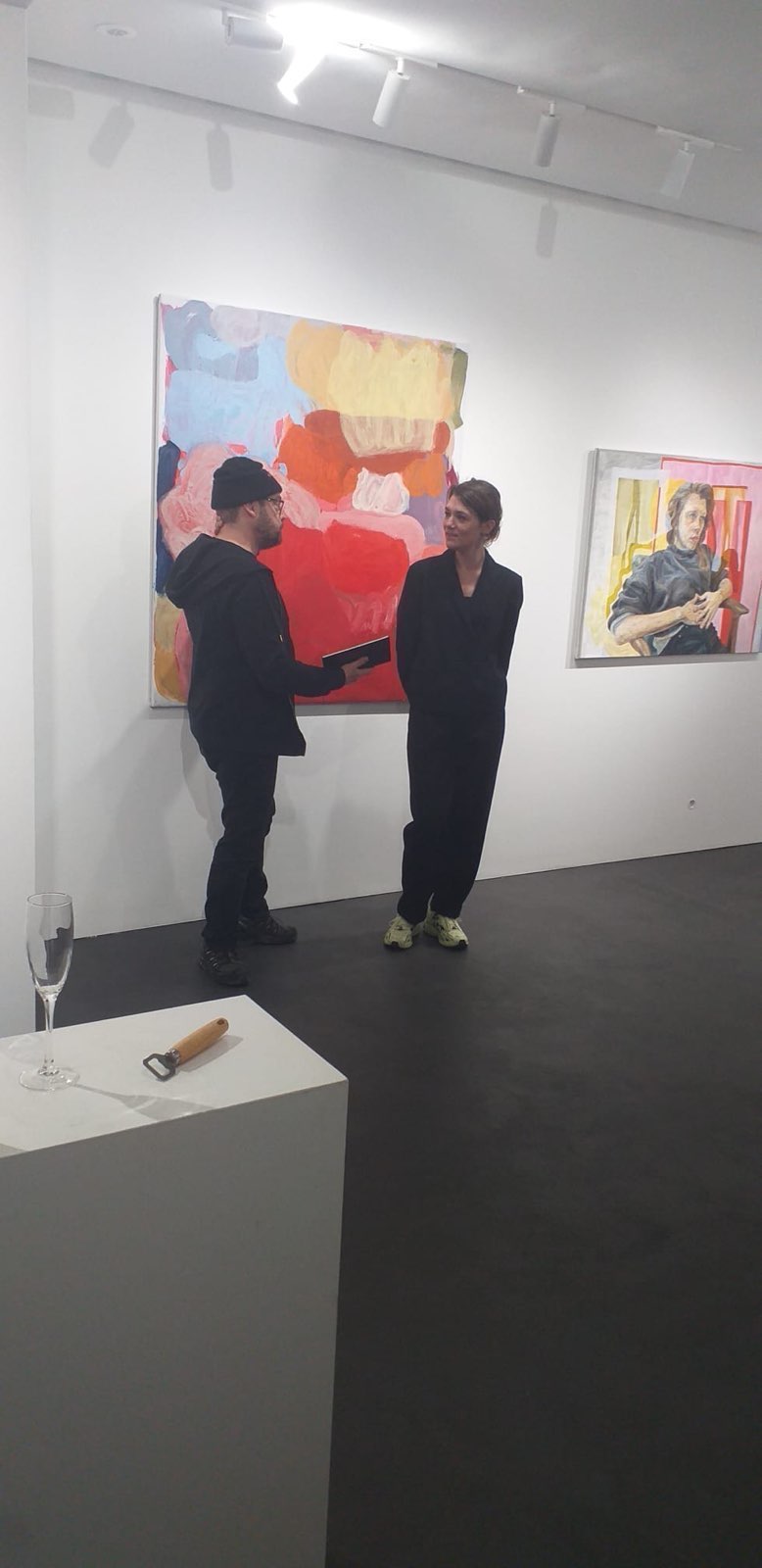
HVC: For you, it’s all fresh. And now with your solo in Nodenaysteen, you hear a lot of feedback. You can see art on a website or social media, but it still remains (thankfully) something that people have to come out of their homes to see, enjoy – or become annoyed, that’s fine too, as long as we experience it physically. Just like you want to experience a live concert or see a play from a red dusty chair where the audience likes to smell the sweat of the actors. Does it remain a vulnerable thing for you when you have an opening coming up? People are looking at your work for the first time and – before or after – at you. (winks) And a judgment is always lurking around the corner.
MJ I stand so firmly behind it that I’m okay with it if people don’t like it; at least it does ‘something’ to them. “I find it ugly,” I also find very interesting. I was recently at S.M.A.K. and I found it terrible there. That’s also part of art. It doesn’t always have to please, to be beautiful. The worst thing for me would be if people say: “I don’t know what I think of it.” Now, if you think it’s completely nothing, I find that equally interesting because it says so much about someone. I also enjoy taking or giving art courses: nothing is wrong! Because what you think and see and feel is really pure. Don’t let anyone tell you it’s wrong! That’s how I’ve worked too. If I see blue and green together, I feel like something has to be added; I can’t explain it, but it has to be, and I only stop when it feels right to me. And if someone else says that it doesn’t fit, then that’s someone else’s opinion and not mine. With a portrait, it’s different. That’s more technical.
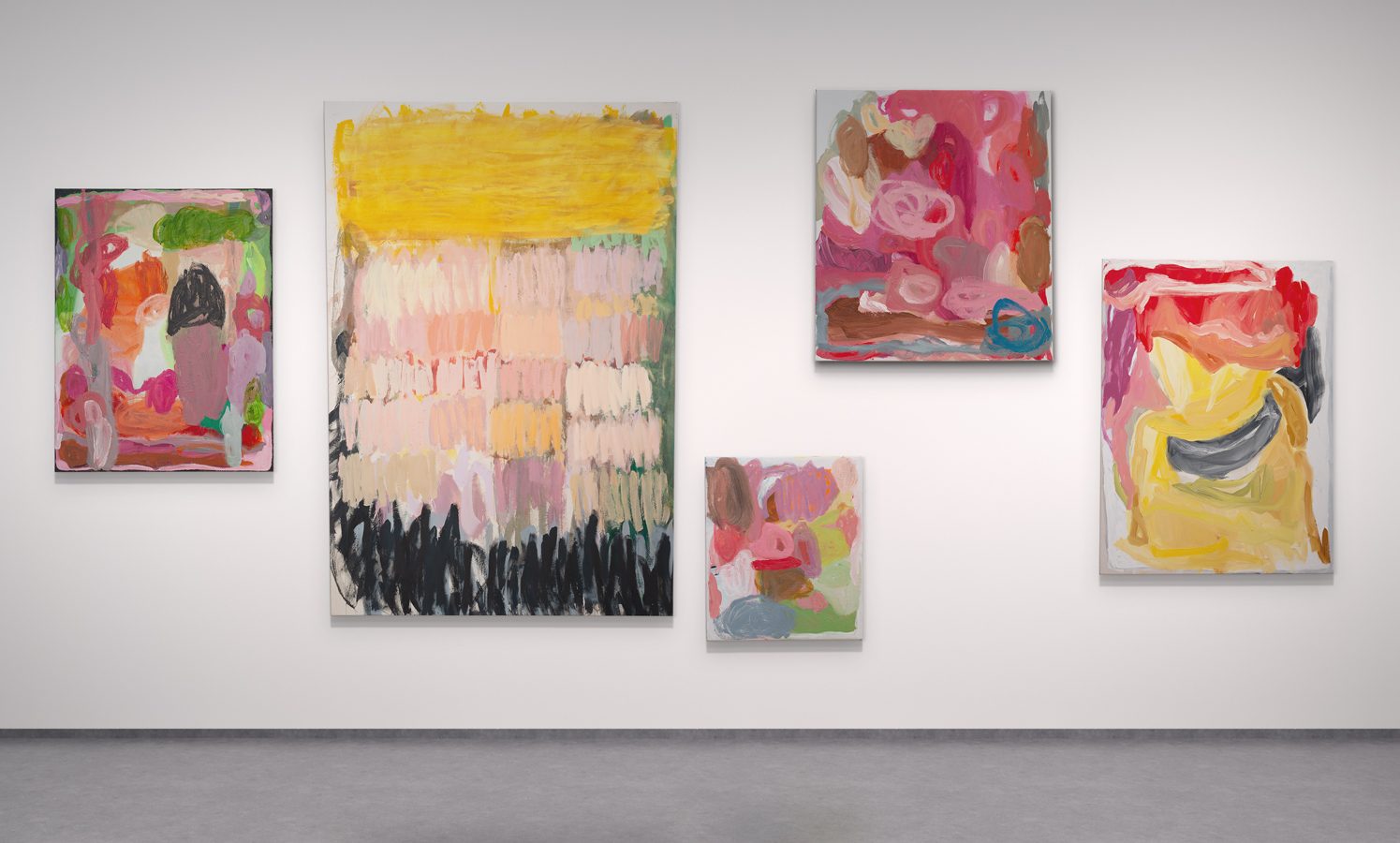
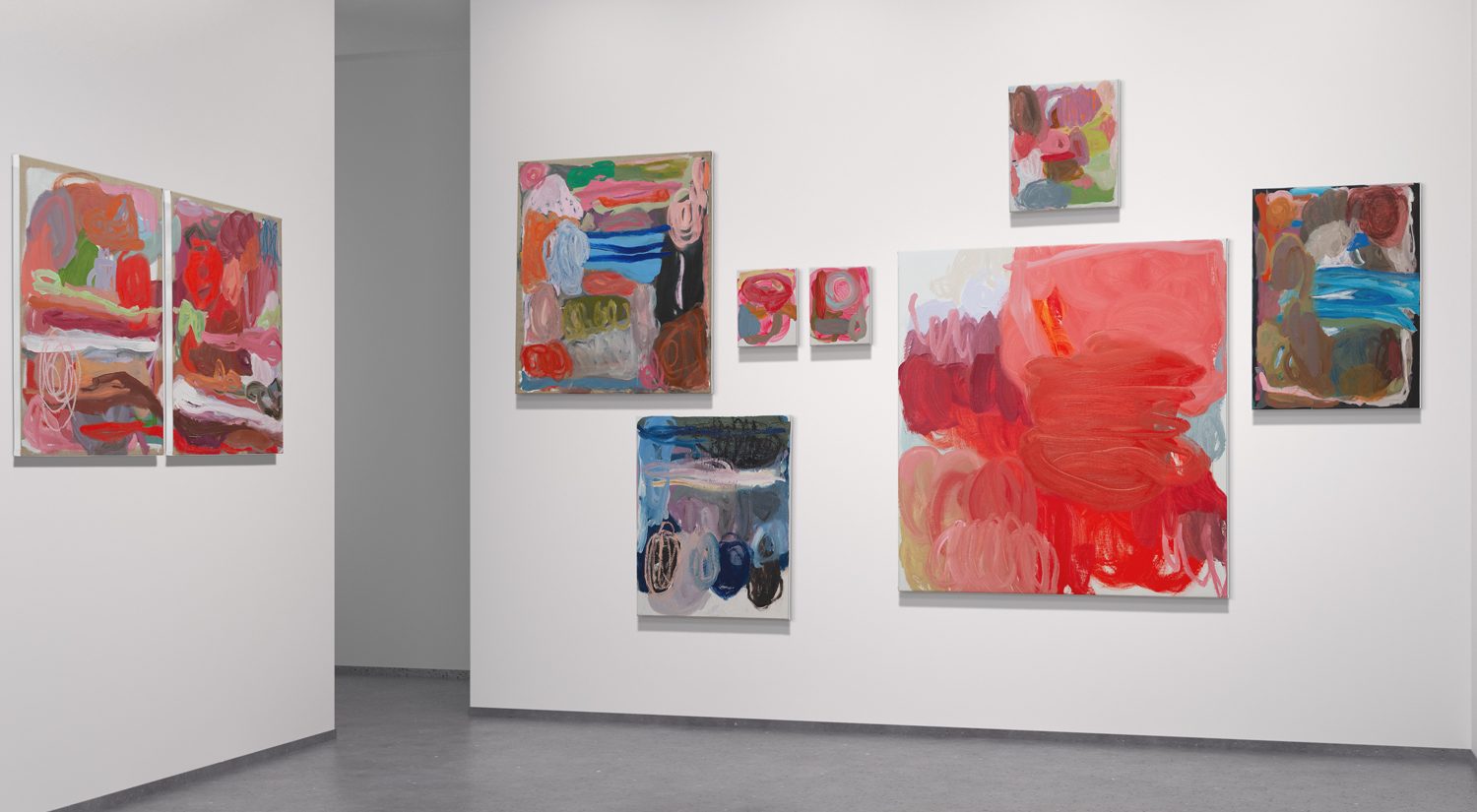
HVC: Chapeau, what you say, it suits you as an artist! So keep thinking like that! It’s about the non-verbal, that which leaves us speechless. What you also do is play with the world. At your expo MEREL now in Nodenaysteen in Ghent – December 25/January 26 – you chose to hang the figurative next to the abstract. That’s a conscious choice, I presume? You could have also chosen to show only your – more recent – abstracts?
MJ Yes, I wanted to show them in such a way that they can both be ‘the same’. My biggest fear is to be pinned down to one style again. Japanese artists often take on different names so they can also do other things. I don’t want that. That’s why I find the title so good, ‘MEREL’. I am all of it, and I believe I can do both. I think they also strengthen each other quite well. They belong together in some way. And I want to show where I come from. I think you can also see a kind of similar handwriting.
An abstract work demands a lot from the viewer, and a figurative work actually asks something different, but also a lot from you. And I think that together it can create a kind of beautiful balance.
HVC: In any case, the viewer completes 50% of the artwork. If you adapt too much, you go mainstream, and those are usually lukewarm works. MJ I don’t do it to please. I hope that people feel something and can dive away for a moment into my world. HVC Simply getting lost in the moment.
MJ Looking at what happens when they get lost in it, without panicking. What is there and what do I feel there? Maybe they are also mirrors of what all that does to you? HVC A thought-provoking one!
HVC: DeNode presents @ Nodenaysteen, Ghent: Merel Jansen (NL), Predikherenlei 4, 9000 Ghent. Last weekend: January 10 & 11, 26. https://www.merel-jansen.nl/ https://www.hildevancanneyt.be/