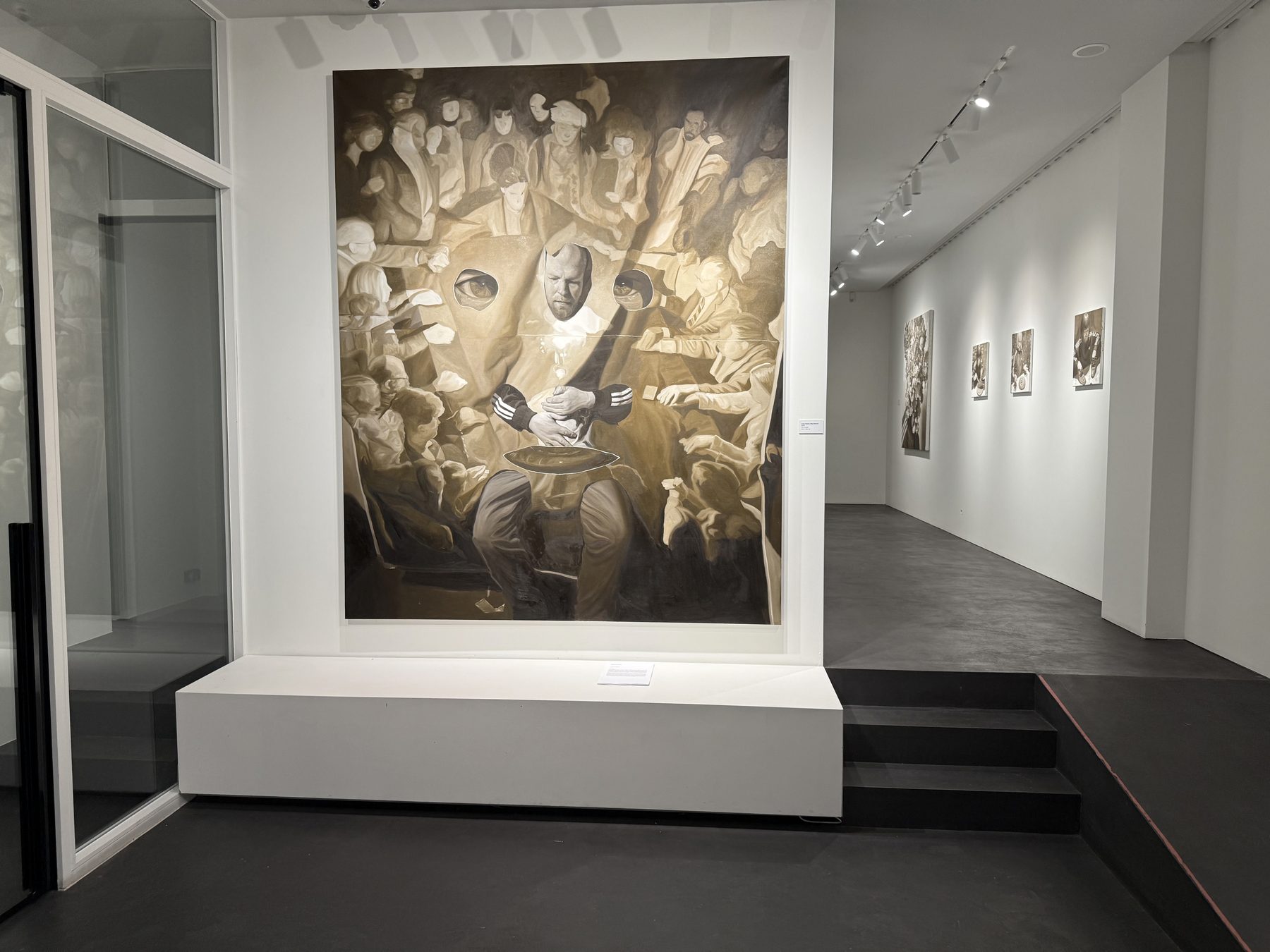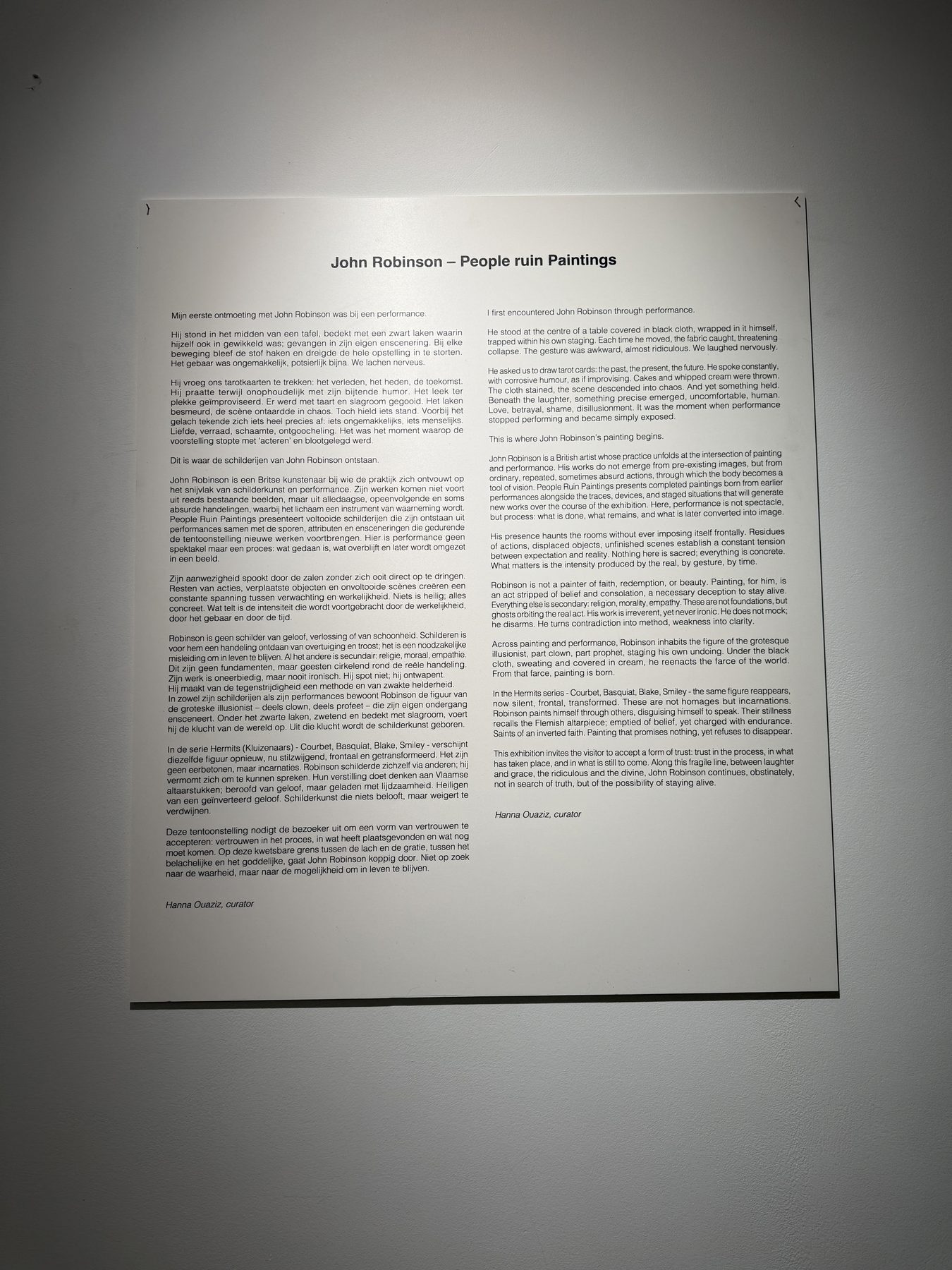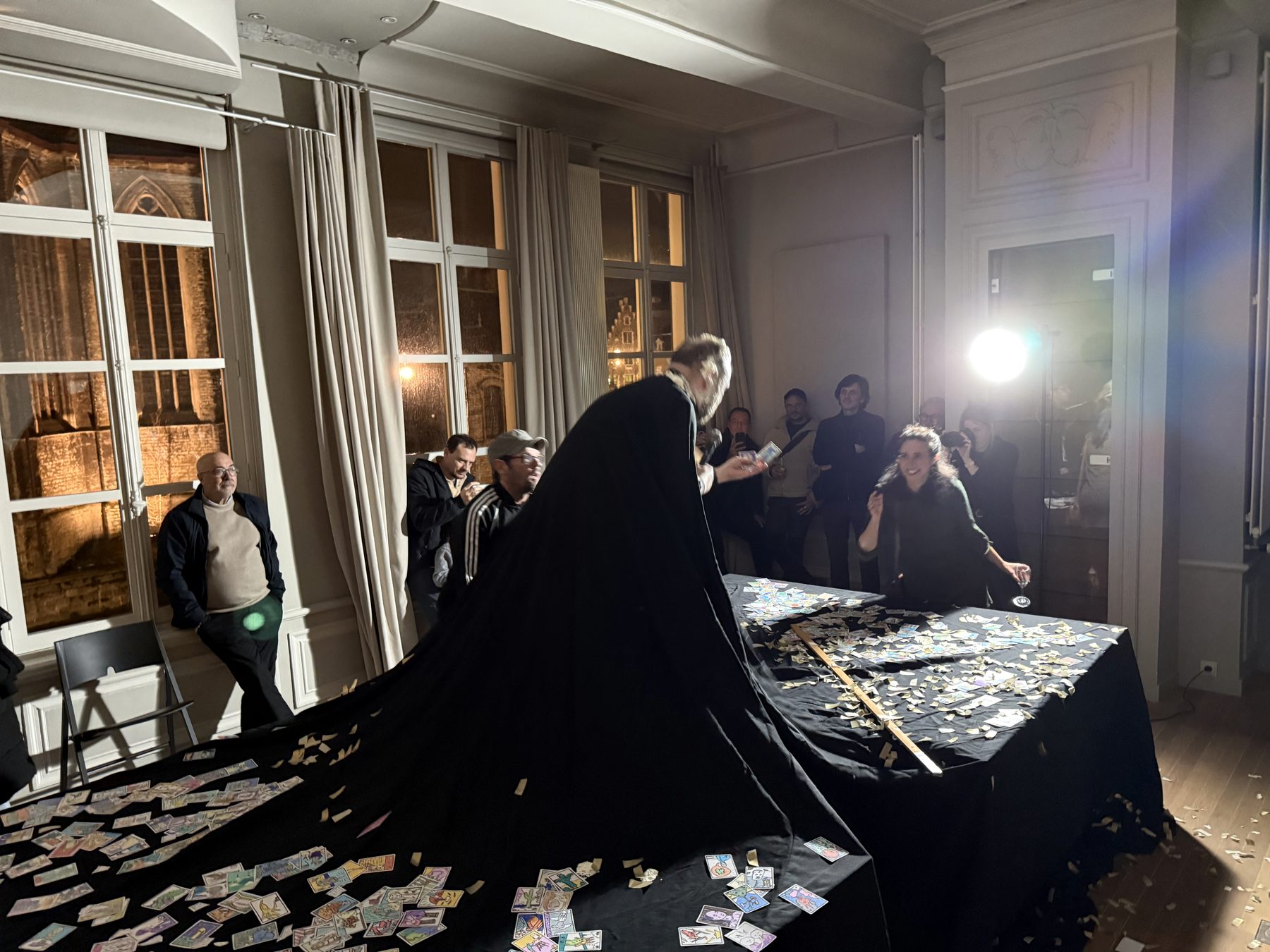
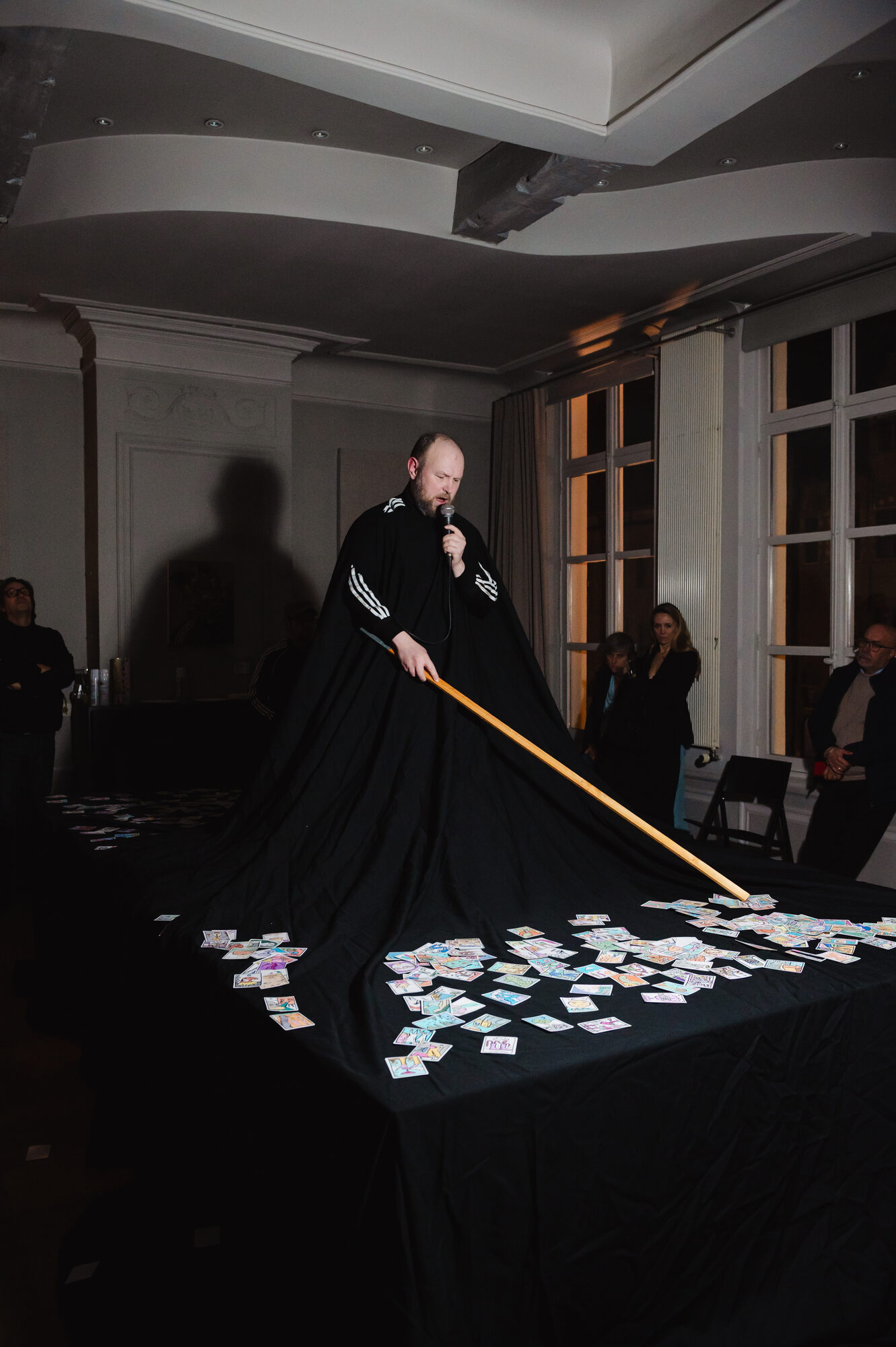
He stands in the middle of a table, covered with a black cloth. He is also wrapped in it, fixed in his own staging. Every time he turns around, the fabric gets caught and threatens to pull the table with it. The gesture is awkward, almost comical. We laugh — a nervous laugh.
John Robinson draws cards from the tarot deck and asks each of us to choose three — the past, the present, the future. He speaks incessantly, carried by that unstoppable, biting English humor. Everything seems improvised, even absurd — and yet every word falls into place with an almost ruthless precision. What he reveals cuts to the bone: love, betrayal, disillusionment, shame. The audience wavers between amusement and discomfort.
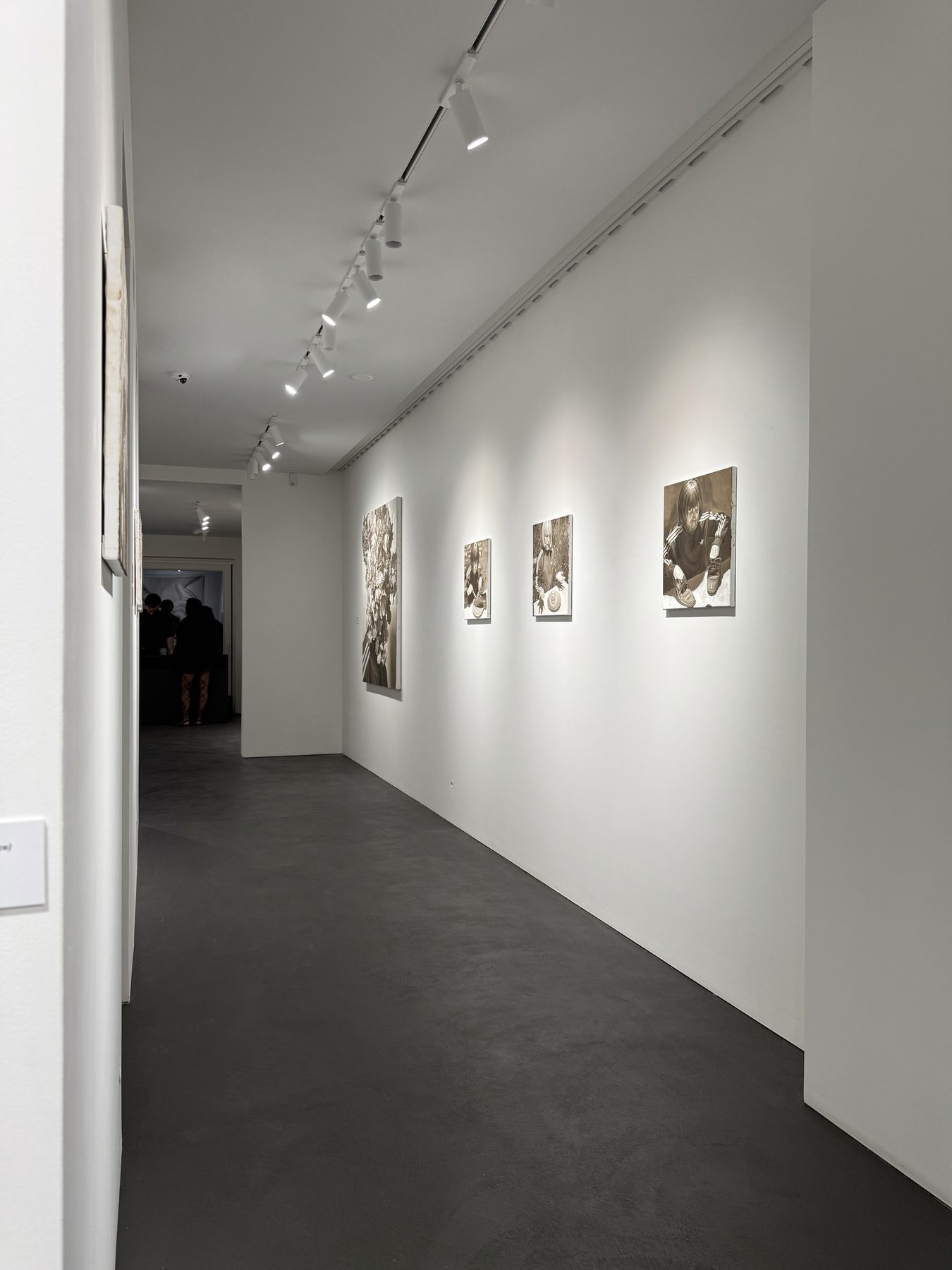
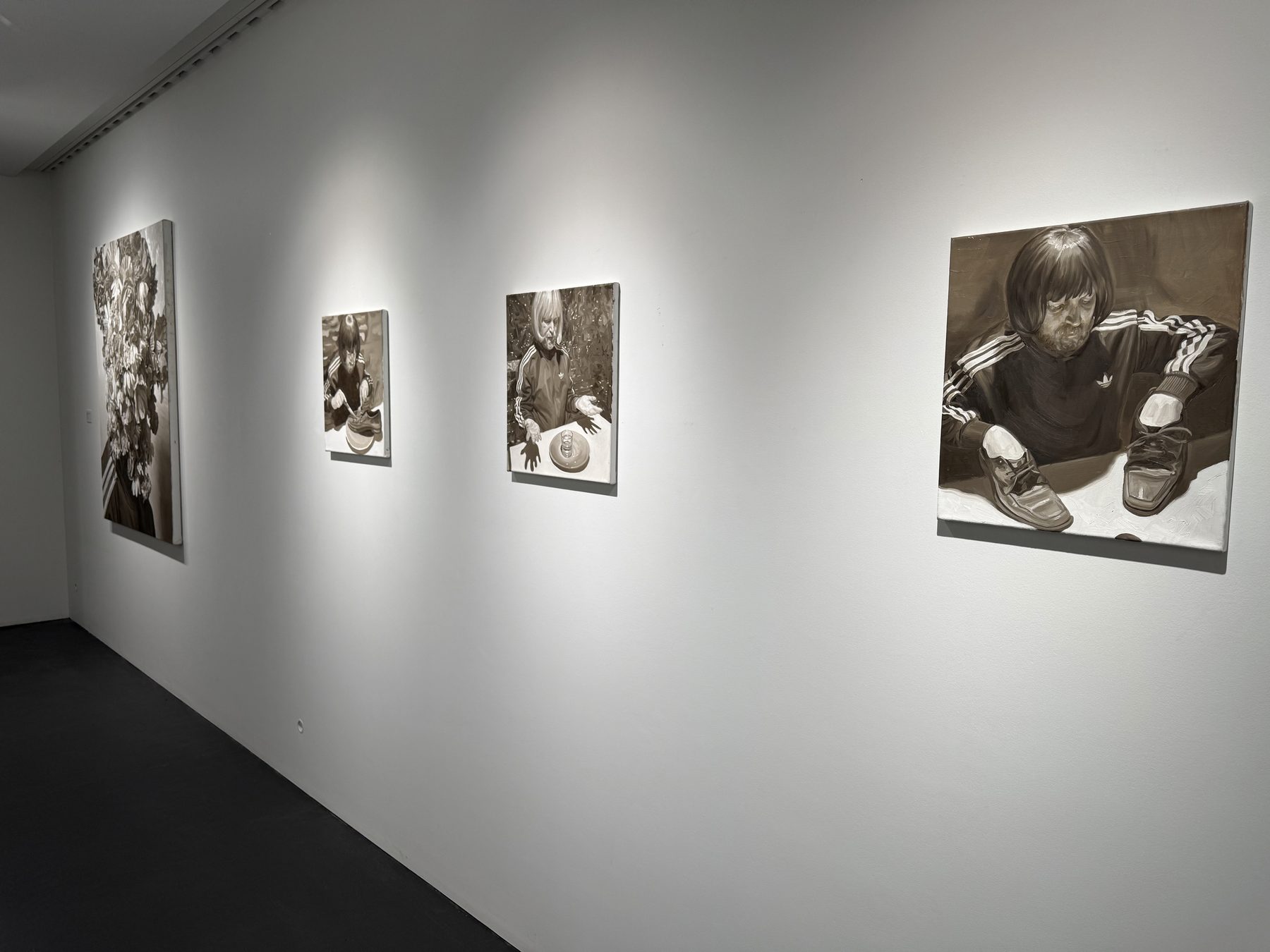
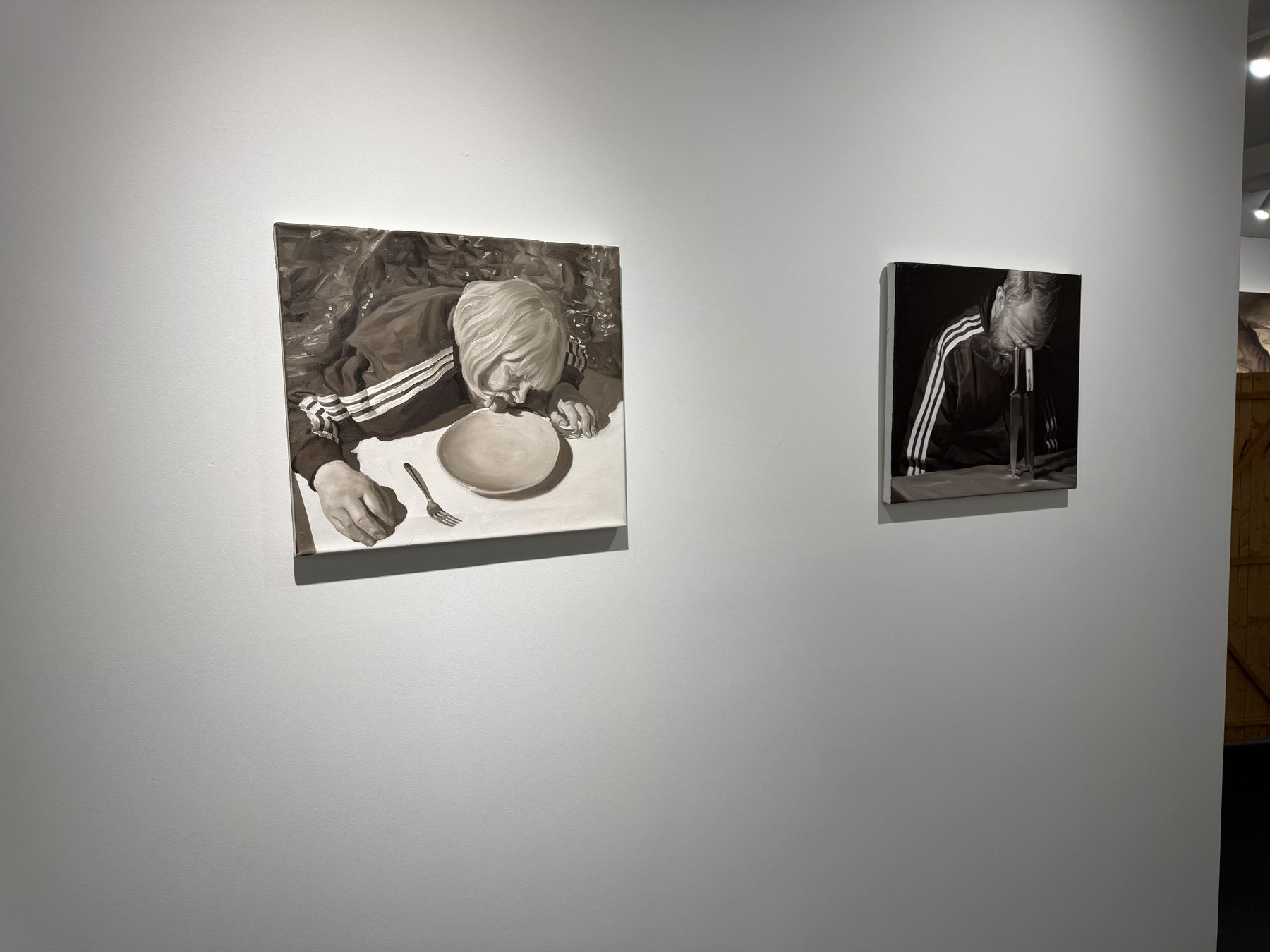
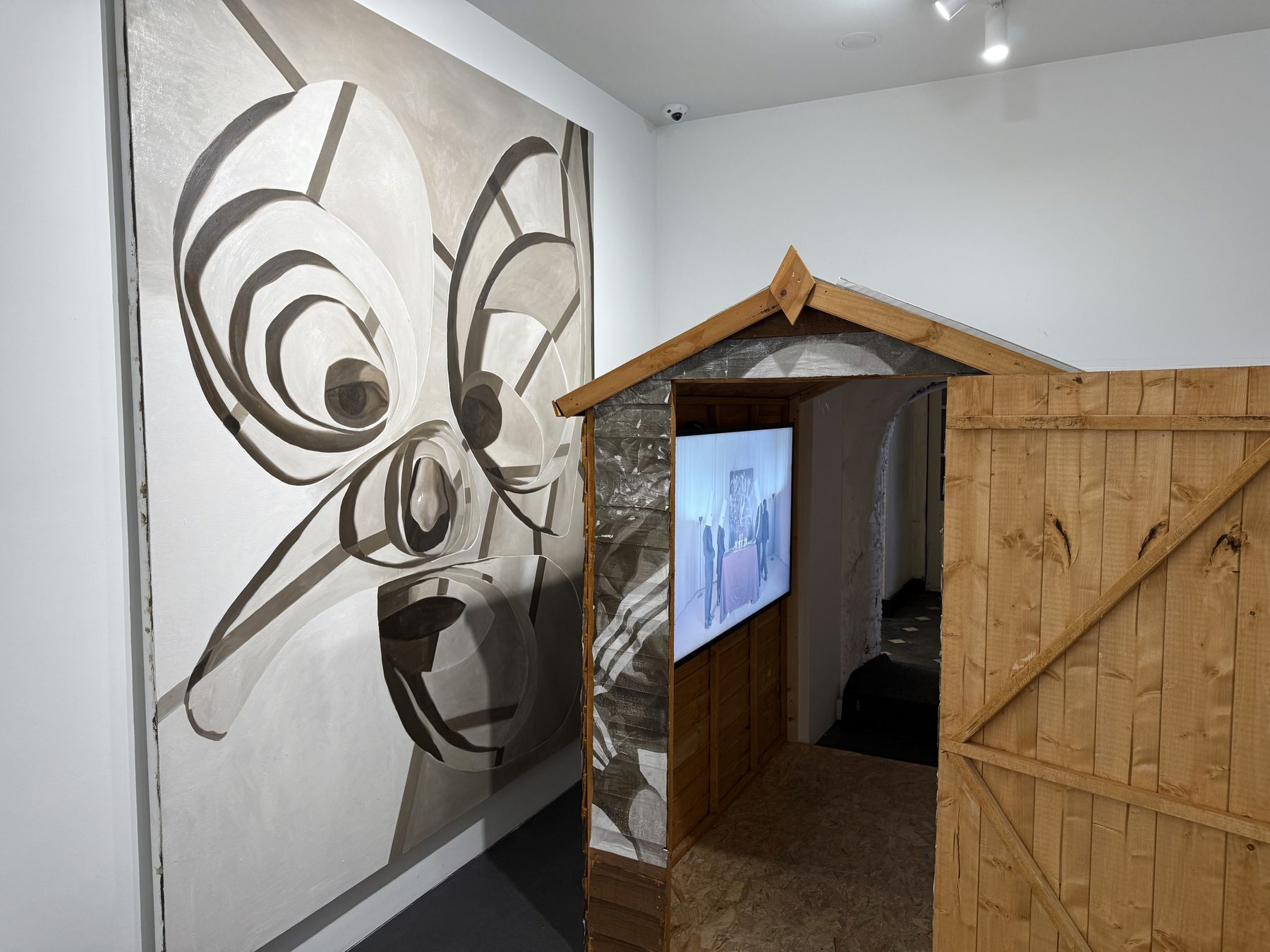
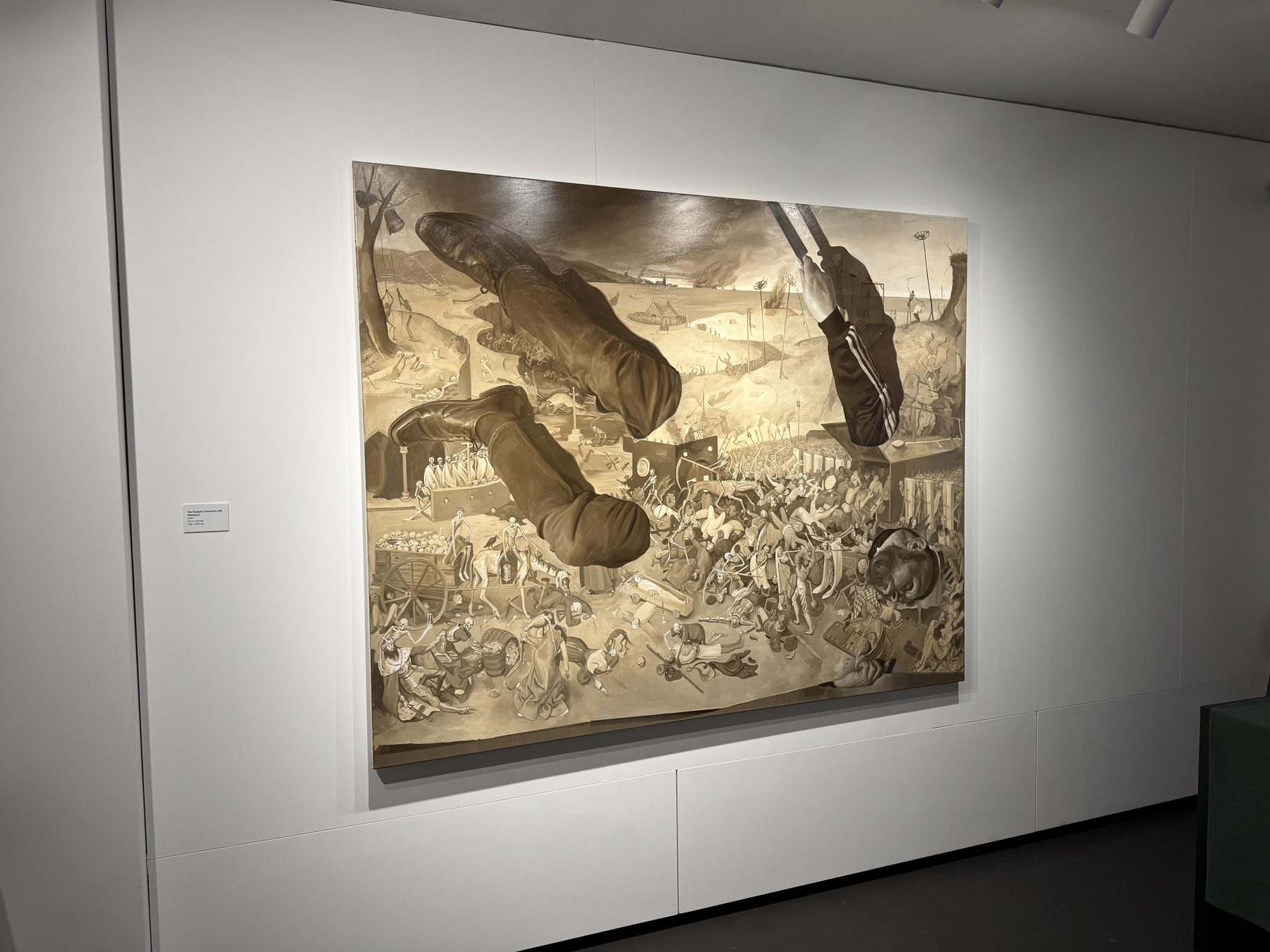
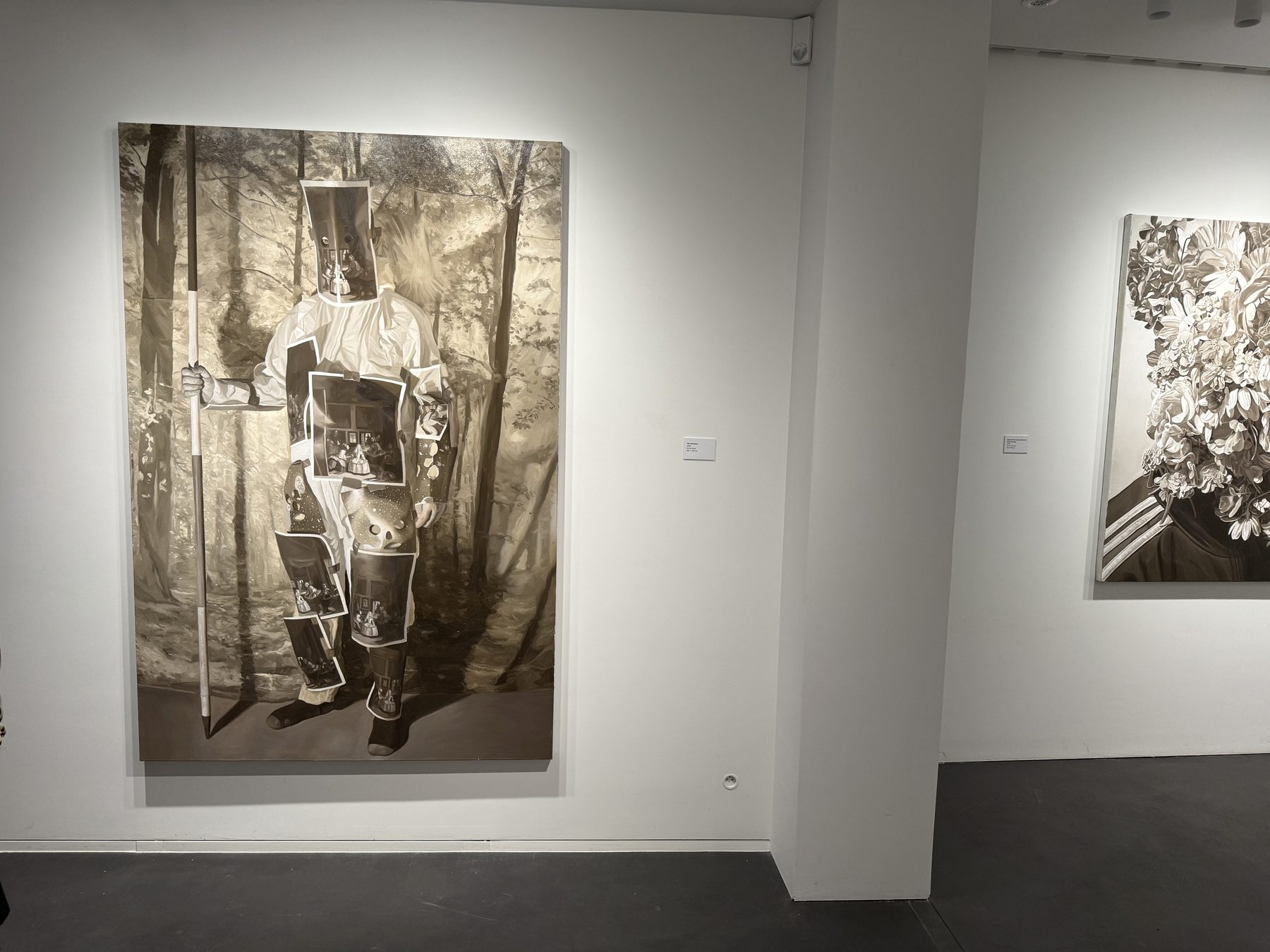
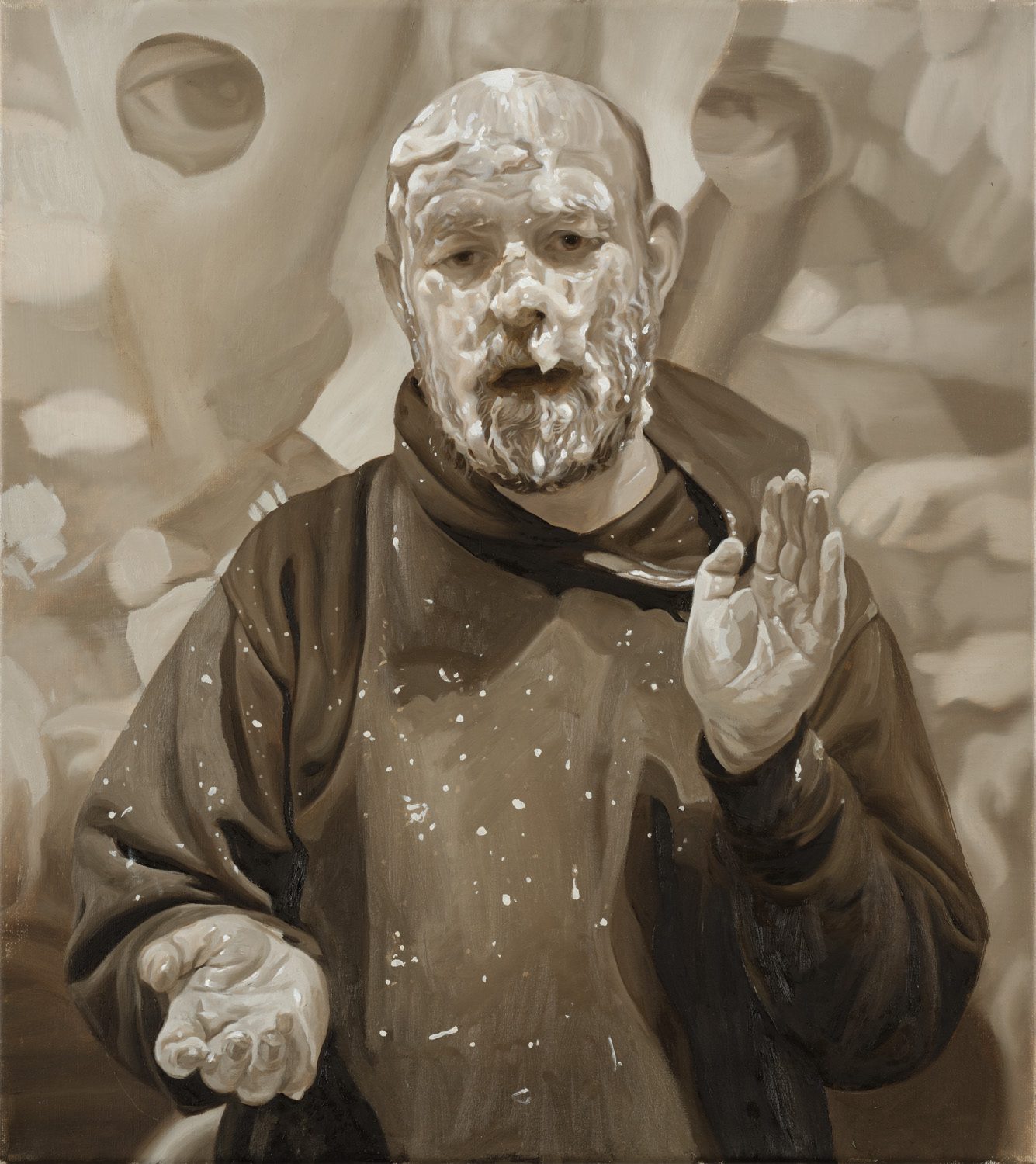
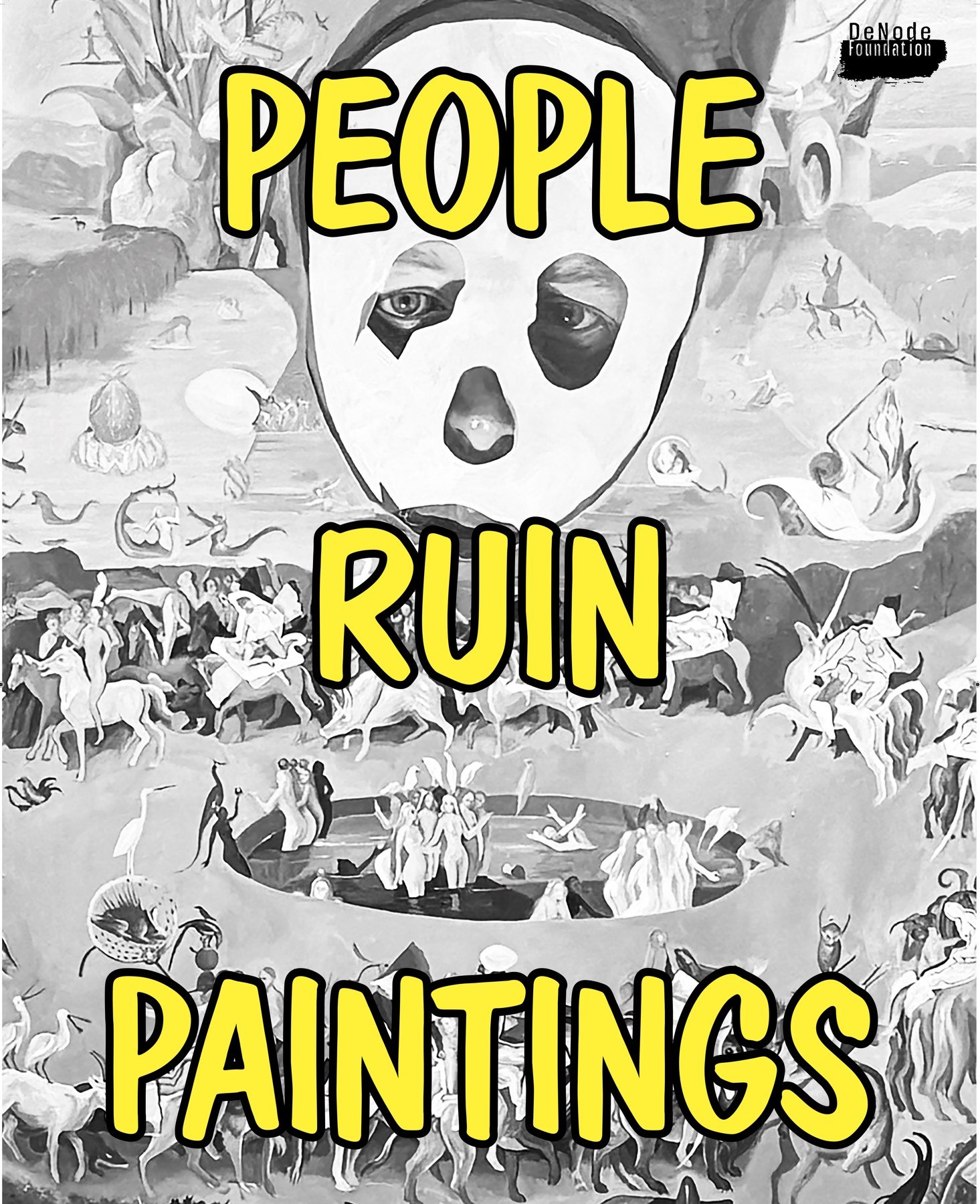
During People Ruin Paintings John Robinson presented three performances that serve as the basis for future paintings.
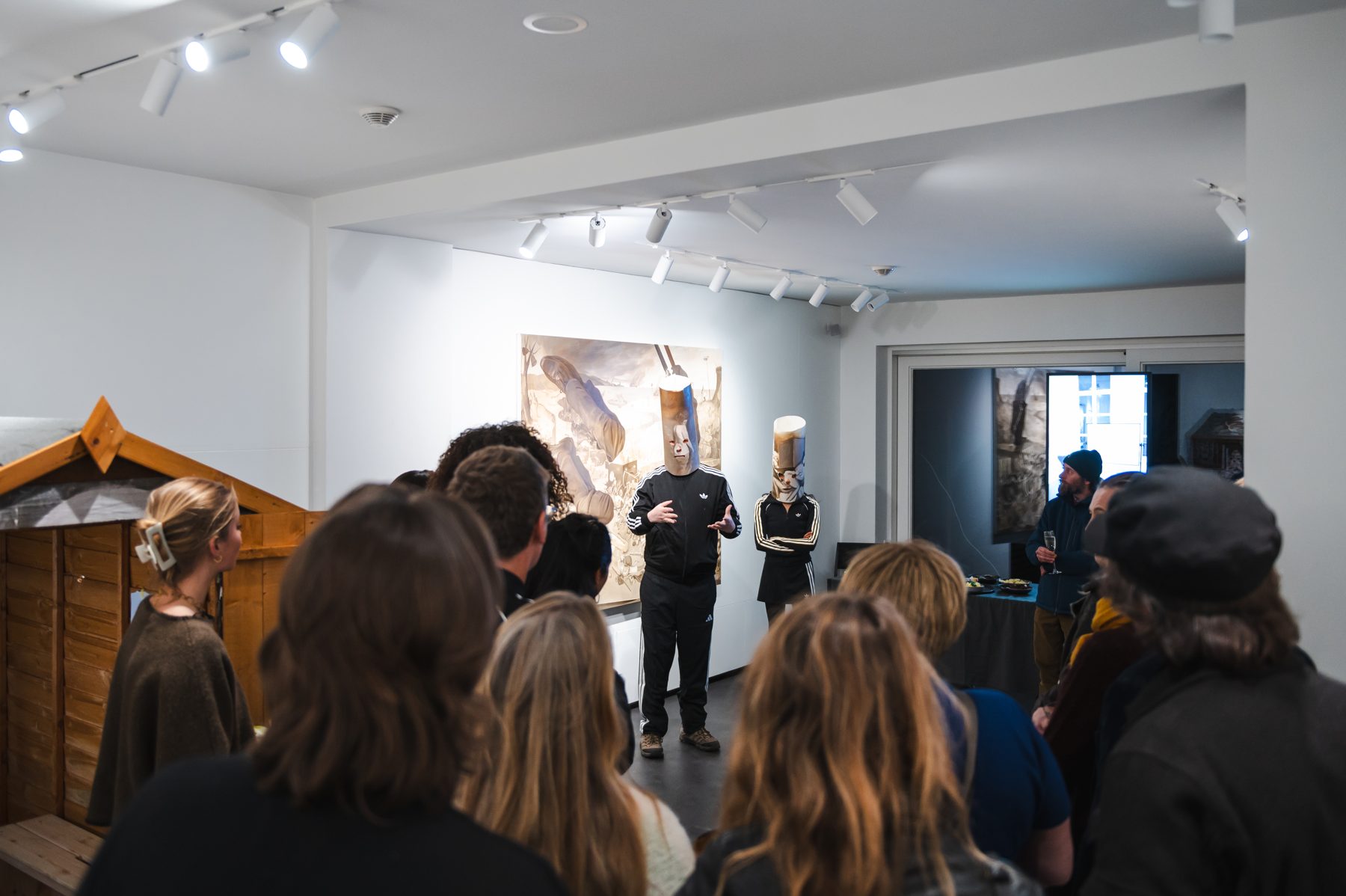
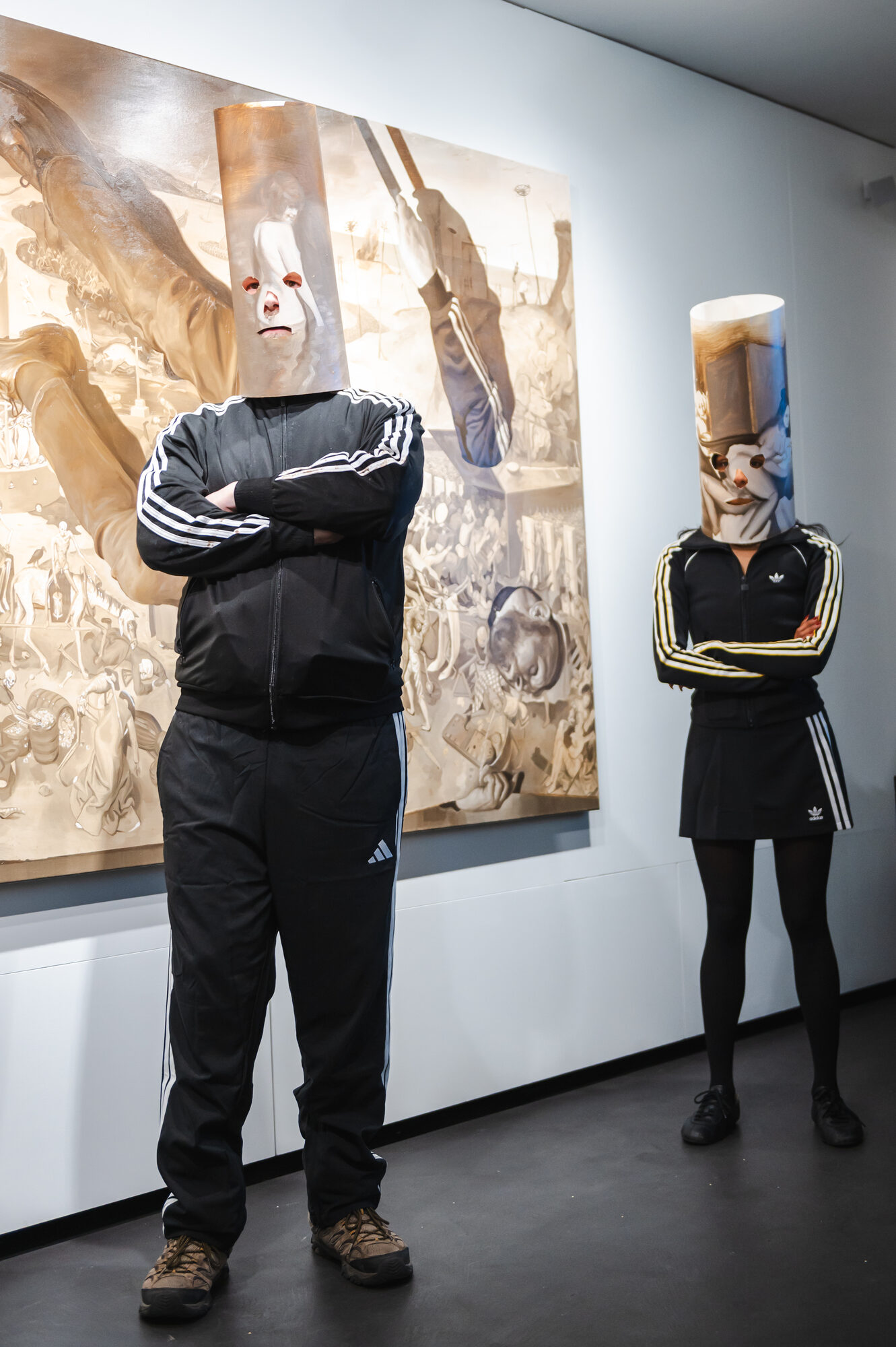
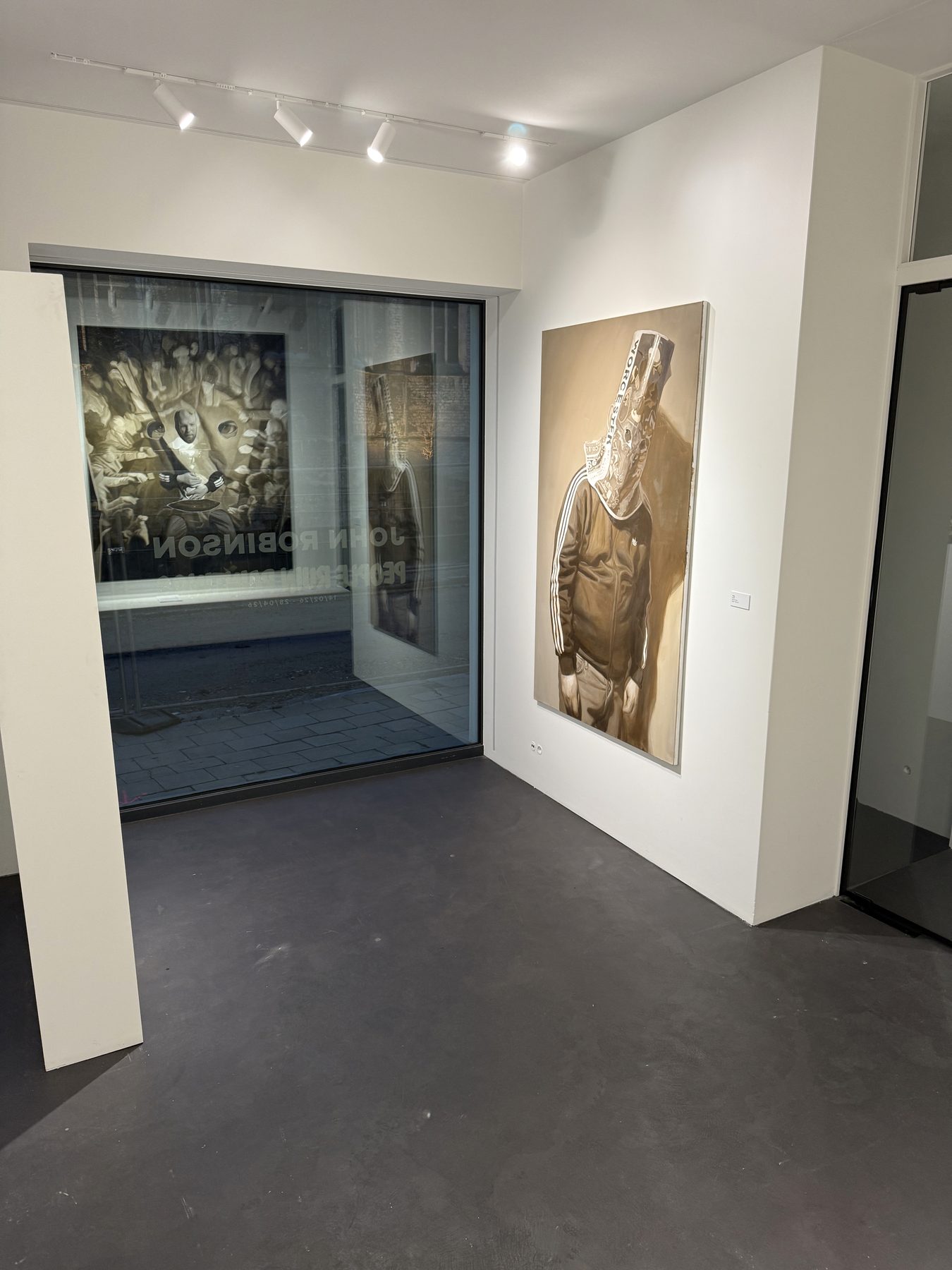
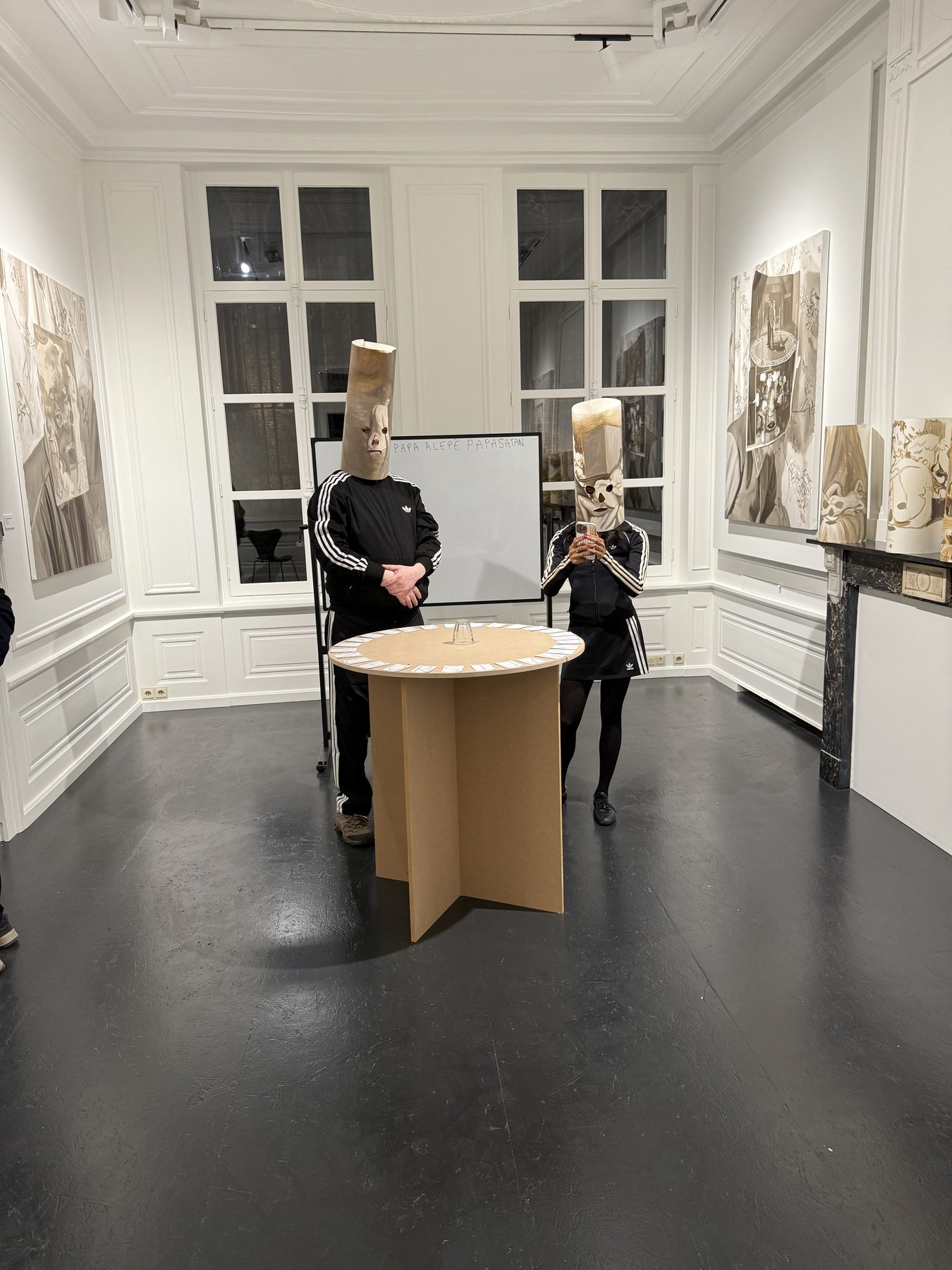
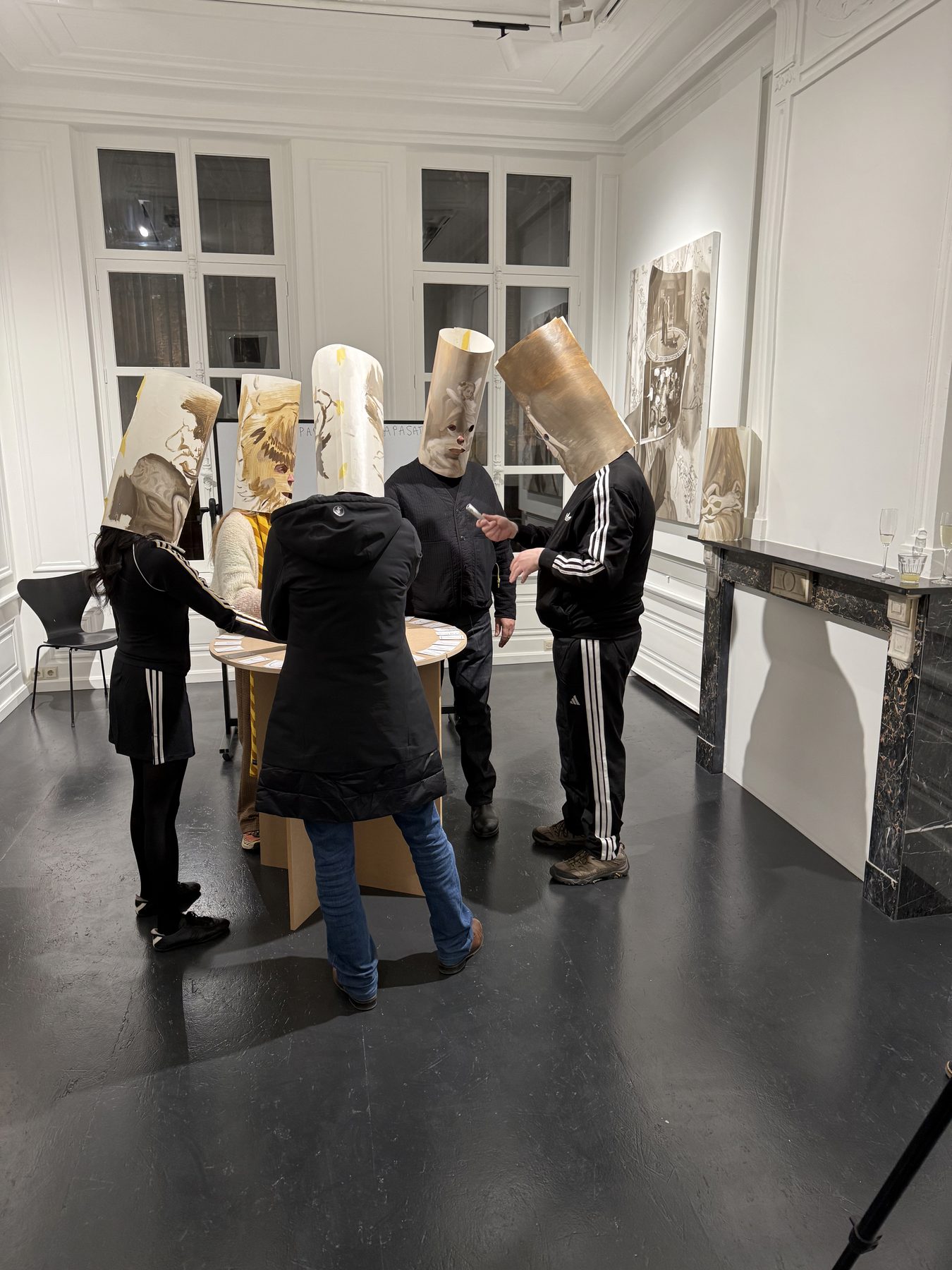
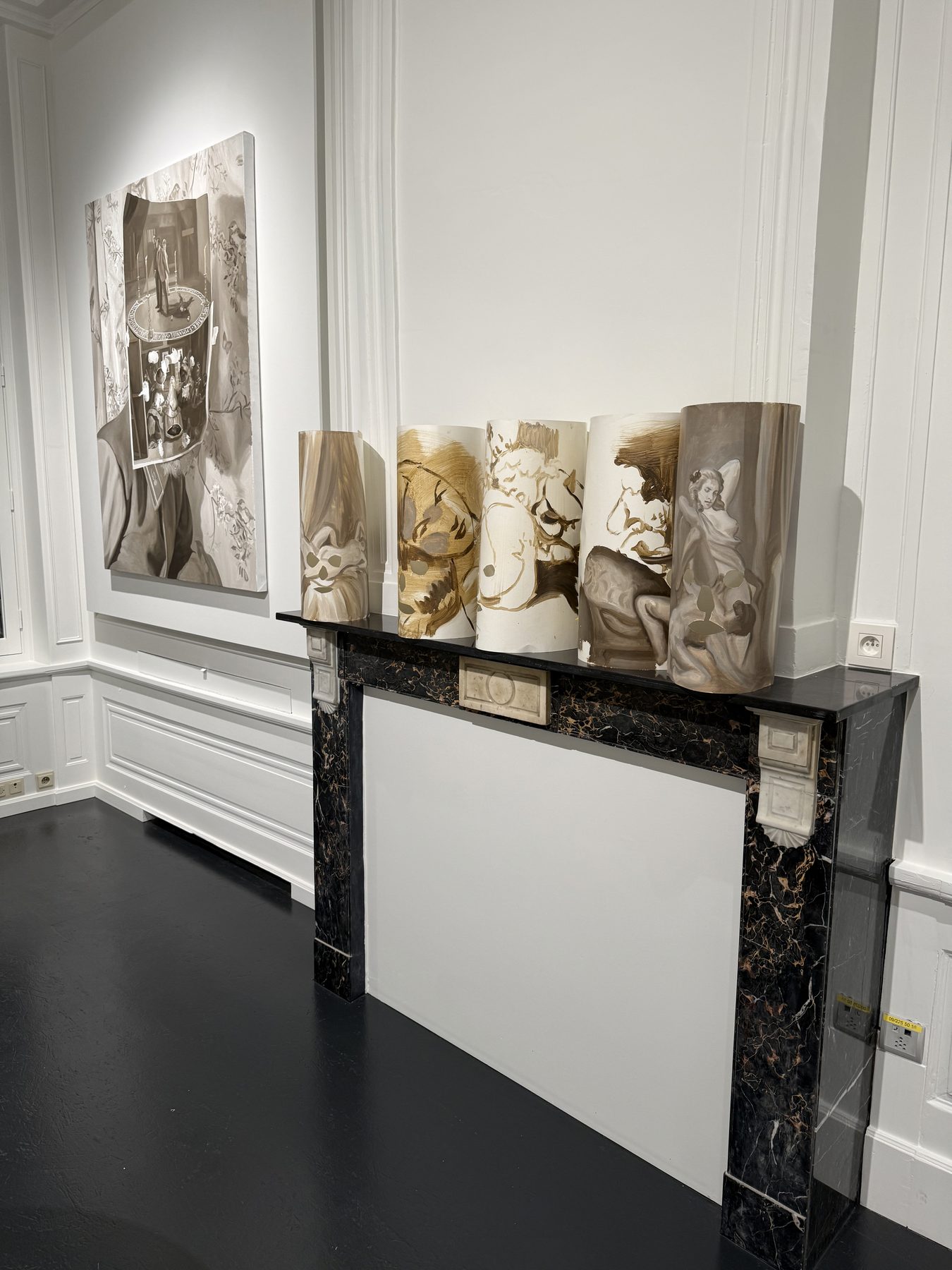
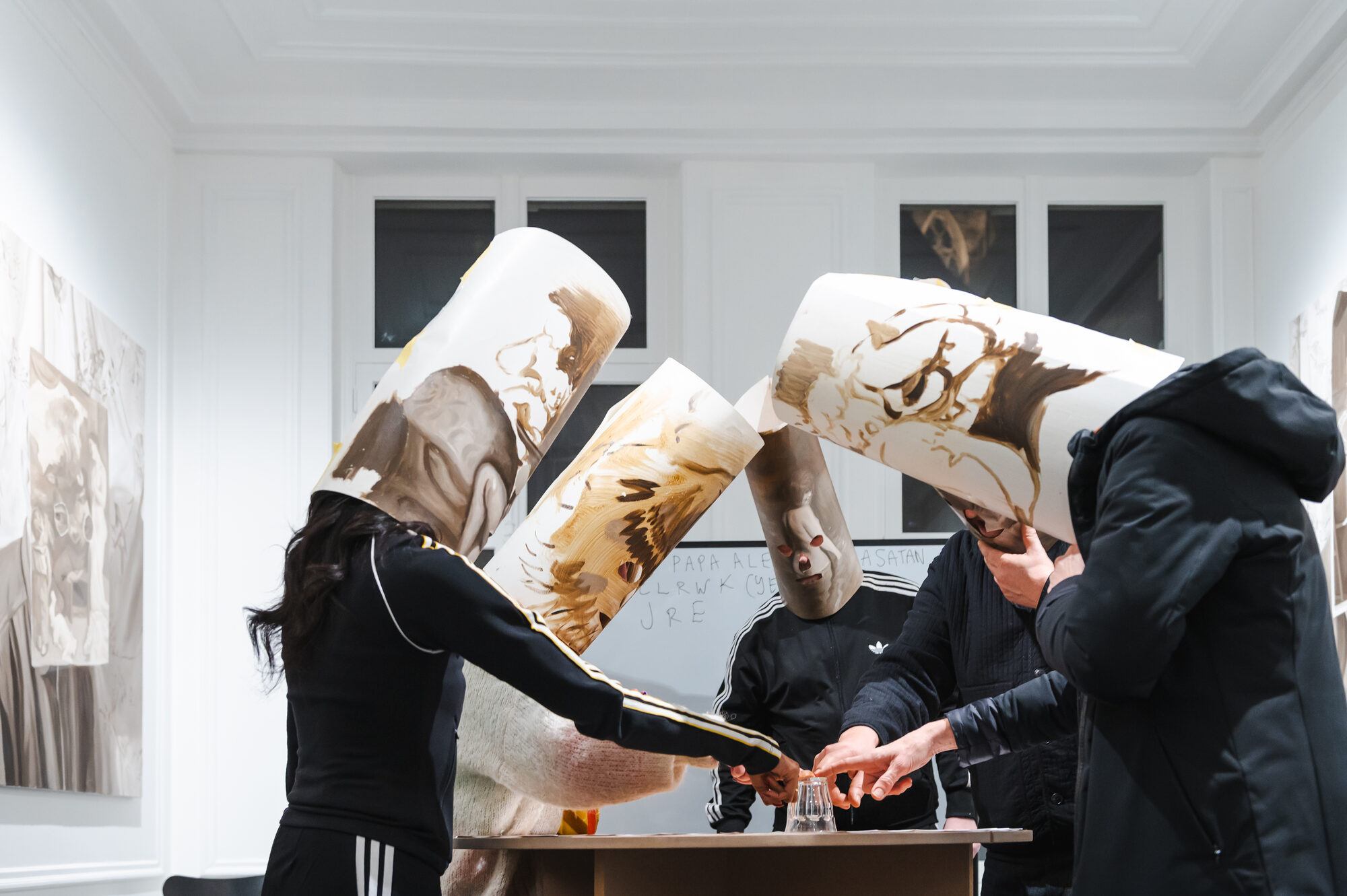
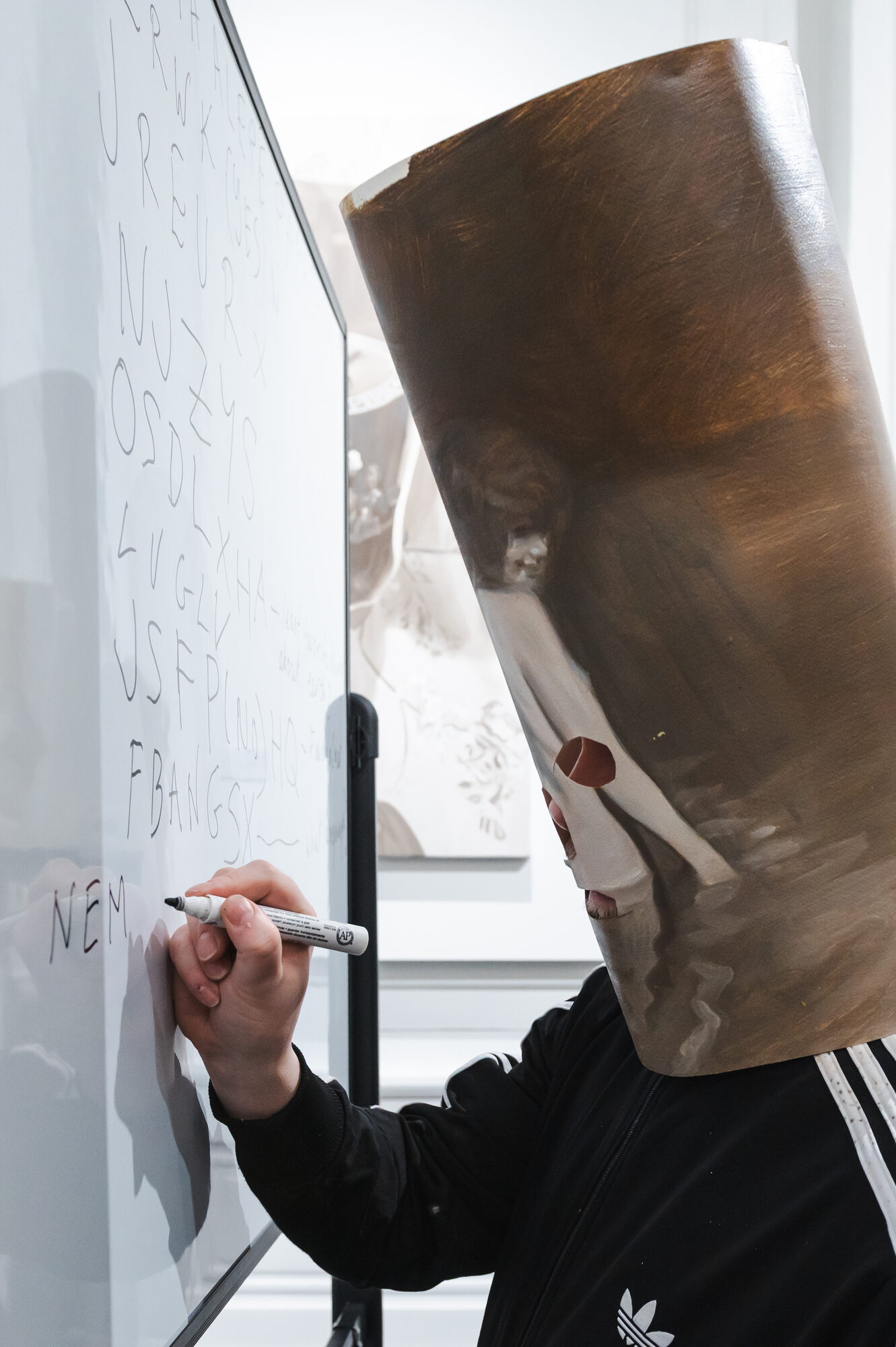
A collective alphabet board composed of twenty-six letters and two additional cards — YES and NO — was activated on the ground floor. Participants placed rolled paintings over their heads, converting canvases into provisional masks that at once concealed the face and turned the body into part of the apparatus of address. Questions were directed to unseen presences while Robinson transcribed the resulting letters and responses onto a whiteboard, translating the séance into a public exercise in unstable notation. The work hinged on the tension between earnest invocation and evident failure: language appeared only in fragments, coherence remained perpetually deferred, and the promise of communication was sustained precisely through its breakdown. In this way, the ritual staged not revelation but the persistence of desire in the face of its own impossibility.
A long table draped in black cloth became the site of extended tarot sessions. Visitors selected cards corresponding to past, present, and future, which the artist read aloud in public. The format refused privacy: interpretation unfolded in front of the room, with embarrassment and exposure treated as structural materials rather than incidental effects. At the centre of the table, Robinson emerged through an opening in the cloth which also functioned as his robe, so that the performance bound body, costume, and stage into a single continuous surface. This arrangement was crucial to the work's logic. It rendered the artist at once enthroned and trapped, officiant and appendage of the apparatus he had constructed, lending the reading an unstable authority: part oracle, part spectacle, part self-imposed entanglement. Here divination operated not as prediction but as an apparatus for testing authorship and control — who was permitted to speak, who was rendered legible, and how a "reading" redistributed agency between performer and participant.
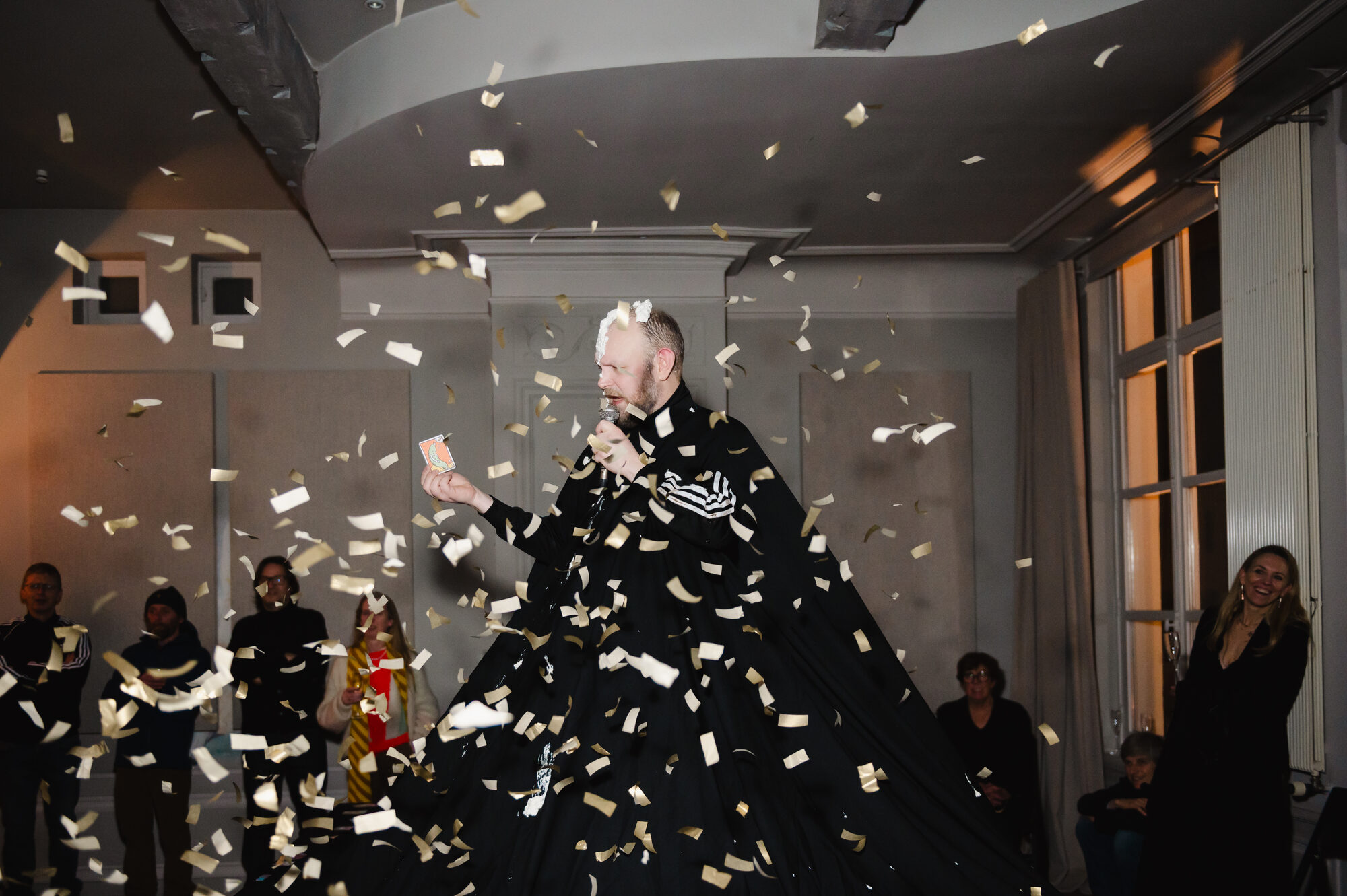
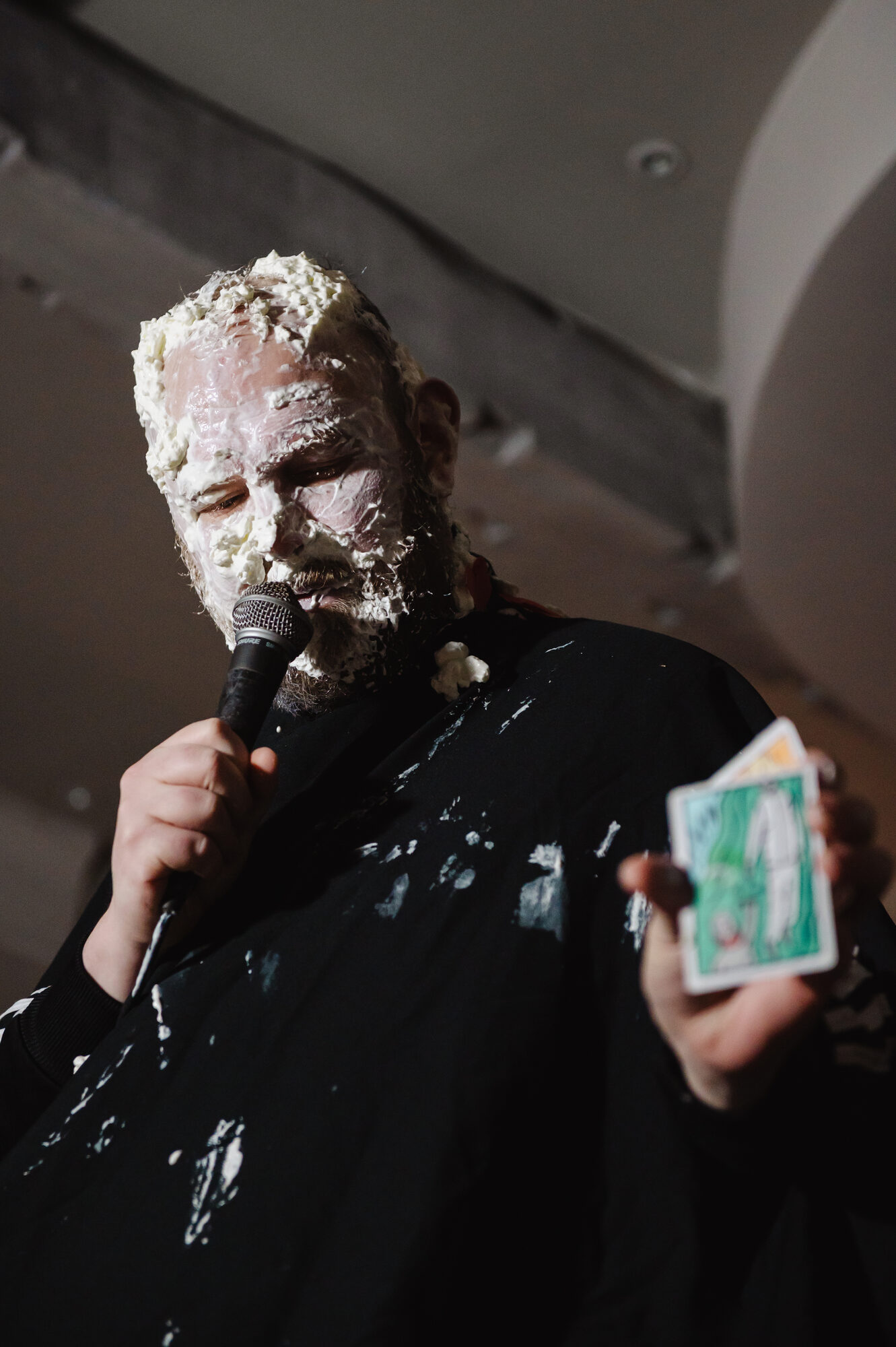
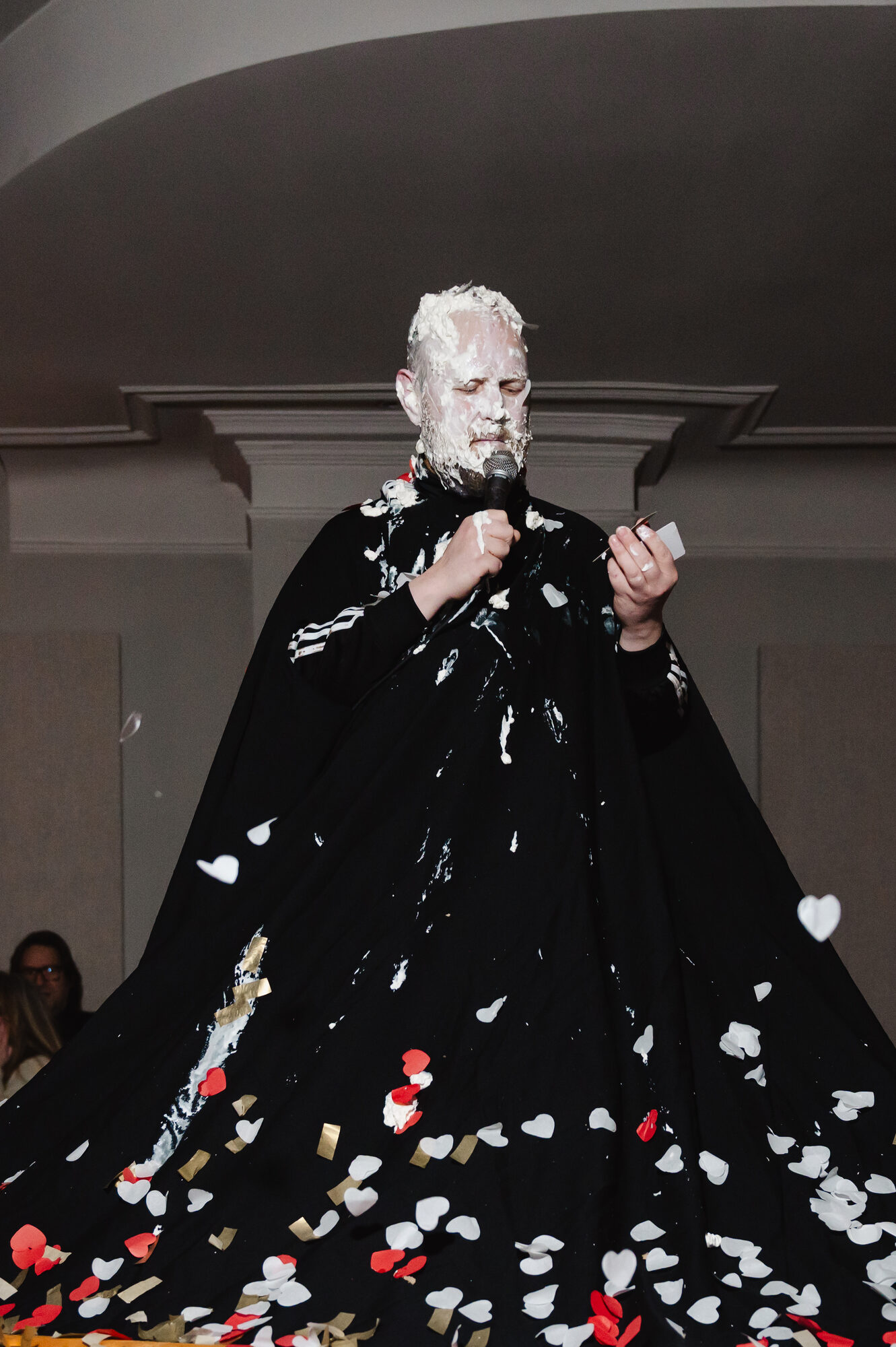
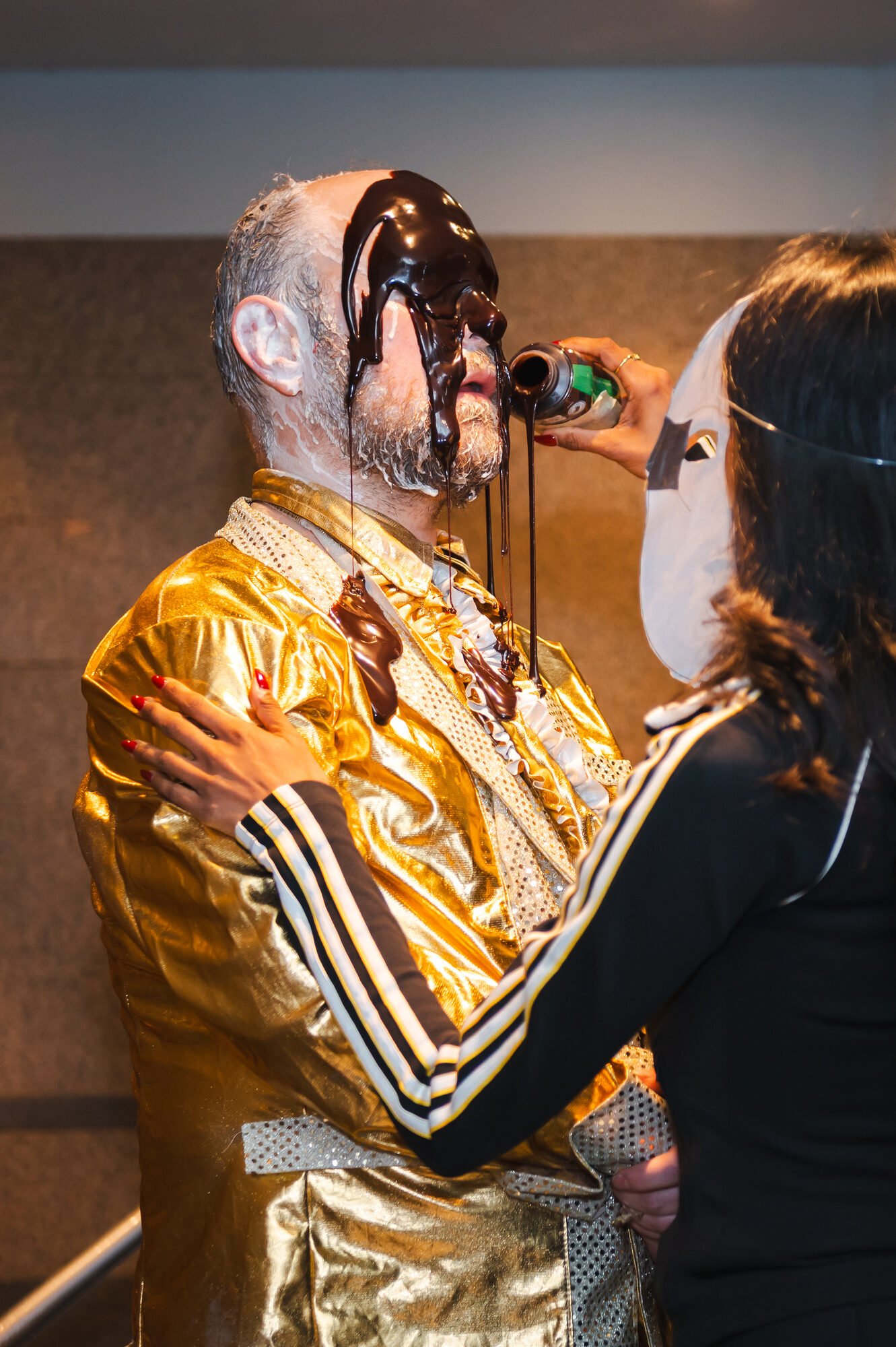
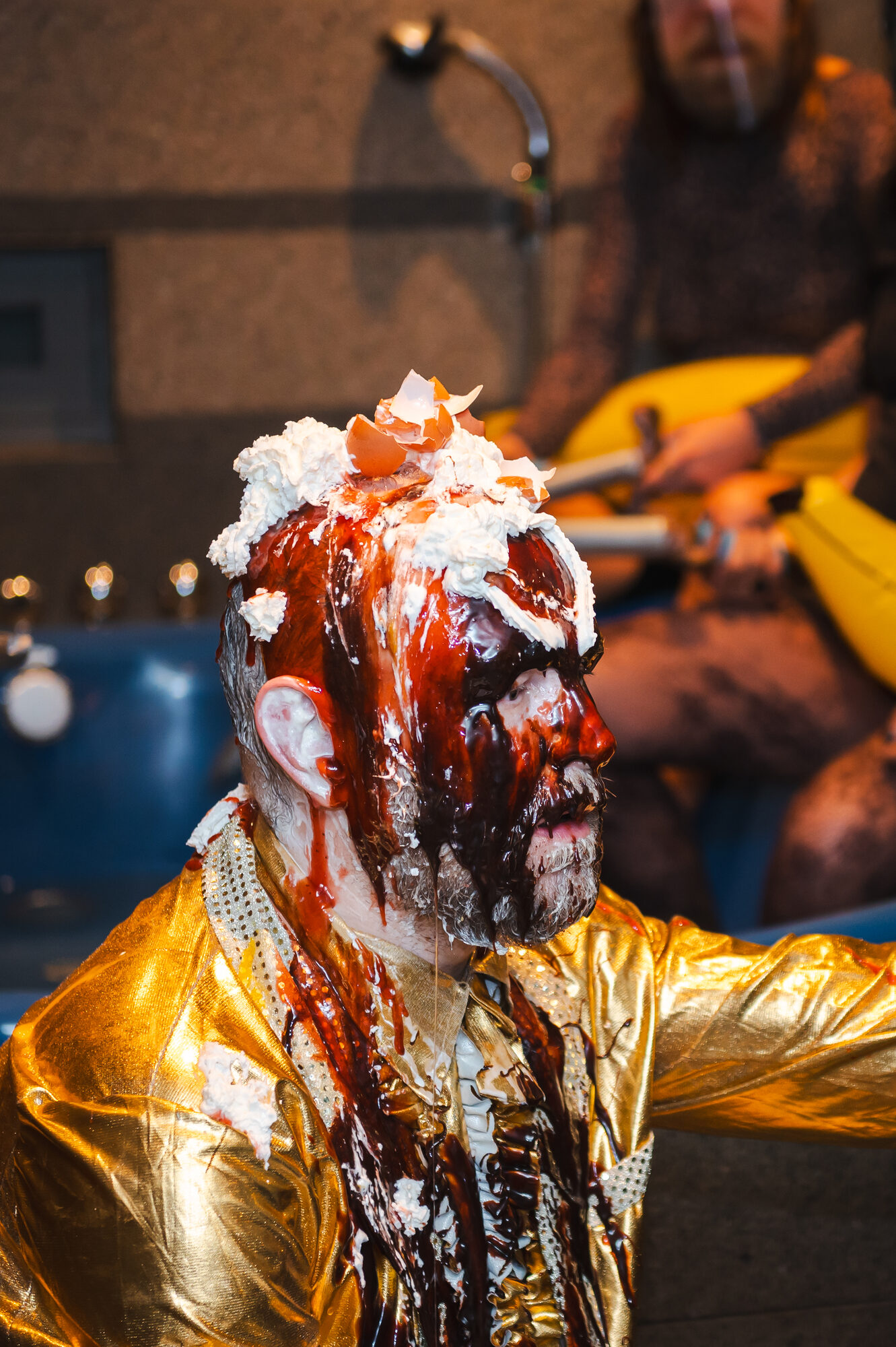
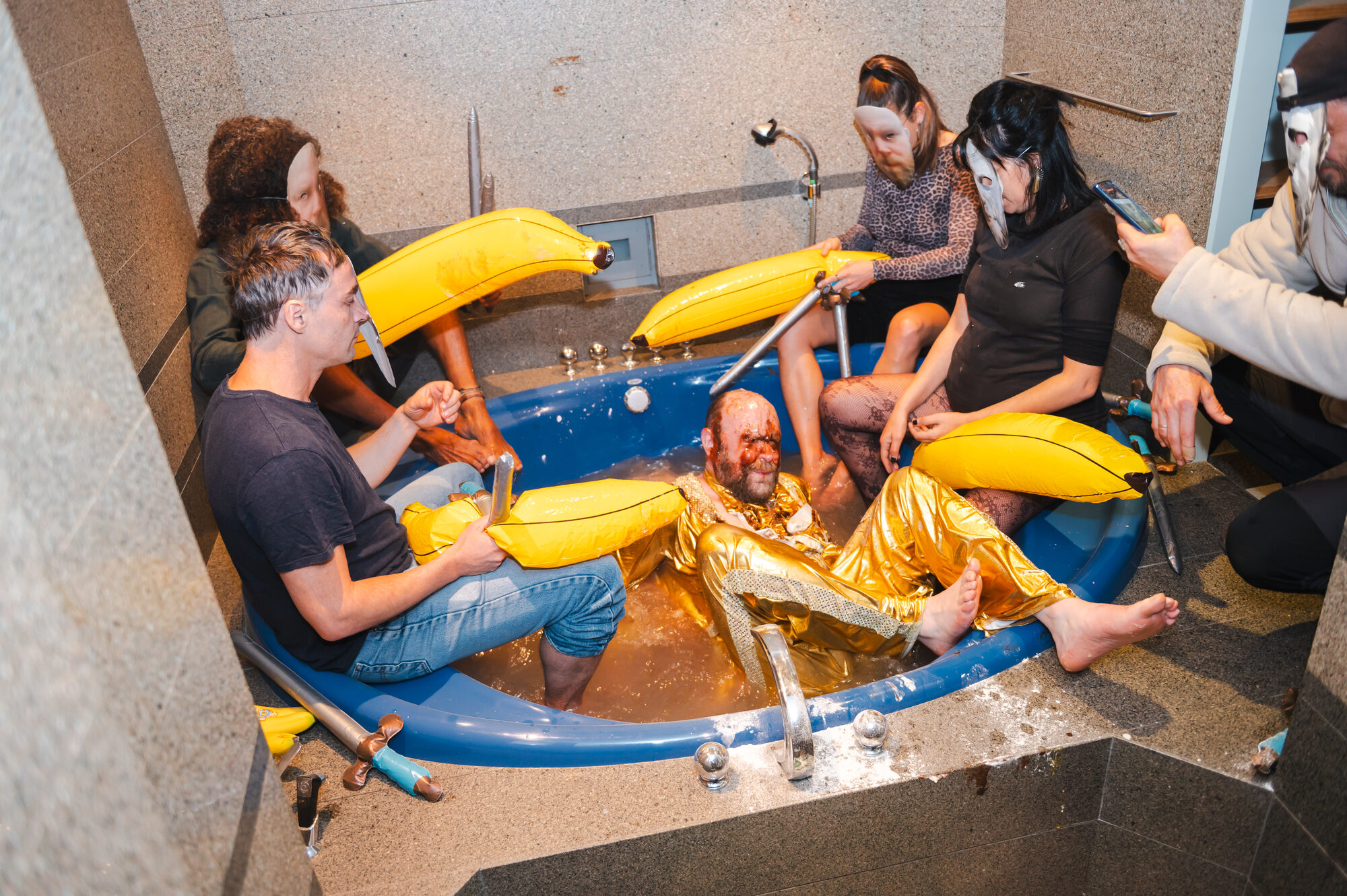
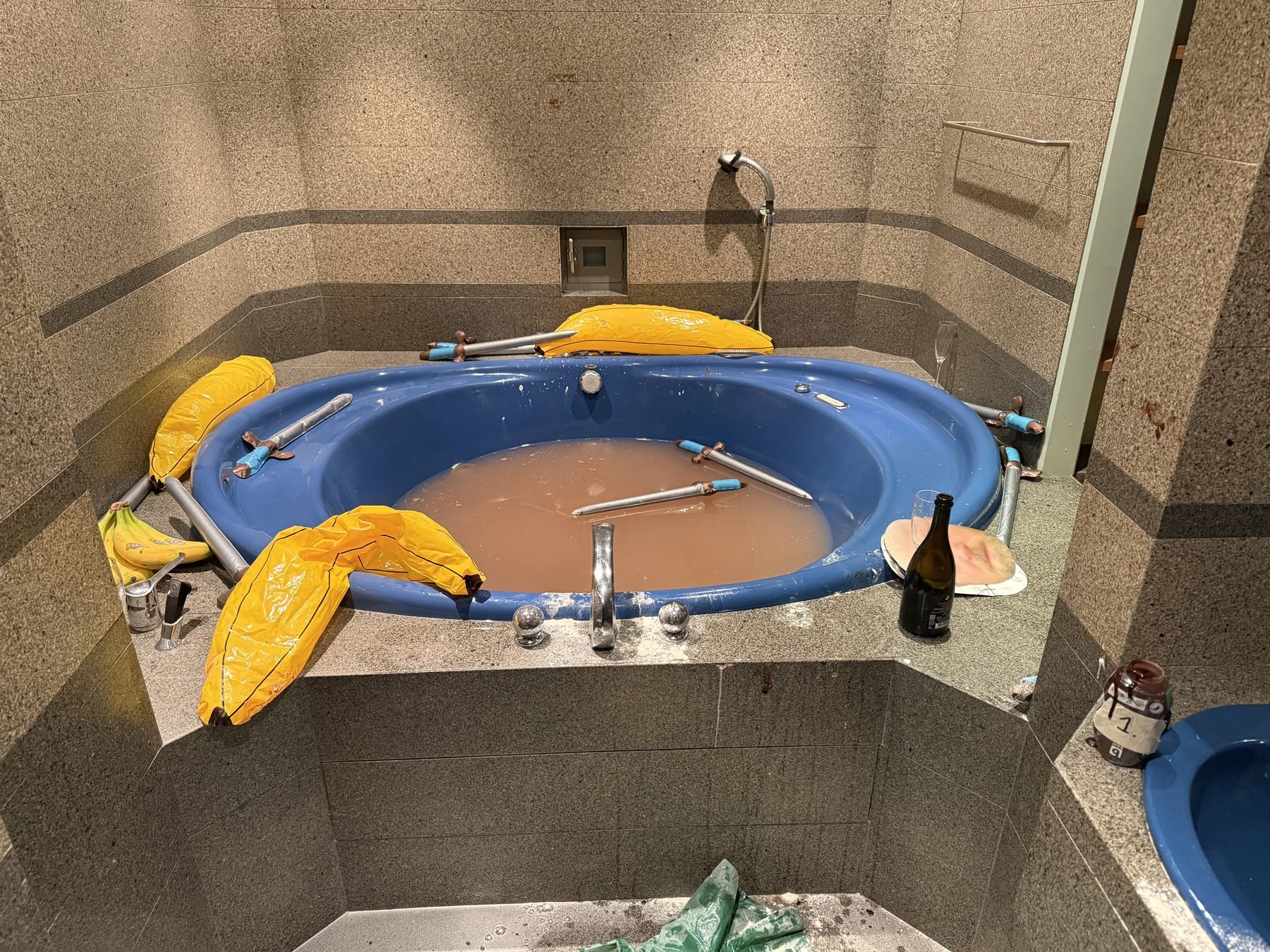
On the upper floor, the performance shifted from divination to a deliberately abject bodily rite. The artist was subjected to a sequence of accumulations and degradations — egged, covered in flour, doused in chocolate sauce — so that the body was progressively transformed into a surface of excess, slapstick, and humiliation. The scene moved with a kind of disreputable theatricality, in which camp, farce, and violation became difficult to separate. Robinson then entered the bathtub in a staged act of baptism, only to be struck with inflatable swords and bananas, extending the action's unstable oscillation between mock-ritual and ordeal. Nothing here resolves into purification or transcendence. Instead, the performance drives the body toward exhaustion, leaving behind residue rather than redemption.